There’s a saying: "Every saint has a past, and every sinner has a future." It’s a timeless reminder that no one is entirely good or entirely bad; people can change, and everyone has a history.
In Islam, a similar teaching is found in the Hadith: "Whoever seeks forgiveness, Allah will forgive him; whoever turns back in repentance, Allah will accept it." This is because life isn’t about perfection. It’s about growth, learning, and transformation. No matter how far someone may have strayed, the door to redemption always remains open.
To most people, the name Nuray Istiqbal may not immediately ring a bell. But in fact, her story illustrates these truths perfectly.
Formerly known as Rae Lil Black, she gained fame in the adult entertainment industry. But in early 2025, her life took a profound turn. Embracing Islam, she new name, and began a journey of personal transformation.
As an influencer, YouTuber, and content creator, she now uses her voice and her influence to remind others that a person’s past does not define their future. Redemption, growth, and change are always possible, if one is willing to seek them.
But the internet is unforgiving.
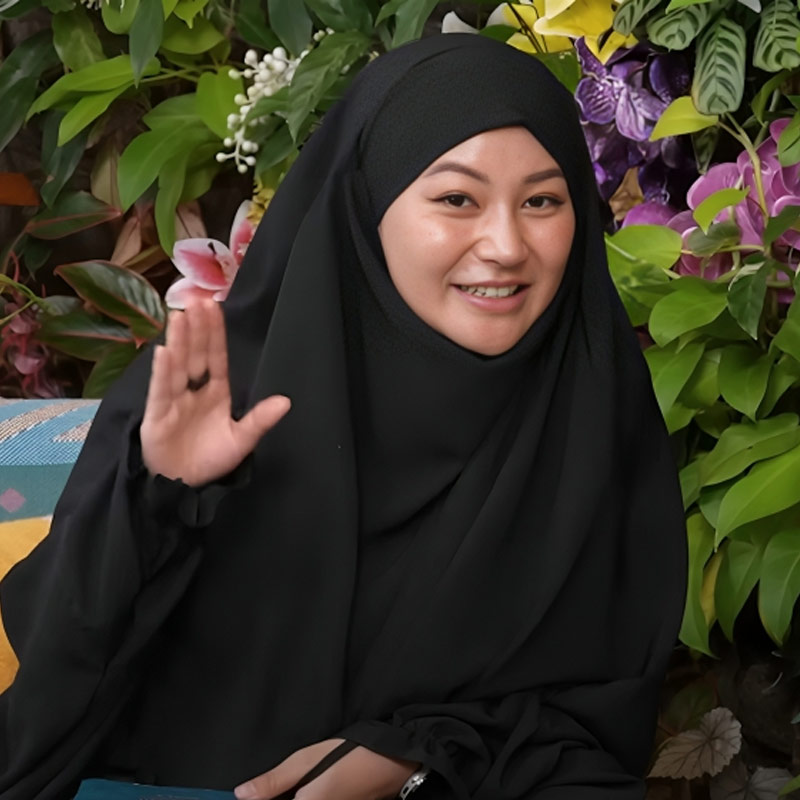
In a podcast with Denny Sumargo, she shared how her past continues to haunt her online presence. When asked whether she wanted to erase the videos and photos of her on the internet, she replied simply: “Want and can" are different.
Nuray is just one of countless women who grew up in the age of the internet, only to have their past resurface through photos and videos that reappear without consent. Like many others, she cannot erase her past.
But in a more detail explanation, she doesn't blame her past. She even credited it for making what she is now.
"So what I did was wrong, well, I didn't break the wrong law technically but now I in my position right now it's wrong. But if I erase my past that doesn't make me right now."
Instead of blaming her past and wishing it would disappear, she chooses to embrace what life has brought her, and to be grateful for it.
Islam teaches that every human is born in a natural state of fitrah, an innate recognition of God and an inclination toward monotheism. Therefore, when someone embraces Islam, it isn’t seen as adopting a completely new religion, but rather returning to their original, natural state.
This is why Nuray calls herself a "revert."
As for dealing with online criticism, she told Denny that the best thing she can do is simply not read the comments. She admitted to have lost hundreds of thousands of followers because she's covering up her body, embracing Islam and no longer in the adult industry, and she couldn't care less.
Now, covered in hijab, she says she no longer feels the need to impress anyone with her appearance.
Read: Ex-Porn Star Rae Lil Black Embraces Islam, Leaving The Internet In Shock And Disbelief
Nuray Istiqbal, born Kae Asakura on August 17, 1996, in Osaka, Japan, experienced a strict upbringing under conservative parents.
This environment limited her exposure to music and social activities, leading her to develop a keen interest in history and geography during her school years. As an introvert, she often found solace in academics rather than social interactions. Before entering the adult industry, she adopted the name Rae Lil Black.
In 2017, at the age of 21, Rae made her debut with a solo performance.
Initially considering it a brief venture, her first video gained unexpected viral attention, propelling her into the spotlight. Over the years, she appeared in numerous productions.
In the adult industry, where women are the main attraction, female performers earn considerably more than men. As a newcomer and rising star, Rae was able to negotiate higher pay for scenes, content, and appearances. Her status also allowed her to set terms, including working hours. She had the right to say “no” to any request.
Speaking to Denny, Nuray explained that in the eight years she was in the industry, she worked only about one month per year. The remaining eleven months were spent on her hobbies, especially reading and traveling.
Her travels eventually took her to Malaysia, where she first developed an interest in Islam. Later, after much reflection, she donned the hijab, and when she was eventually ready, she embraced the faith fully, and took the name Nuray Istiqbal.
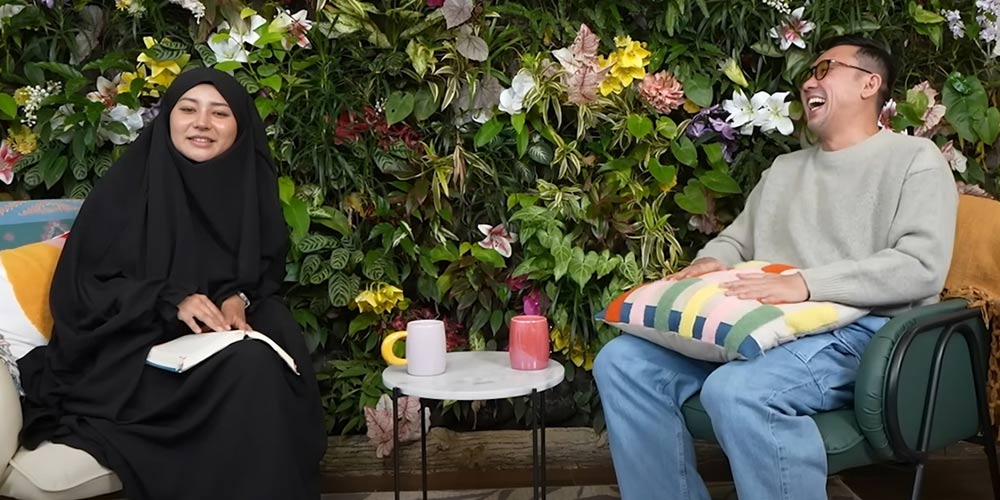
When asked by Denny what advice she would give her past self from five years ago, she responded:
The lesson is universal: no matter a person’s history, they are never beyond hope.
Nuray’s journey is living proof that transformation is not only possible, but it’s real.
"Indeed, Allah will not change the condition of a people until they change what is in themselves," Nuray said, quoting a verse in the Qur'an, (Ar-Ra'd chapter, verse 11), which she said is one of her most favorite verses.