
OnlyFans began in 2016 as a straightforward subscription platform created to help creators earn money directly from their audiences. Founded by British entrepreneur Tim Stokely, it was originally a space for fitness instructors, chefs, musicians, and lifestyle creators to share exclusive content behind a paywall.
Its trajectory shifted dramatically when adult creators embraced the platform, transforming OnlyFans into one of the most profitable user-generated content ecosystems in the world.
By 2020, the shift was unmistakable. As the pandemic pushed millions of people toward digital income sources, OnlyFans became a cultural phenomenon and a financial powerhouse. By the time founder Leonid Radvinsky took full control, the service was generating billions of dollars while operating with one of the leanest full-time teams in the tech industry.
This ultra-lean structure is now a defining part of the company’s identity.
Speaking at the Web Summit technology conference in Lisbon, CEO Keily Blair told Masters of Scale host Jeff Berman that OnlyFans still runs with just forty-two full-time employees, even as it brings in roughly seven billion dollars in annual revenue.
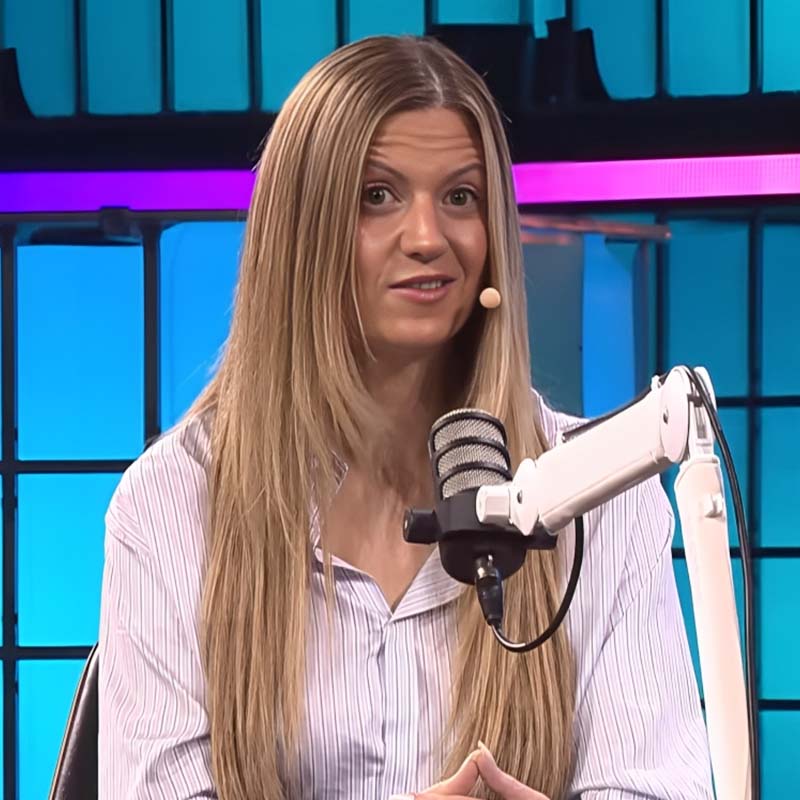
Blair, who stepped into the role in 2023 after a career in tech and compliance law, said she is proud to lead what she calls an extraordinarily efficient and capable team. And her secret, she explained, is simple: OnlyFans does not hire middle managers.
"And we do not have that sort of squidgy layer of middle management in the middle, because nobody's ever had a really good middle manager in my experience."
To her, traditional corporate structures slow companies down instead of propelling them forward.
OnlyFans therefore recruits senior employees who can operate autonomously and junior employees who are fast learners, doers, and problem-solvers. What matters is mindset and ability, not lengthy résumés or multiple layers of approval.
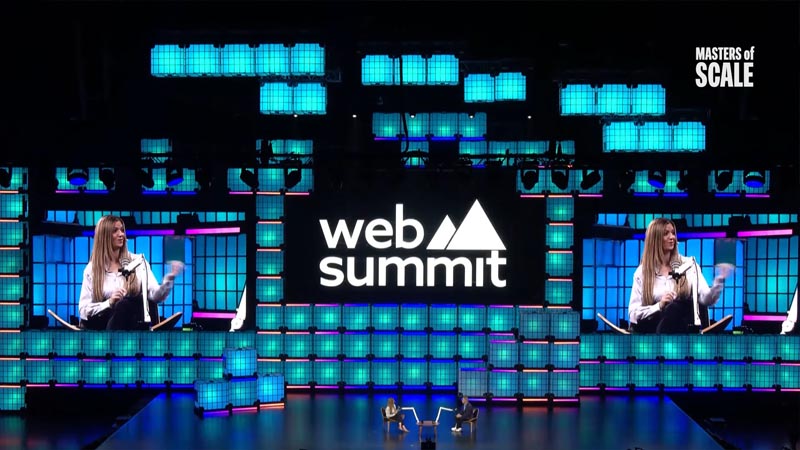
Every employee at OnlyFans is an individual contributor, given both the freedom to act and the responsibility to deliver.
Someone can be a "team of one," Blair said, and still produce exceptional results because performance, not the size of one’s department, is what the company values.
In turn, this creates an exceptionally high revenue-per-employee ratio compared to major technology and social media companies. With just 42 employees, OnlyFans' revenue-per-employee is approximately $37.6 million. This makes it one of the most revenue-efficient companies in the world.
In comparison, Nvidia with its tens of thousands of employees, only has a ratio of $3.6 million, despite being worth around $5 trillion. Other comparisons, Apple has around $2.4 million; Meta (Facebook, Instagram) with $2.2 million; Google (Alphabet) with $1.9 million, and Microsoft and OpenAI at around $1 million.
This kind of efficiency and cutting cost by not having a middle layer has been initiated by others as well, where companies have also trimmed layers of their management in recent years to also speed up execution, especially as AI reshapes workflows. But none of them come close to the extreme minimalism of OnlyFans, where just forty-two employees support a platform serving over 400 million registered users and around 4 million active creators worldwide.
Despite the staggering revenue-per-employee ratio, Blair emphasizes that the company’s success comes from its structure, not in spite of it.
OnlyFans doesn’t create content and doesn't employ its creators. Instead, it builds the infrastructure, compliance systems, payment rails, platform stability, and global support that enables millions of independent creators to monetize their work.
The creators power the ecosystem; the forty-two employees keep the machine running, secure, and scalable. When the company needs additional expertise, Blair prefers hiring short-term contractors rather than building permanent layers of management.
Flattening an organization can deliver benefits: lower operating costs, less bureaucracy, and faster decision-making on paper.
Junior employees may also enjoy more autonomy when there’s no mid-level gatekeeping. But in most companies, this structure comes with major drawbacks. Executives can become overwhelmed by too many direct reports and too many operational responsibilities. Junior staff may struggle without coaching, guidance, or clear prioritization.
Communication often breaks down because no one is translating high-level strategy into actionable steps.
This creates bottlenecks at the top, inconsistencies in execution, slower delivery, declining innovation, and ultimately, cultural deterioration. Burnout rises, turnover spikes, and the model becomes unsustainable.
A managerless structure only tends to work well in smaller, highly disciplined companies with standardized workflows, deeply transparent cultures, and strong processes.
Even famously "flat" organizations eventually add layers as they scale. Middle managers, it turns out, perform crucial functions that become unavoidable as complexity grows.
Yet OnlyFans remains a rare outlier: one of the few companies that has made this model work at massive scale. Its business structure mirrors its creator-first philosophy: independence at the edges, minimal control at the center, and efficiency everywhere in between.
What sounds radical for most organizations has proven highly effective for OnlyFans. In an industry where hierarchy often bogs companies down, OnlyFans shows that sometimes the most powerful results can come from the smallest teams.
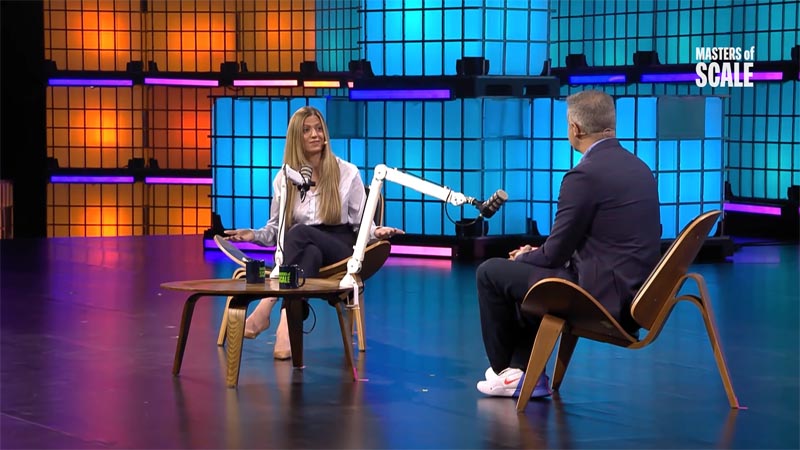
And speaking about how OnlyFans is now famously (and infamously) known for, which is a place where adult content thrives, Blair explained that the platform's relationship with adult content creation by first clarifying that the site was never created as an adult content site but rather as a platform for adults (over 18).
Adult content creators quickly realized OnlyFans was the only platform built with direct monetization in mind, offering a fair 80/20 revenue split where creators keep 80% of any payment.
She noted that adult content creators are "exceptionally savvy, exceptionally smart" but have been "marginalized from other areas of the internet," which is why they gravitated to the platform.
Blair also emphasized the platform's superior safety and controls compared to traditional social media, where adult content often appears without regulation and is accessible to minors.
She detailed the rigorous creator verification process, describing it as "Bank KYC on steroids," which requires government ID, bank details, and third-party age assurance.
She stated that all content is moderated, and because both creators and fans are verified, it creates a safer "true social network".
Furthermore, she rejects the idea of a stigma, calling the platform's role in society something to be "incredibly proud of". She advocates for realism, suggesting that society would be "better and healthier" if it acknowledged that most adults look at content online and supported it being consensual, ethical, monitored, and made safely.