Now, the era is when large language models (LLMs) are no longer confined within research labs and have been crucial in many people's everyday lives, with unprecedented growth speed that pretty much no technological advancements had ever achieved.
Since the public release of ChatGPT marked a turning point in AI, what had largely been a technical arms race between a handful of labs suddenly became a consumer phenomenon, forcing every major technology company to rethink its strategy, scale, and timelines.
Microsoft’s early bet on AI placed it in a distinctive role. Its 2019 investment in OpenAI positioned the company as a quiet infrastructure partner rather than a loud, front-facing innovator. Under the terms of that deal, OpenAI would push toward artificial general intelligence, while Microsoft supplied the compute, cloud infrastructure, and capital to make that possible.
In return, Microsoft received exclusive licensing rights to OpenAI’s models and embedded them into products like Azure and, later, Copilot. At that stage, Microsoft’s AI ambitions were largely constrained by contract: it was enabling the revolution, not openly leading it.
That relationship began to change as AI adoption exploded.
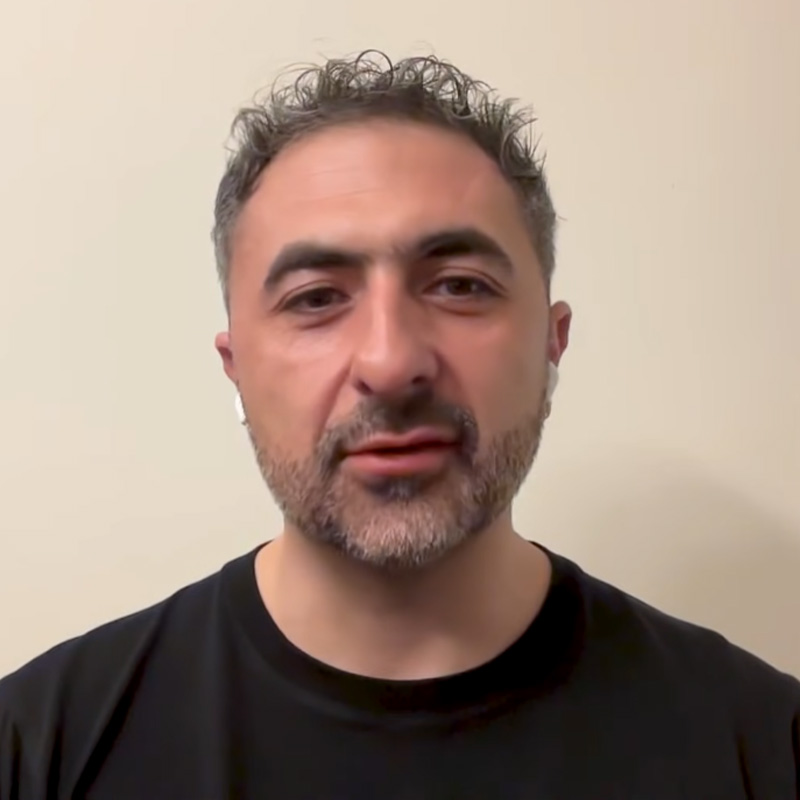
Speaking with Mishal Husain from Bloomberg, Mustafa Suleyman said that Microsoft still licenses everything OpenAI builds through 2032. But by late 2025, OpenAI started sourcing compute beyond Microsoft, signing massive data-center deals with other partners to fuel its growth.
In exchange, Microsoft gained the freedom to pursue AGI and superintelligence independently.
What this means, the company is no longer limited to being the platform for someone else's intelligence product. Instead, it's now freely able to build its own superintelligence team, methodologies, and long-term research agenda.
This shift unlocked the full mandate of Mustafa Suleyman as Microsoft’s AI chief.
To do this, Suleyman explained the Microsoft is playing a different game from many of rivals.
Rather than racing loudly to be first, it is positioning itself as the most stable, trusted, and institution-ready AI company. Central to this approach is the idea of "humanist superintelligence." Microsoft has drawn clear red lines, stating it will not release systems that can self-improve, set their own goals, or act autonomously unless containment and alignment are proven.
Rather than relying on a single killer chatbot, Microsoft is embedding AI across its entire ecosystem. Copilot is becoming a layer that runs through Windows, Office, GitHub, and enterprise workflows, turning AI into a daily companion and assistant rather than a standalone destination. The goal is not just to impress users, but to make AI indispensable in everyday work and decision-making.
Suleyman also emphasizes that he doesn't want to poach rivals' staff the way Meta CEO Mark Zuckerberg does.
In an industry often driven by speed and spectacle, this emphasis on restraint is a deliberate differentiator.
Microsoft’s infrastructure advantage underpins this strategy.
With tens of gigawatts of compute already up and running, the company is already having an edge, in a way that only a few competitors can ever match. With its massive resources, it can train its own frontier models, or it can sell inference and compute to others. This reduces the all-or-nothing risk faced by companies spending hundreds of billions of dollars solely on training ever-larger models.
And according to Suleyman, Microsoft is able to make use of its traditional strength in cloud infrastructure, and turn it into long-term leverage.
The contrast between then and now is stark.
Then, Microsoft was the enabler behind ChatGPT. Now, it is both collaborator and competitor, building its own AI capabilities quietly, carefully, and at enormous scale. While others chase speed, dominance, or spectacle, Microsoft is betting that AI will reshape society over decades, not quarters, and that abundant intelligence only matters if humans remain firmly in control.
In the so-called “broligarchy,” often shorthand for the world of tech bros, the reality is more complex than the label suggests.
While not actually all male, this circle of power is often portrayed through dystopian satire as a set of composite characters modeled on real-life billionaire tech leaders. These figures are not only at the helm of enormously valuable companies; they are also influential, highly capable individuals shaping the direction of a technology that is transforming the world.
Suleyman is careful to acknowledge talent across this landscape.
He praises Mira Murati, the former CTO of OpenAI, as "one of the best people in the field." He speaks of Demis Hassabis, CEO of Google DeepMind, as both "a great scientist" and "a great thinker," recognizing his deep intellectual contributions. Of Sam Altman, the CEO of OpenAI, Suleyman uses the word "courageous," underscoring the scale of ambition and risk involved in building at the frontier of AI. When reflecting on Elon Musk, he offers a more colorful assessment, describing him as a "bulldozer" with near-superhuman ability to bend reality to his will, someone who repeatedly attempts what seems impossible and often succeeds, even if guided by a different set of values.
In all, Suleyman loves how many in the competition can go "nuts" and "loves failure." And in fact, they're all dependent, at least in one way or another.
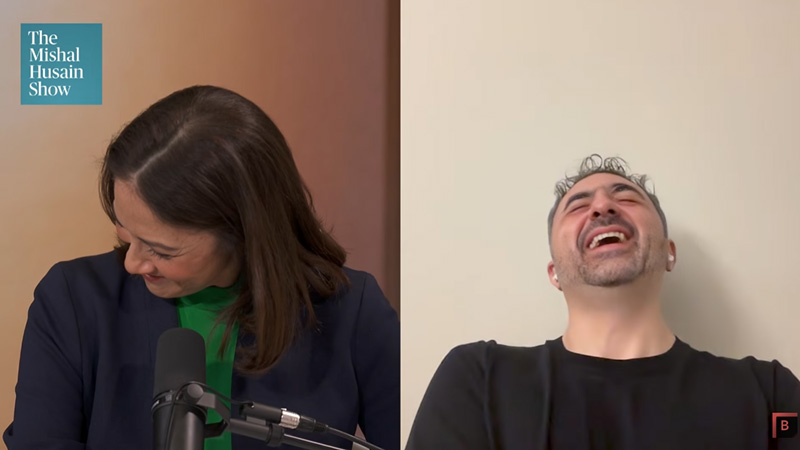
And not just that, because many of them are also investing on one another, which in turn provides stimulus to get things going.
"If we do, then I think the world is going to look very, very different. We will have abundant intelligence on tap."
Taken together, these portraits highlight how fierce and unforgiving the AI competition has become.
The pace of advancement is accelerating faster than any previous technological shift, compressing decades of progress into just a few years. Yet despite the intensity of the rivalry, the reality is clear: no single individual or company can thrive in isolation. The future of AI is being forged through a tangled web of competition, collaboration, and shared responsibility.
In other words, in this rivalry, no single being can thrive alone.














































































































































































































































































