Nvidia has spent the past decade transforming from a gaming-focused chipmaker into the defining powerhouse of the AI era, and that rise has reshaped markets, technology, and expectations in ways even its founder and CEO has acknowledged are difficult to manage.
In an all-hands meeting, Jensen Huang addressed the company's earnings. He said that "the market did not appreciate" Nvidia's "incredible" and knockout numbers. Huang said the company was in a no-win situation amid AI bubble chatter. Despite delivering record-shattering results and pushing back against swelling narratives of an AI bubble, Nvidia’s stock initially jumped and then fell, reflecting investor unease around the entire AI trade.
Huang explained that expectations had risen so high that any deviation, even a minor one, could trigger overreaction from the market.
He nodded to online chatter about Nvidia’s enormous influence on both the economy and the technology landscape
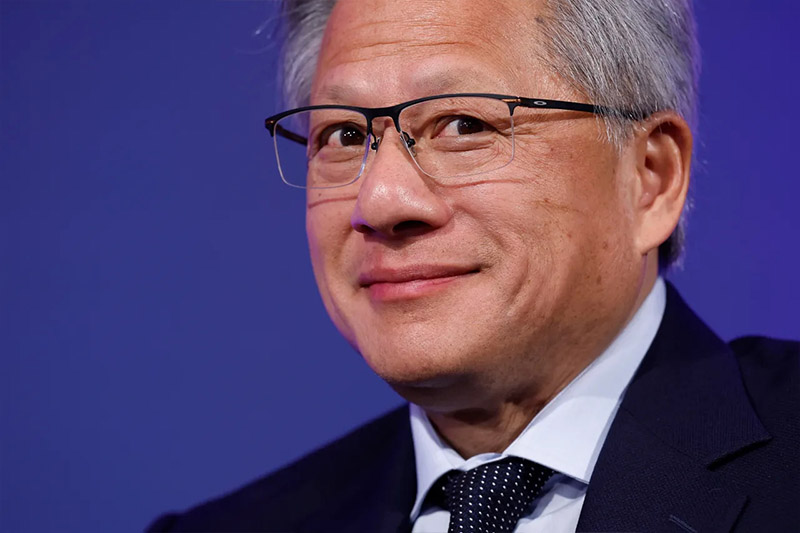
"If we delivered a bad quarter, if we're off by just a hair, if it just looked a little bit creaky, the whole world would've fallen apart. There's no question about that, OK? You should've seen some of the memes that are on the internet. Have you guys seen some of them? We're basically holding the planet together, and it's not untrue."
Ten years ago, few believed a GPU company could rule the world. Now, Nvidia is the most valuable public company on Earth, while also being the architect of the AI era.
Back in June 2024, Nvidia briefly surpassed Microsoft to claim the title of world’s most valuable company with a market cap of $3.34 trillion. By November 2025, it holds steady above $3.6 trillion, or more than the GDP of Germany and Japan combined. This isn’t luck. It’s the result of a decade-long bet that paid off in ways even CEO Jensen Huang couldn’t have scripted.
Among the things Nvidia successfully managed, it shortened the training time for GPT-3 (175B parameters), on Nvidia A100 GPUs from 355 years on CPU alone, to just 34 days. It then helped the creation of xAI’s Colossus supercluster of 100,000 H100 GPUs. It was deployed in 19 days using Nvidia's pre-configured racks and InfiniBand networking. Elon Musk called it “the fastest AI training system ever built.” Nvidia is also known to build the Blackwell GB200 “superchip” (GPU + CPU), which consumes 1,200 watts, but replaces 60 traditional servers, capable of saving data center power by 95%. It also managed to secure 40% of TSMC's CoWoS capacity, which helped it survive the global chip shortage in 2021-2023, leaving rivals scrambling. It helped Meta developed LLaMA 3 70B model, making it run 40% faster on its chip than on AMD ROCm, even with identical hardware.
In other words, Nvidia didn’t just ride the AI wave. Instead, with Huang, the company built the ocean.
This made Nvidia the most exclusive company, briefly surpassing the previously unimaginable $5 trillion market cap.
But still, Huang thinks that "the market did not appreciate" the company despite having a record-breaking quarter.
"The market did not appreciate our incredible quarter," Huang said, less than 24 hours after Nvidia reported another set of record earnings and said it had “visibility” into half a trillion dollars of revenue lined up for the rest of 2025 and 2026.
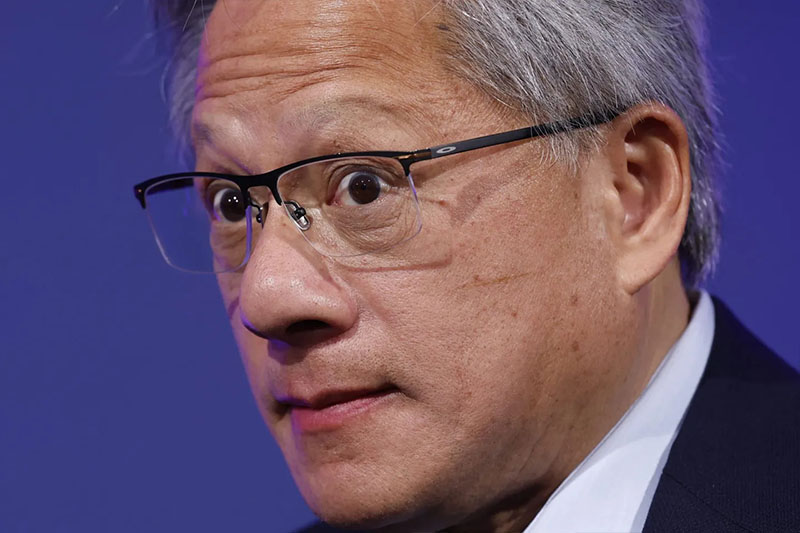
While Jensen Huang said that Nvidia was helping the U.S. avoid recession, he reinforces how dramatically the company's importance has been perceived
Even with pride in Nvidia’s performance and employees, Huang acknowledged how the company’s size influences expectations, including its market valuation. He joked about what he called the "good old days" when the company had a $5 trillion market cap.
"Nobody in history has ever lost $500 billion in a few weeks," Huang said.
"You've gotta be worth a lot to lose $500 billion in a few weeks."














































































































































































































































































