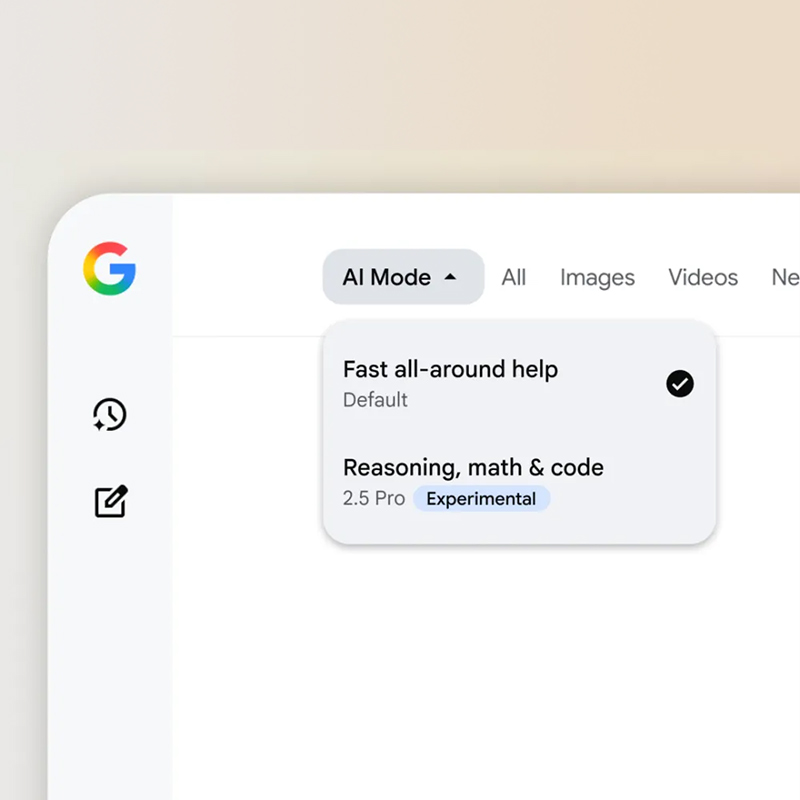
Google Brings Gemini 2.5 Pro To AI Mode, Giving Users Access To Its 'Most Intelligent AI' Inside Its Search Engine
Almost three decades ago, two Stanford doctoral students gave birth to a search engine that would change the world.

Almost three decades ago, two Stanford doctoral students gave birth to a search engine that would change the world.

Not long ago, large language models (LLMs) felt like charming party tricks—AI chatbots capable of composing essays, or even playfully bantering in Shakespearean English.
Technology has evolved rapidly—and among its most transformative breakthroughs is artificial intelligence.
The dramatic rise of large language models (LLMs) shows no signs of fading, as new players continue to emerge from obscurity and make a powerful impact.

AI is moving at a breakneck pace, and with all of its might, Google is determined not only to remain relevant but also to stay ahead of the competition.

When demands shift, businesses must adapt, or risk losing their appeal.

The market is always open for new players. But not all players can shine.

The rapid rise of LLMs stems not just from tech potential or demand, but from the egos of their creators.

In the arena of web browsers—dominated by giants like Google Chrome, Microsoft Edge, and Mozilla Firefox—Opera quietly holds its ground as the perennial underdog.

In the ever-evolving world of web browsing, speed and responsiveness are king. And if people thought Microsoft Edge was already fast, think again.