For decades, companies have been built on the same foundation: hierarchy. Managers oversee teams, information flows up and down the chain, and decisions are made at the top before filtering across the organization.
It's a structure that has endured for centuries, evolving only gradually with each new wave of technology.
But that foundation is now being questioned.
As AI becomes more capable, a growing number of tech leaders are beginning to rethink what a company should look like in the first place. Instead of relying on layers of management to organize and distribute information, AI offers a new possibility: systems that can understand, process, and surface insights from everything happening inside a company in real time.
This shift raises a fundamental question: if AI can handle the flow of information more efficiently than humans, what role does hierarchy still play?
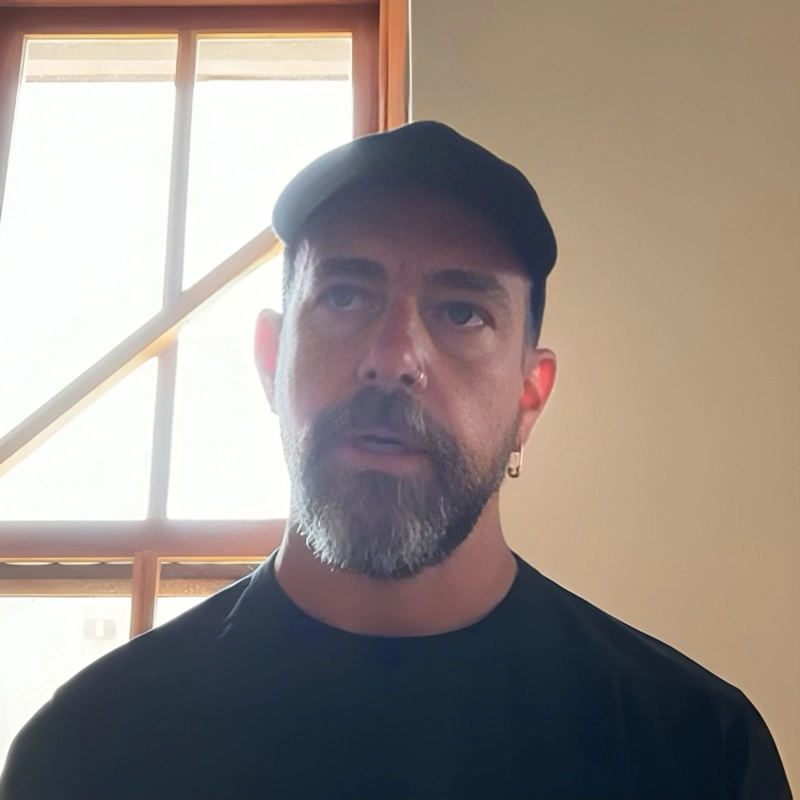
Jack Dorsey suggests that companies should be treated like a "mini-AGI," in the sense that they already function as a form of collective intelligence.
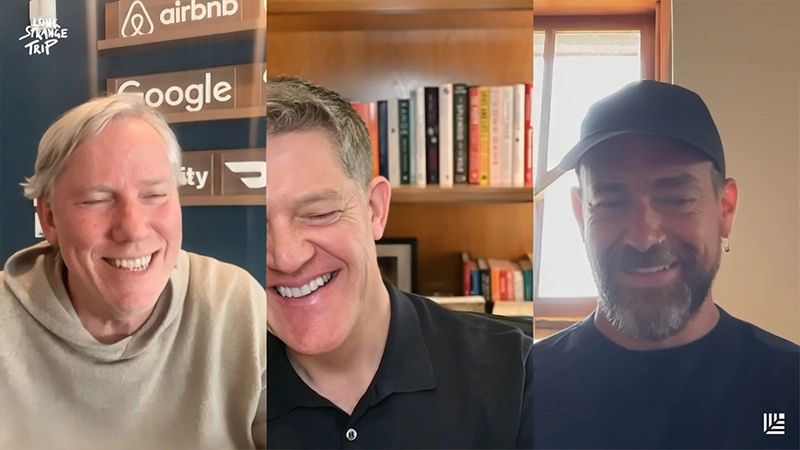
In a podcast by Sequoia Capital, Jack Dorsey is seen with Brian Halligan, HubSpot co-founder and podcast host, and Roelof Botha, Sequoia Capital partner and Block board member, discussing trust, leadership, and bold structural change.
To really differentiate like if I were starting a company today, I would be so excited about how quickly I could build things and how quickly I could prototype and get things out to customers."
He suggests that currently, the processing information, making decisions, and adapting over time are limited by inefficient structures like hierarchy and fragmented communication.
By applying AI systems on top of all the data a company generates, he argues that this “organizational intelligence” can be made more coherent, accessible, and responsive. In such a model, anyone within the company could interact with this shared intelligence directly, rather than relying on layers of management to interpret and distribute information.
To eliminate the layers, Dorsey is moving his company, Block, towards only three functional roles:
- IC (Builder/Operator): People using tools to build, augmented by AI agents.
- DRI (Directly Responsible Individual): Those who own customer outcomes and strategy.
- Player Coach: Replacing traditional managers, these people build human capacity by doing the work alongside their team.
In this model, the CEO does not sit atop a pyramid but rather functions as the "Architect" of the company's collective intelligence.
Dorsey envisions the CEO (and the leadership team) as rare individuals who must embody all three roles simultaneously. They are builders, strategic owners, and mentors who ensure the company’s "world model" remains aligned with its core values. The primary focus shifts from managing information flow between layers to exercising high-level judgment and taste.
Ultimately, the CEO's job is to manage the alignment between the humans at the edge of the organization and the AI core at the center.
By removing the "limiting factor" of a rigid corporate roadmap, the CEO ensures the company can react in real-time to customer signals. In this "circle" structure, the CEO acts as a final checkpoint for excellence, ensuring that the organization’s output remains unique, opinionated, and fundamentally relevant to the world.
The goal is to transform a company from a collection of siloed teams into a unified, continuously learning system that can reason about itself and operate more effectively.
To really differentiate like if I were starting a company today, I would be so excited about how quickly I could build things and how quickly I could prototype and get things out to customers."
In summary, his manifesto, "From Hierarchy to Intelligence," suggests that with AI, the traditional corporate hierarchy is nearing its end, replaced by what he calls "Dorsey Mode," a circular, intelligence-led structure.
By treating a company as "mini-AGI," leaders can move beyond the "commander and control" style of the past.
In this new era, information is no longer a tool for internal politics or gatekeeping; instead, every artifact of work becomes part of a collective, legible intelligence that empowers everyone from the CEO to the newest builder to make context-rich decisions with unprecedented velocity.
His idea is that, the true differentiator for any organization will not just be the technology it adopts, but the human "judgment and taste" that steers it. While AI can handle the vast majority of execution and data synthesis, it is the human element that provides the creative spark and the ethical alignment necessary to build something truly unique.
By embracing AI as a foundational input rather than just a productivity co-pilot, companies can move away from being "copies of copies" and instead focus on solving the most profound needs of their customers in real time.














































































































































































































































































