
As Apple approaches its 50th anniversary in 2026, CEO Tim Cook has been reflecting on what has actually driven the company’s success across half a century of technology shifts.
In interviews tied to the milestone, Cook emphasized that Apple's strength does not come primarily from patents, products, or even breakthrough technology, but from the people and culture inside the company. According to him, intellectual property matters, but it is ultimately created by talented teams working within a culture that encourages innovation.
Cook argued that culture is difficult for competitors to replicate because it takes years to build the right organization, hire the right people, and maintain the same values across generations of employees.
In other words, according to Cook, there are two things that are "essential" to Apple: people and culture.
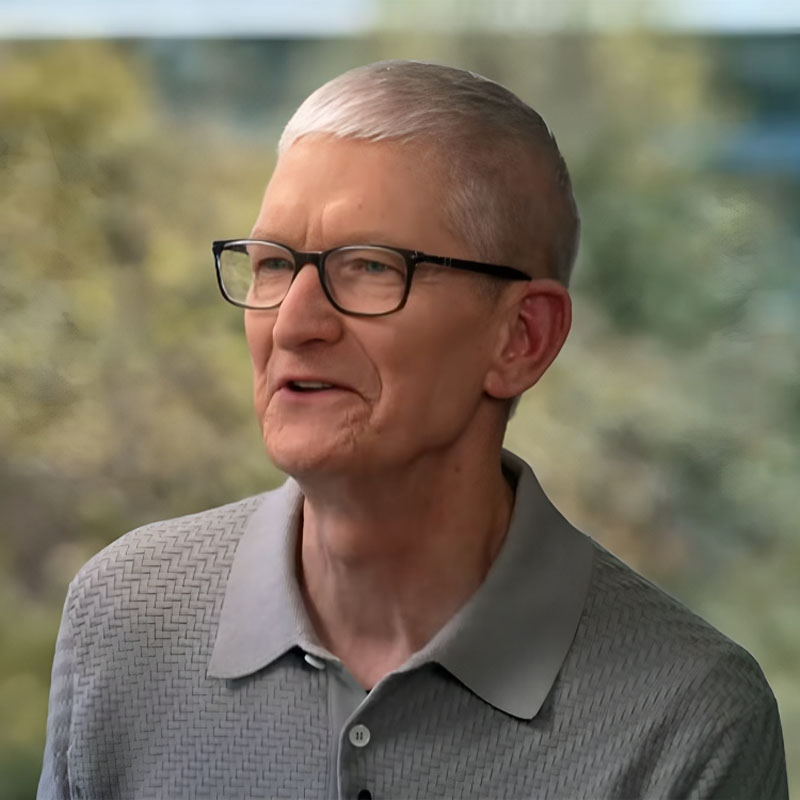
CBS Sunday Morning correspondent David Pogue interviewed Cook ahead of the company's 50th anniversary on April 1, 2026, in which Cook said that:
Cook also described Apple as occupying a uniquely singular position in the tech industry, saying the company operates in what he called a "party of one."
In his view, the combination of design philosophy, integrated hardware and software, and the long-standing principles established in the company’s early days create something that other companies struggle to copy. Those principles, originally championed by Steve Jobs, remain embedded in Apple’s DNA decades later and still guide the company’s approach to building products.
Cook has led Apple since 2011, overseeing a period of enormous growth and profitability, with the company expanding its ecosystem of devices and services while maintaining the tightly controlled user experience that defines the Apple brand.
Cook’s reflections come at a symbolic moment for the company founded in 1976, which evolved from a small startup building personal computers into one of the most influential technology companies in the world.
Over the decades, Apple has repeatedly reshaped consumer technology through landmark products such as the Apple II, Macintosh, iPod, and iPhone, each redefining how people interact with computers, music, and smartphones.
The consistent thread behind these products has been Apple’s emphasis on simplicity, design, and control of the full ecosystem, an approach that Cook continues to defend as key to Apple’s identity and long-term success.
Tim Cook has long been open about his admiration for Steve Jobs, often describing the late Apple co-founder as one of the most extraordinary leaders he has ever encountered.
Looking back at Apple's history, Cook recalled the difficult period that followed the power struggle between Jobs and then-CEO John Sculley in the mid-1980s. The conflict ultimately forced Jobs out of the company he had helped build, marking the beginning of a long and uncertain chapter for Apple. Without its visionary co-founder, the company struggled to find direction.
Apple gradually lost momentum in the rapidly evolving personal computer industry.
Jobs remained away from Apple for more than a decade, and during those years the company’s situation became increasingly fragile. Cook later reflected on just how dire things were at the time.
"It was bleak, to be honest," said Cook. "The company had very little cash, and we had lost our way."
Apple cycled through strategies and leadership decisions that failed to reignite the innovation and clarity that had once defined the company.
The turning point came in 1997 when Jobs returned to Apple after the company acquired his startup NeXT. His comeback marked the beginning of a dramatic turnaround. One of the key decisions Jobs made soon after returning was hiring Cook to lead Apple’s operations. Cook, who had previously worked at IBM and Compaq, quickly became one of Jobs’ most trusted lieutenants as Apple rebuilt its product line and operations.

Reflecting on that moment, Cook said the experience of working with Jobs left a lasting impression on him.
"I saw in Steve something I'd never seen in a CEO before. He is a once-in-a-thousand-years kind of person," Cook said.
Apple’s recovery during that period was also supported by an unlikely ally: Bill Gates.
At the 1997 Macworld conference, Jobs announced that Microsoft would invest $150 million in Apple and continue developing Microsoft Office for the Mac platform. The partnership was controversial among Apple loyalists at the time, given the fierce rivalry between the two companies, but it provided Apple with much-needed financial stability and credibility during a critical moment.
The investment, combined with Jobs’ renewed leadership and the operational discipline Cook helped bring to the company, played an important role in setting the stage for Apple’s eventual resurgence.
Meanwhile, Apple co-founder Steve Wozniak offered a more grounded reflection on the company’s origins.
In a separate interview, also by CBS Sunday Morning, he looked back nearly five decades after building the early Apple computers alongside Jobs. The man, who also goes by the name "Woz," said the team never believed they were predicting the future of computing.
Instead, their goal was simply to build something better than what existed at the time. As he explained, "we didn't foresee the future the way it turned out," but they focused on taking a step ahead of everyone else in the present.
That mindset, and that incremental innovation driven by curiosity and engineering, helped spark the personal computing revolution and laid the foundation for the company that Apple would eventually become.