What began in Wuhan, China, people concern about the spread of the coronavirus.
On the internet from people all around the world, discussions about this contagious Wuhan coronavirus have spread. And here, many people read the news, look for information and communicate through Facebook and Twitter.
The two social media companies anticipate the surge in the trend, and outline how they put proactive measures to ensure that users get the information from accurate sources, and away from hoaxes. The two companies want to steer people away from conversations that are hijacked to spread fear and fake news.
Facebook relies on its fact-checking teams to monitor related coronavirus conversation to flag inaccurate posts, saying that:

Facebook also said that it is removing content with false claims or conspiracy theories which have been flagged by health authorities.
In addition, Facebook is also pushing dedicated News Feed notifications on the coronavirus to users in relevant regions, as guided by the World Health Organization (WHO), while adding similar search results prompt related to the outbreak.
"When people search for information related to the virus on Facebook or tap a related hashtag on Instagram, we will return a dedicated information module with credible information."
More attempt has been made on Facebook's side, as the company is providing free advertising credits to relevant organizations which are looking to run coronavirus education campaigns on Facebook and Instagram. The social giant is also providing population density maps and other data.
As for Twitter, the social media said that there has been more than 15 million tweets about the coronovirus outbreak until this date, and the discussion is gaining pace very fast.
While Twitter said that there isn't any "significant coordinated attempts to spread disinformation at scale about this issue" on its platform, the company has allocated resources "to ensure that trends, search, and other common areas of the service are protected from malicious behaviors."
In addition to monitoring the various discussion threads, Twitter is also adding a new search prompt in several languages, to guide users who search for the term "coronavirus", and lead those searches to official resources and accurate information about the outbreak.
And to prevent people from finding hoaxes, Twitter is also suspending its auto-suggestion feature.
The company said that it is working with official in health groups to provide any assistance.
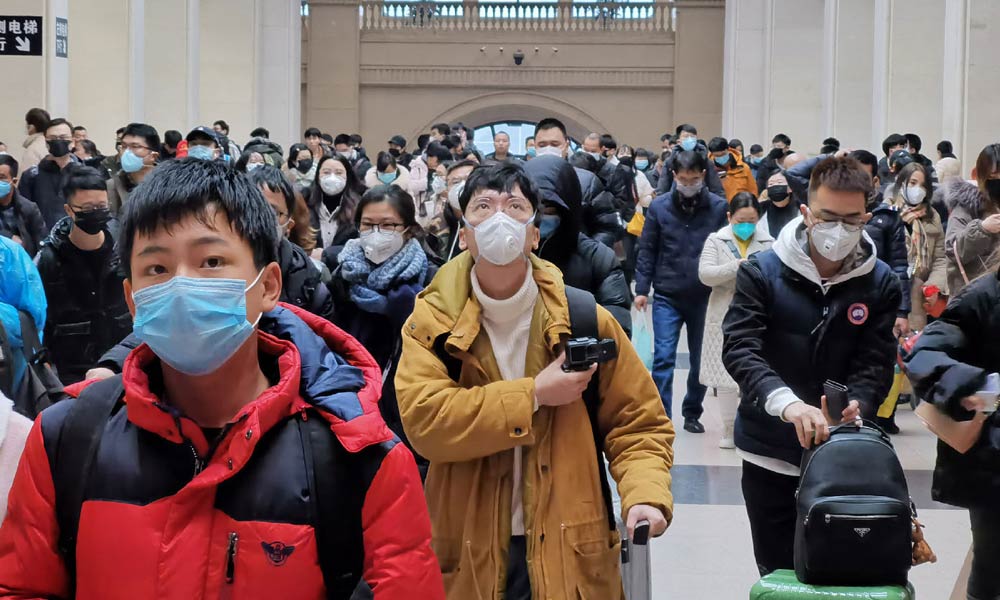
The coronavirus (2019-nCoV), is a contagious virus that causes respiratory infection with symptoms that may include fever, dry cough, and shortness of breath. The virus shares similarities to SARS-CoV (79.5%) and bat coronaviruses (96%).
The first person infected with this virus occurred in early December of 2019, with the outbreak first detected in Wuhan, China, in mid-December. Quickly, the virus subsequently spread to
other provinces in China, and to more than twenty other countries in Asia, Europe, North America, and Oceania.
As of 31 January 2020, there were 9,776 confirmed cases of infection, of which 9,658 were within mainland China.
Infection that occurred outside China, until this date, were caused by people who have previously traveled to Wuhan, or have direct contact with those who have traveled from the area. As of 31 January, the death toll of this virus has reached 213.
Many companies that have offices in China have started banning travels, in and out.
With the number of infected people and fear that increase, given the significant role of the two social media platforms as broadcasters of information, Facebook and Twitter want to be the place where people see legitimate information.
Their combined efforts on addressing coronavirus misinformation by monitoring relevant mentions and trends should help both platforms enhance their detection and removal operations, which could lessen the impact of misinformation.