
The launch of a space rocket is extremely complex and a dangerous operation.
This is why building such marvel requires a strong understanding of physics. Then, it also requires aerospace engineering and rocket science, as well as other engineering disciplines such as mechanical engineering, electrical engineering, and computer engineering are also essential. Then, mathematics is necessary, computer science and lots more. On top of that, funding and a large laboratory space is also required.
Elon Musk's SpaceX company started small, but it managed to gather enough resources and talents, to then show the world how a cheaper commercial space launch is possible.
But mistakes can happen, and Mark Zuckerberg isn't happy at all.
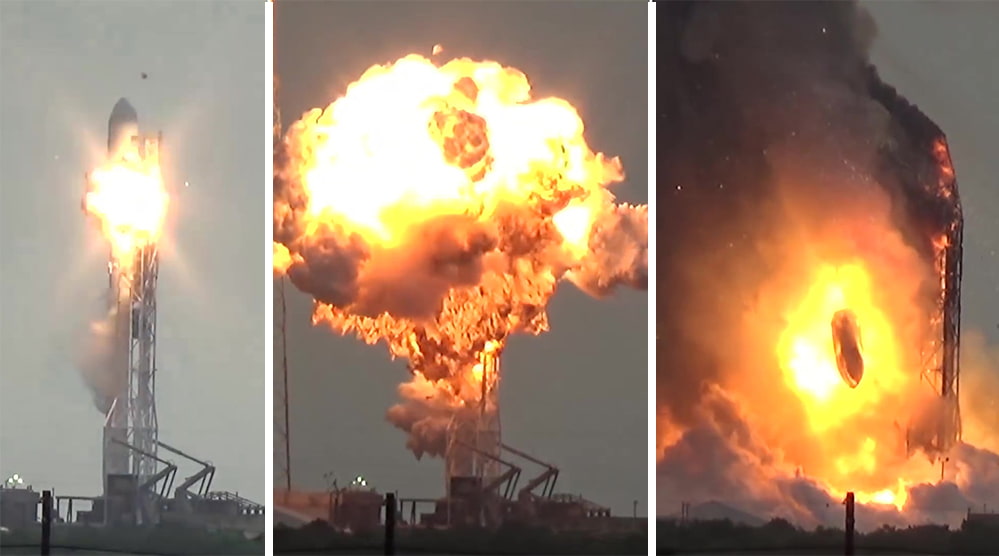
This is because a planned rocket launch botched.
SpaceX's Falcon 9 rocket exploded on the launchpad on September 1 at Cape Canaveral, Florida, and destroyed Facebook's satellite worth $200 million.
Still working on the Falcon fireball investigation. Turning out to be the most difficult and complex failure we have ever had in 14 years.
— Elon Musk (@elonmusk) September 9, 2016
According to SpaceX, this happened because of an "anomaly" caused when the extremely cold helium that made carbon fibers and aluminum to cool at different rates on the second of the rocket's two stages. Because of this, the material that shrunk at a different rate opened gaps between the two layers of overwrap, where liquid oxygen escaped and got trapped, it said.
Because of this, one of the protective layers failed.
In the end, static ignited the trapped oxygen, setting off a chain of catastrophic explosions, explained SpaceX.
To find the cause, SpaceX concentrated all of its engineering efforts on the analysis of available data, amassing thousands of engineering-hours within a period of only a few days. In a statement issued last Friday, SpaceX said that over 3,000 channels of telemetry and video were being reviewed with particular focus on a time period of only 35 to 55 milliseconds during which the failure manifested.
Support & advice from @NASA, @FAA, @AFPAA & others much appreciated. Please email any recordings of the event to [email protected].
— Elon Musk (@elonmusk) September 9, 2016
While SpaceX operates a number of video feeds from launch pad cameras, the company pinpointed to an unusual pop and click sound, and wondered whether it originated from the rocket or not.
SpaceX even asked the public to send in any recordings (video, photos or audio) of the event.
According to reports, the sound could be heard between five and six seconds prior to the explosion.
Musk thanked NASA, the Federal Aviation Administration and the U.S. Air Force for their inputs in the failure investigation.
Loss of Falcon vehicle today during propellant fill operation. Originated around upper stage oxygen tank. Cause still unknown. More soon.
— Elon Musk (@elonmusk) September 1, 2016
In the past, there have been many accidents and failures involving space rockets.
Despite space rockets have become increasingly reliable, for-profit companies like SpaceX are making rocket launches more affordable, kickstarted the commercial race to space, further forcing the development of more advanced rockets in shorter amount of time.
This has become an essential part of space exploration, and the advancement of human civilization.
In this case, the Falcon rocket was to have launched an AMOS-6 communications satellite for a Facebook-Eutelsat joint venture to extend internet access to underserved parts of the world.
Hearing about the loss, Zuckerberg said he was "deeply disappointed," but promised that "we will keep working until everyone has the opportunities this satellite would have provided."
He stressed that "the problem isn't the money; it's that now it may take longer to connect people."
After announcing the cause of explosion, the company sets next launch date.
SpaceX, a private space venture run by billionaire inventor Elon Musk, said that its engineers have managed to reconfigured the rocket's helium containers, moderating the temperature of the helium, which should eliminate the buckling in the overwrap layer.
Designing and building a rocket capable of achieving 11 kilometers per second, or over 40,000 kilometers per hour, is no easy feat. After checking all the boxes, the rocket should also be able to reach that escape velocity in a controlled manner, and remain safe for anything it's bringing to space.
Even when everything is well-prepared, sometimes, unforeseen incident can happen.
Targeting return to flight from Vandenberg with the @IridiumComm NEXT launch on January 8. Update: https://t.co/15yMaiobpX
— SpaceX (@SpaceX) January 2, 2017