
A selected group of Uber users in Pittsburgh can request an option to ride in a self-driving car. The announcement comes about a year after Uber hired researchers from Carnegie Mellon University's robotics center to develop the technology.
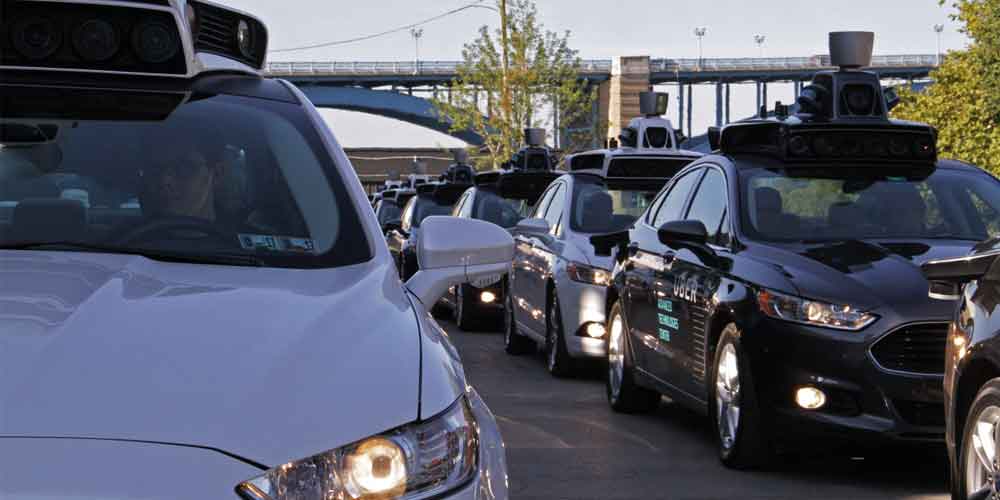
A fleet of 14 Ford Fusions are equipped with radar, cameras and other environment sensing equipment taken from Uber's Advanced Technologies Campus (ATC). The fleet is on the works as a research exercise as Uber wants to learn and refine how self-driving cars act in the real world - including how its passengers reach with a car.
"How do drivers in cars next to us react to us? How do passengers who get into the backseat who are experiencing our hardware and software fully experience it for the first time, and what does that really mean?" said Uber ATC director Raffi Krikorian.
The selected Uber users, accompanied by two Uber engineers who sit at the front seats, can see a live view of the car's vision: blue for road and red for objects. The engineers aren't driving the car; they're there to observe and intervene if necessary.
The Ford Fusions look like ordinary cars. The noticeable difference can be seen when looking at their roofs: an array of sensors. Additional sensors are also located at the sides of the cars. The sensors are laser equipped to collect 1.4 million map points per second, resulting a 360-degree image of the car's surroundings. Cameras and GPS systems are also included in the car.
Pittsburgh is the first place Uber is dispatching its autonomous fleet. Within weeks, it expands to other surrounding places. The slow rollout is because Uber needs to pre-maps the roads as the car travels, including speed limits and other information about real-time detection such as pedestrians and unwanted obstacles.