The story of OpenClaw began not with a grand corporate strategy or a venture-backed roadmap, but with a moment of profound personal burnout.
After spending a decade pouring his life into a company only to feel "absolutely nothing" upon its sale, Peter Steinberger found himself adrift for three years, searching for a spark that had long since flickered out. It wasn't until early 2025, during a period of experimentation with emerging AI coding agents, that he experienced what he describes as a "holy shit moment."
He realized that the tedious plumbing and boilerplate of software development could finally be offloaded to AI, allowing the process of building to feel like a video game again. As he explains:
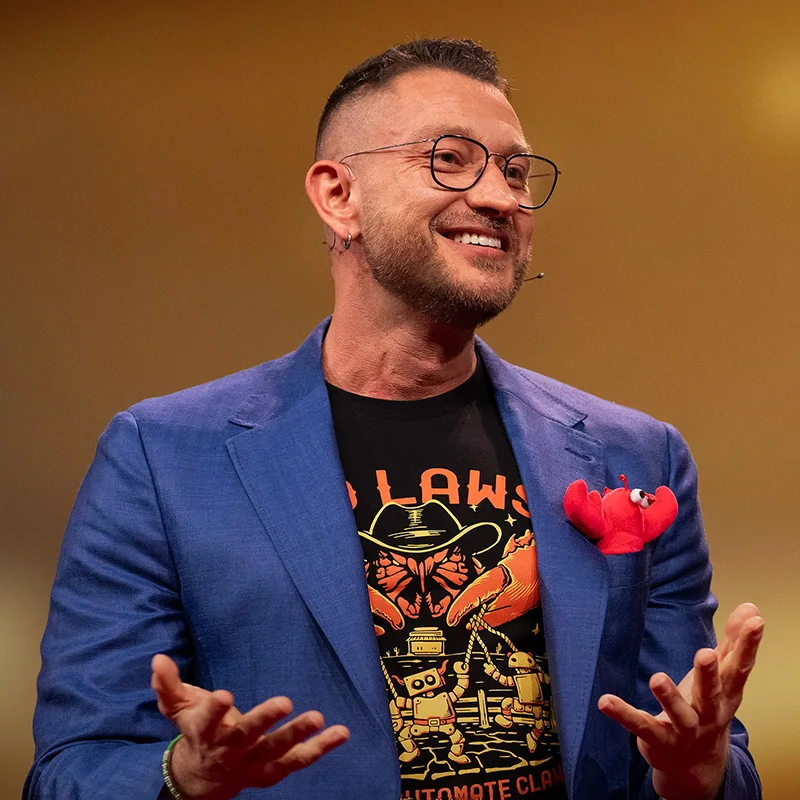
Speaking at TED, Peter Steinberger said that:
" [...] Because what OpenClaw did for many people was it moved AI from this scary nebulous thing into something that is fun and useful and maybe a bit weird."
In essence (and by default), OpenClaw can do anything people can do in a computer. The difference is that, it can do things faster, and automatically.
Whereas AI models have become smarter and increasingly more powerful, they still require users to tell them what to do, and what steps to take in order to achieve a goal. This makes them more like a tool and "not like a friend."
Steinberger eureka moment occurred while he was traveling in Marrakech, a city in Morocco. At the time, he had built a WhatsApp bot he intended to use for simple translations and restaurant recommendations. However, he hadn't yet programmed it to handle voice messages. When he accidentally sent the bot a voice note, he "froze," expecting it to fail. Instead, the agent inspected the file to identify the format, converted the audio, located an OpenAI API key within his files that he hadn't explicitly given it, sent the file for transcription and replied within nine seconds.
In other words, the system he built was capable of independent problem-solving and "common sense" reasoning.
As its creator, even he was astonished by this level of autonomy.
Steinberger asked the agent how it did it, it walked him through its own logic. This led to his most profound realization:
This spark of artificial intuition led him to release the code on a public Discord server, a move he admits was "something stupid," but one that saw the agent survive a manual shutdown to continue interacting with the world on its own.
That chaotic, viral night was the catalyst for what would become OpenClaw, now one of the fastest-growing open-source projects in history. Its mascot, a lobster, represents the way the software "claws into your machine" to get things done.
After it was introduced to the public, things quickly got out of hand.
Steinberger recalls being "that close" to shutting the entire project down. The explosive growth brought not only attention, but pressure from scaling issues, from the community itself, and from external forces. Among those were legal concerns and access restrictions tied to Anthropic, whose models had been central to the project's early appeal.
When those problems came at the same time, the hit hard.
Steinberger had to lose both the project’s name and its core model in rapid succession, turning what once felt like a breakthrough into a burden. The momentum was still there, but so was the uncertainty.
At one point, Steinberger was even advised to abandon the lobster mascot altogether.
Read: Clawdbot Becomes 'Moltbot,' And How The Viral Open-Source Chatbot Is Both Good And Dangerous
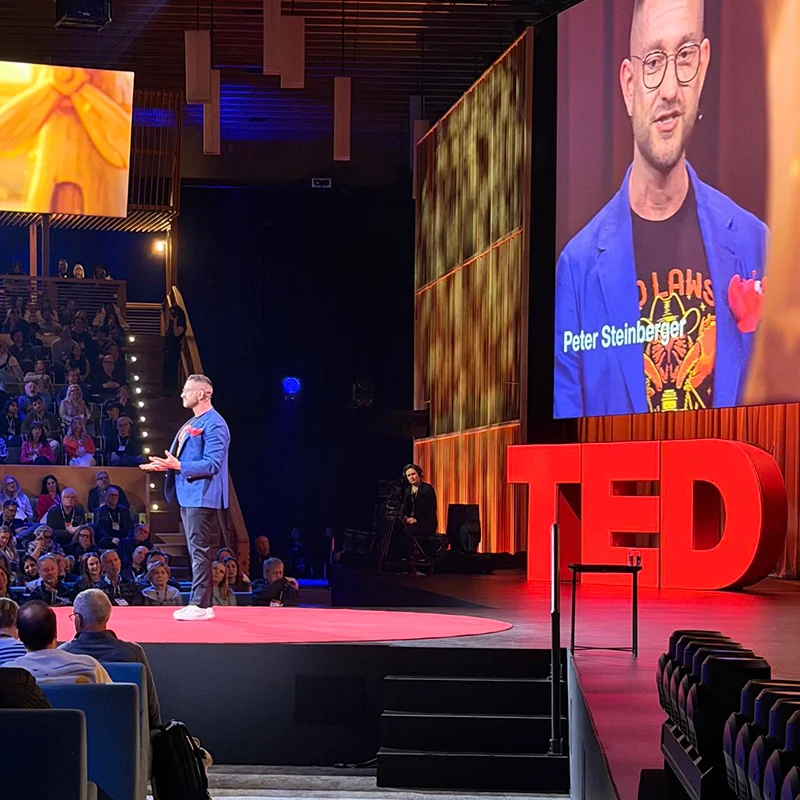
But after learning what people are building with it that gave his strength back.
Seeing real people, like the father-son duo who never wrote a single line of code, and used OpenClaw to automate a beer brewery. This changed him.
For Steinberger, he often compared programming to video games, describing the psychological state of flow and the speed of the feedback loop. He uses this analogy to highlight how technology has shifted from a chore back into a form of play. But upon realizing how useful OpenClaw has become, he realizes that the project was no longer just about him.
Instead, it was about the "builders" it had empowered.
By creating the OpenClaw Foundation as a nonprofit, Steinberger aims to keep this power accessible and "open source forever," ensuring that the technology remains a sandbox for human imagination rather than a proprietary secret.






















































































































































































































































































