In a world that often demands instant transformation and flawless consistency, the journey of Nuray Istiqbal stands as a quiet reminder that growth is rarely sudden. It is not a clean break or a dramatic reinvention, but a slow, rhythmic process shaped over time.
Born in Osaka, Japan, Nuray was once known to millions under her former stage name, Rae Lil Black, during a high-profile career in the global adult entertainment industry. Her life, however, took a profound turn following a series of travels through Southeast Asia, particularly Thailand, Malaysia and Indonesia, where she encountered the warmth of Muslim communities and the sense of peace embedded in their way of life.
By early 2025, she had stepped away from her previous career, embraced Islam, adopted a new name, and literally shocked the internet. It was a transformation that drew widespread attention, not only because of its visibility, but because of the complexity behind it.
As a Japanese woman undergoing such a deeply personal transformation, she now finds herself navigating unfamiliar ground.
Nuray Istiqbal exists between two vastly different worlds: one that shaped her past (but in many ways, led her to where she is now), and another that reflects the person she is striving to become.
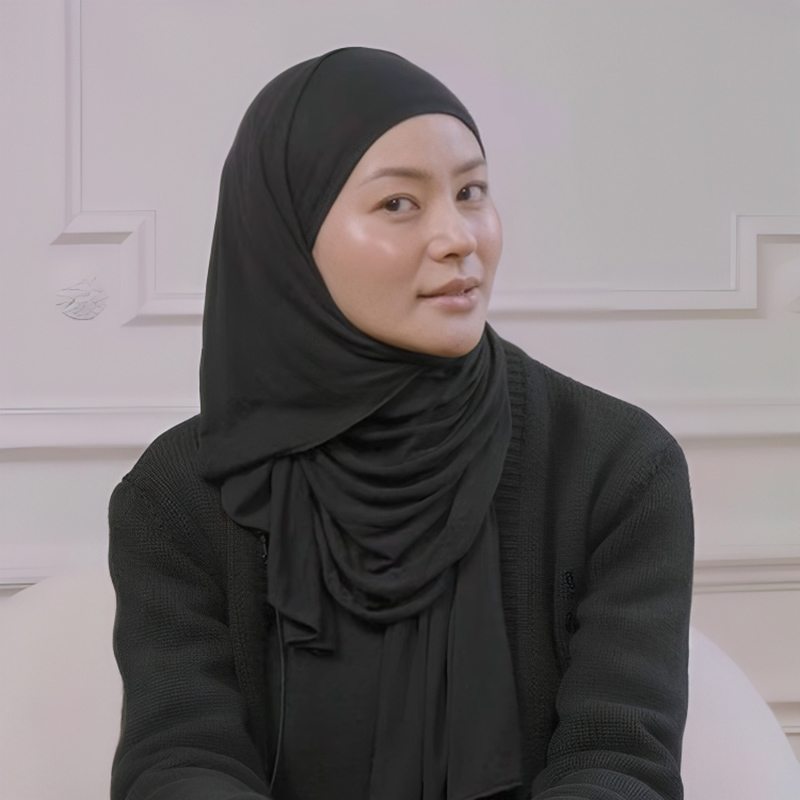
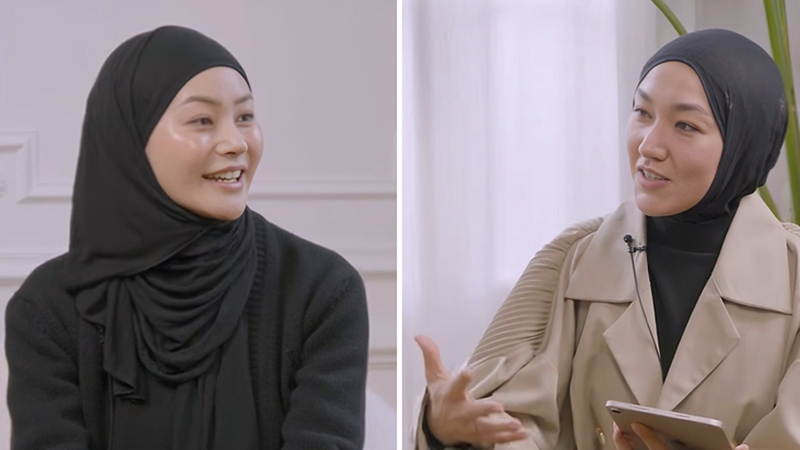
Nuray Istiqbal sat down with Guzelya Marisova on the Luminihsan podcast, said that:
"Also you know I do speak about it too like no it's it's a journey and I do just taking step one by one. But of course, it's a social media that some gets viral some does not. . Let's say we put whole interview online but not everybody sees everything and not everybody remembers everything."
"So people just pick whatever they they want to pick want to pick."
Her present life contrasts sharply with her past, and with that contrast comes constant tension.
There are those who admire and elevate her for who she is becoming, and others who continue to define her by who she once was, sometimes with support, sometimes too much, and others often with judgment. Between these opposing views, Nuray is left to balance her personal convictions with the realities of public perception.
Her story is not one of reaching a "perfect" destination, but of moving through the unspoken challenges that arise when private faith meets public scrutiny.
She has spoken openly about the weight of being seen as a role model in the digital age, where a single image can convince thousands that a journey is complete when it is, in truth, only just beginning. With disarming honesty, she describes the "burden" of expectation, and how people assume she has fully transformed, when she herself knows she is still learning, still growing.
"And then the it creates the space for us trying to get better."
In other words, for Nuray, faith is not a performance. It is a continuous, evolving relationship with Allah: one that unfolds step by step, far away from the rigid timelines imposed by the internet.
It is, as she sees it, a lifelong marathon.
Each step involves both learning and unlearning: learning how to pray, how to read the Quran, how to carry herself in a new spiritual framework, while unlearning habits and patterns shaped over years. There is no instant reset, no moment of complete arrival, only progress.
Her journey also carries a unique cultural weight.
In her hometown in Japan, where Islam remains unfamiliar to many, even something as simple as wearing a hijab can draw attention. For her family, it brings concern, worries about how she will be perceived, and how her choices might affect her place in society.
"Because if you compare what I made, me making this decision is like, so much less money with more challenges."
There is a profound beauty in her perspective on self-worth and the universal right to seek a higher purpose, especially given the intense scrutiny she has faced regarding her past.
Despite facing voices that attempted to use her history to disqualify her from her faith, Nuray maintains that every human being has an inherent right to know God and to change at any moment. She views her faith not as a set of rigid rules to be mastered for the sake of others, but as a mirror that reflects her own imperfections in front of perfection.
This spiritual awareness has manifested in tangible ways: she has spoken of becoming a more present daughter, a less self-centered friend, and a woman who has traded the noise of global fame for the stillness of a prayer mat.
Ultimately, she wants her journey to encourage others to embrace the "middle space" of their own lives, which is the area between who they were and who they are striving to become.
Nuray is still far from perfect, but that doesn't mean she failed. It means that she is still in motion.
By choosing to stay the course despite the noise of judgment, she reminds how the most authentic transformations are those that happen slowly, driven by a quiet, internal purpose rather than the loud demands of the world.
Her life is a testament to the fact that no past is too heavy to be left behind, and as long as people are trying to be what they want to be.