Text-To-Speech Model 'Miso One' Boasts 8 Billion Parameters And Delivers Low-Latency Speech Faster Than Humans
Large language models continue to improve the more they're trained. And voice is no exception

Large language models continue to improve the more they're trained. And voice is no exception

Large language models (LLMs) and the image generation systems derived from them operate by analyzing vast collections of text and visual data to learn statistical relationships.

The race to build the most capable AI systems has expanded dramatically since the arrival of modern chatbots.
The competition among organizations developing large language models (LLMs) has produced a steady sequence of releases over the past several years.
OpenClaw is an open-source, self-hosted AI agent designed to function as a personal assistant capable of performing real-world tasks.

Comments have long formed a central part of social media experiences.
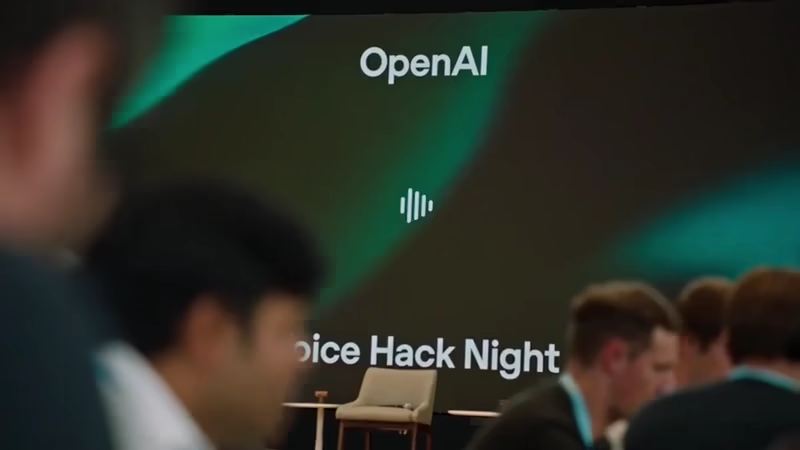
During OpenAI's Voice Hack Night in San Francisco, one solo developer stepped onto the stage and demonstrated something that felt straight out of a sci-fi movie.

GitHub has created a huge stir in the developers' community.
A lot of people have great ideas, and many of them have the capacity to create their own products. But that is about it.
As large language models (LLMs) become smarter, conversations with them can not only be more engaging, but also quite long.