YouTube is no longer a place for people to watch cooking videos or game walkthoughts, or music videos, or some funny cats.
This is because a growing chunk of what the platform shows to its users is machine-made content with minimal human input, and much of it is remarkably low quality. According to a research from Kapwing, more than 20% of the videos YouTube's recommendation system serves to new users are so-called "AI slop."
This is a term to describe poorly, cheaply generated, low-effort clips created with AI, ath look and feel amateurish.
More than often, they're videos stitched together by AI without coherent storytelling or real creative input, often exploiting the platform’s algorithms to rack up views.
In other words, AU slops can be defined as digital filler content prioritizing speed and volume over quality or substance.
To come up with the report, researchers from the video-editing company Kapwing examined roughly 15,000 of the most popular YouTube channels worldwide, in the top 100 in every country, and identified 278 that publish nothing but these AI-generated clips.
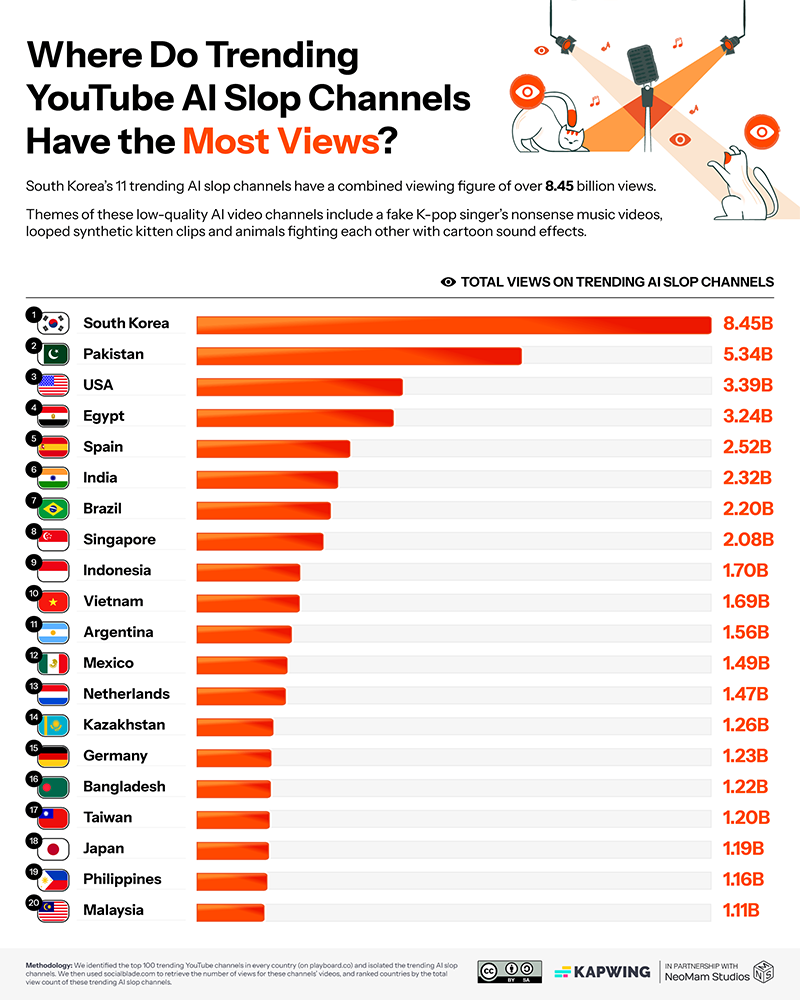
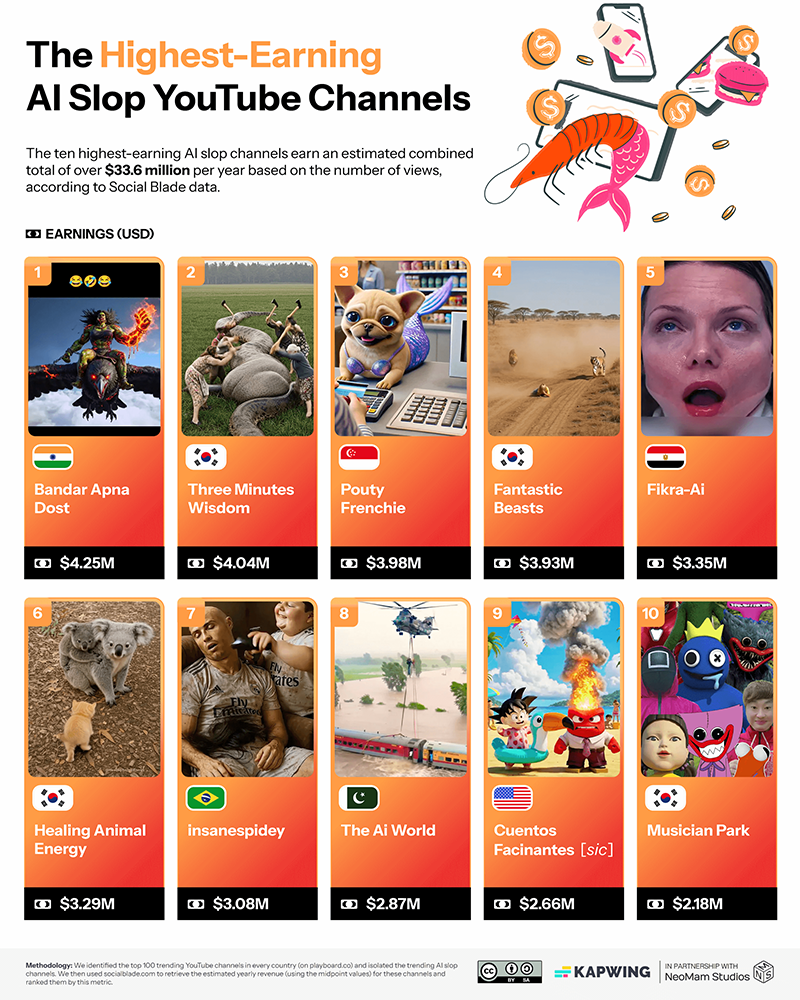
Collectively, those channels have attracted more than 63 billion views and 221 million subscribers, and industry estimates suggest they could be generating around $117 million a year in ad revenue.
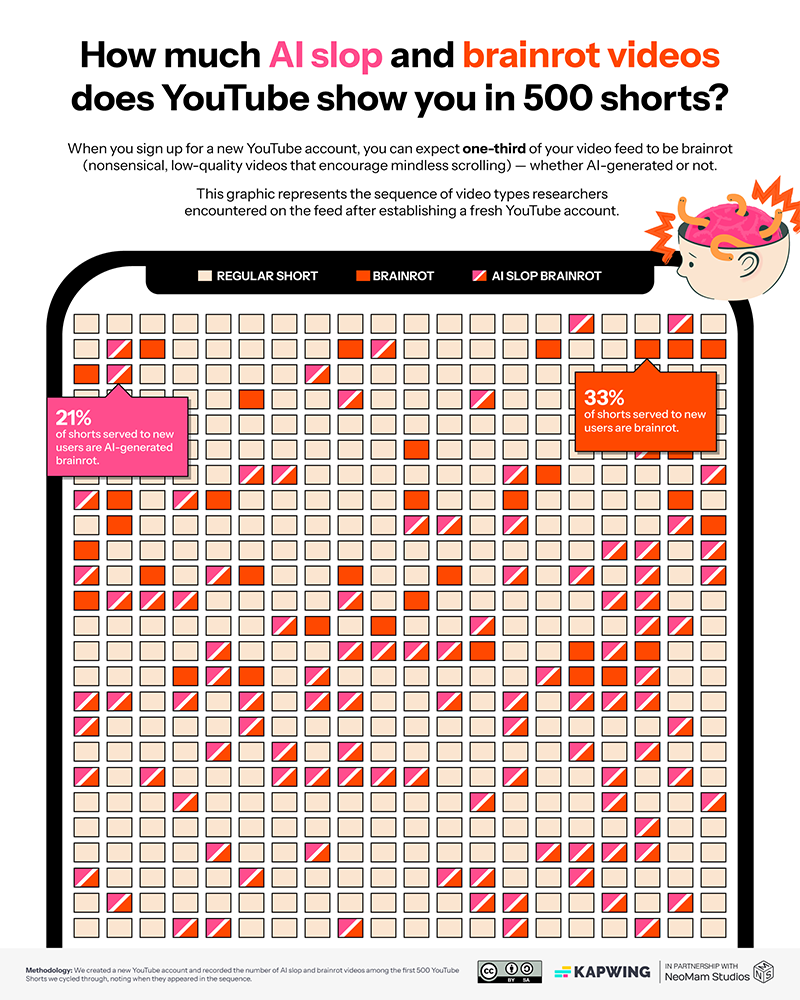
To test what this looks like in practice, the Kapwing team created a brand-new YouTube account with no watch history and observed the first 500 videos the platform recommended.
Of those, 104 were pure AI slop, and about one-third fell into a broader "brainrot" category, which encompasses both AI slop and other repetitive, attention-driven low-quality content.
What this means for users is a feed filled with bizarre, often surreal content designed to keep you watching, sometimes at the expense of real creativity or value.
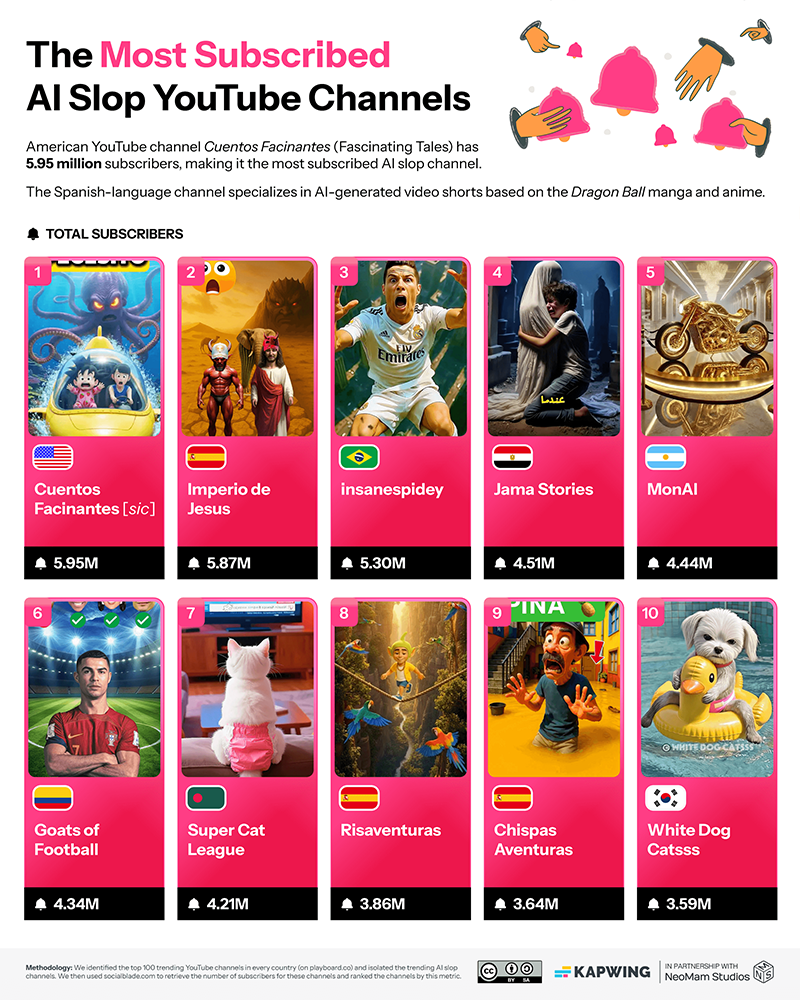
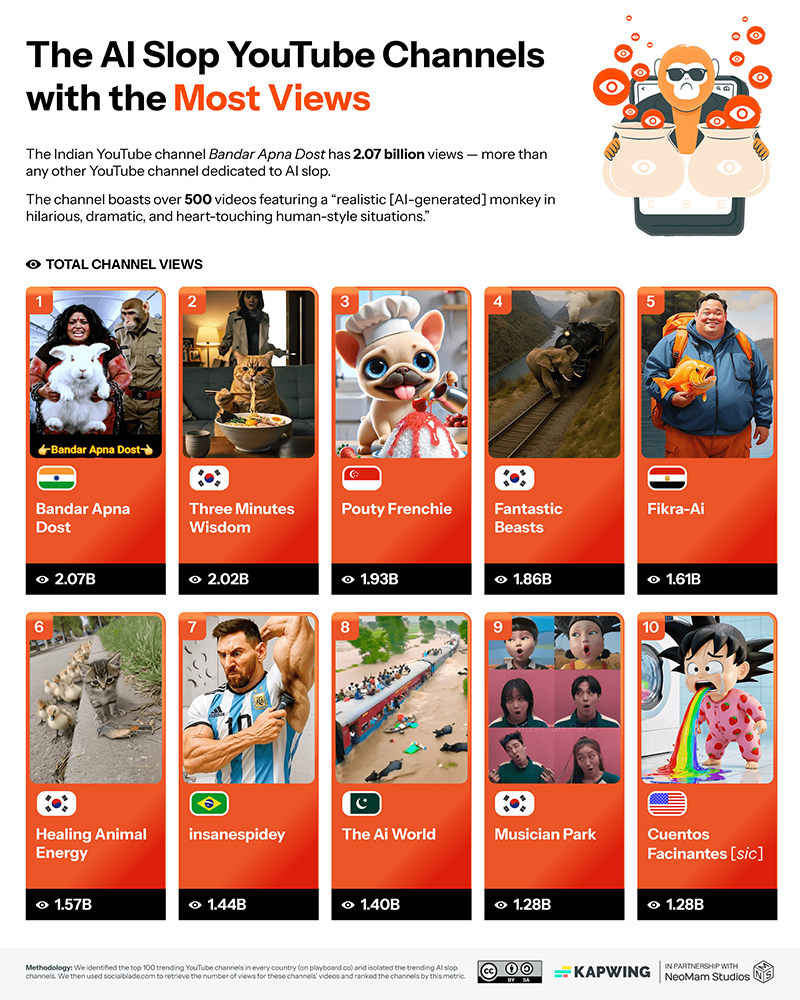
Among the standout examples is Bandar Apna Dost, an India-based channel with more than 2.4 billion views featuring AI-generated scenes of an anthropomorphic monkey and a Hulk-like character battling demons and flying in a tomato helicopter.
Other prolific channels churn out colorful but senseless clips of cartoon animals or surreal "relaxing" footage set to ambient soundtracks, often appealing to children or casual scroll-by viewers.
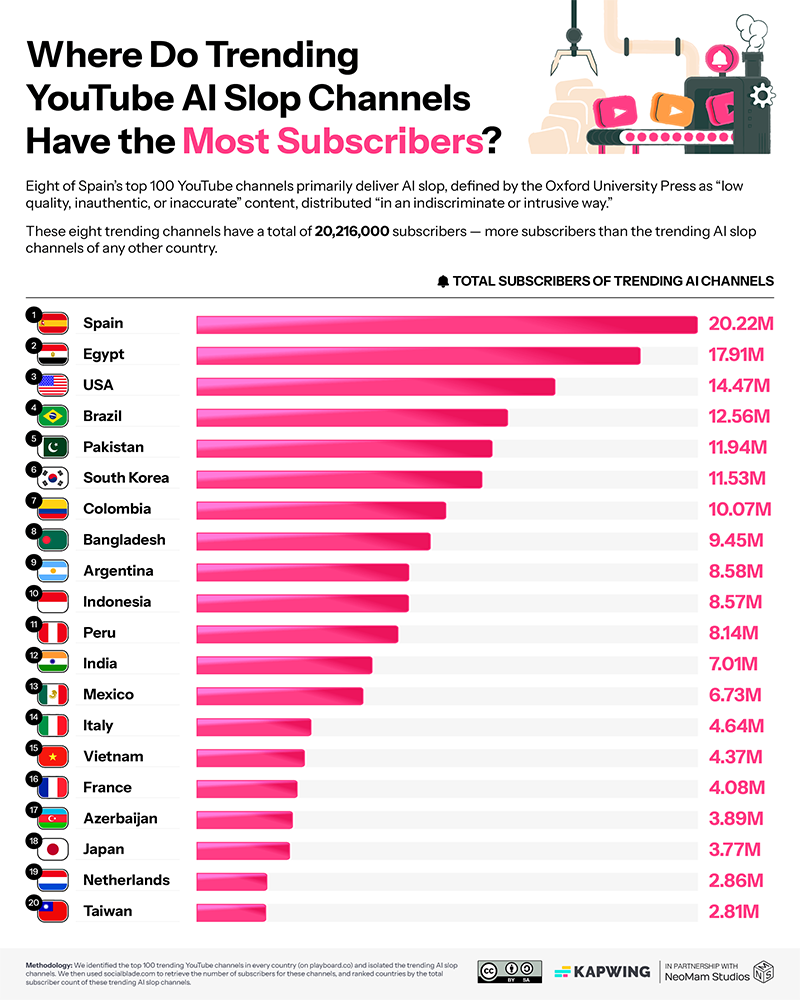
The phenomenon isn’t limited to a handful of accounts: AI slop channels have amassed millions of subscribers in countries around the world, from 20 million followers in Spain to 14.5 million in the U.S. and 13.5 million in Brazil, illustrating how global this trend has become.
Part of the appeal for creators is simple: these videos are cheap and fast to produce.
With widely available generative tools, creators can automatically generate visuals, narration and animation without shooting real footage or investing in post-production.
Some analysts describe this as a semi-structured shadow industry that spans YouTube, Meta and X, where creators swap tips in online groups and launch channels built almost entirely on AI tools.
But the rise of AI slop has sparked widespread concern among users and some creators alike.
Many worry that the trend is drowning out content made by real people, making it harder for original voices to be discovered.
Across platforms like Reddit, users lament feeds dominated by AI clips and call for stricter filters or labeling to distinguish machine-generated videos from human-made content.
Some argue that even if AI is a legitimate tool, the current glut of low-effort videos degrades the user experience and shifts incentives toward quantity over creativity.
YouTube itself has tried to clarify that generative AI can be used for both good and bad content, and that all uploads must comply with community guidelines regardless of how they were made.
But critics say algorithmic recommendations still reward attention-grabbing but shallow videos, and that without stronger signals favoring genuine, high-quality work, AI slop will continue to proliferate.
As this new era of content unfolds, the debate over AI on social media isn’t just about technology.
Instead, it's about what users value, what platforms incentivize, and whether human creativity can stand out in a sea of automated noise.






















































































































































































































































































