The internet began as a revolutionary tool for accumulating and democratizing human knowledge and expertise. Things now changed.
In its early days, it connected researchers, academics, and enthusiasts through simple pages, forums, and databases, allowing information to flow freely without traditional gatekeepers. Websites became repositories of in-depth articles, peer-reviewed studies, expert analyses, and carefully curated content from journalists, scientists, doctors, and specialists.
This vast, interconnected web of legitimate sources promised a new era where anyone could access reliable, high-quality information on virtually any topic.
Google emerged in the late 1990s as the dominant search engine, indexing this growing corpus of human knowledge and making it discoverable through algorithms that prioritized relevance, authority, and trustworthiness.
Over time, the company built an empire by monetizing this access: primarily through targeted advertising tied to search results and, later, features like Google AI Overviews, which pushed personalized content to users proactively.
Publishers, news outlets, blogs, and expert sites thrived as traffic from Google became a primary source of revenue, incentivizing the creation of even more detailed, credible web content. For years, the system rewarded depth, expertise, and editorial rigor: legitimate websites rose to the top because they best matched what users sought: accurate, well-sourced information.
In recent years however, this landscape started shifting dramatically.
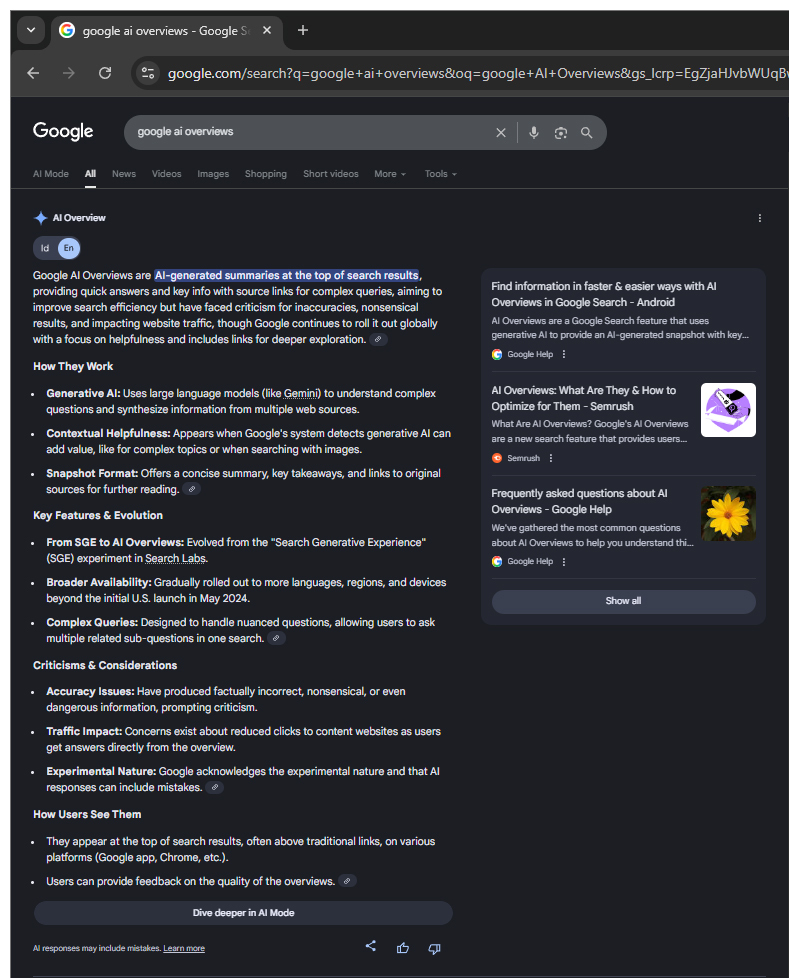
With an increasing number of people favoring certrain formats and platforms that prioritize engagement, virality, and retention over traditional depth and authority, Google AI Overviews, the mobile feed that surfaces articles, videos, and updates without explicit searches, now increasingly promotes content from YouTube videos and social media posts, particularly from X (formerly Twitter), rather than from established publishers and websites.
This change accelerates a broader trend where Google's ecosystem keeps users within its properties longer, boosting ad impressions while reducing referral traffic to external sites.
Reports from early 2026 indicate this pivot is hastening declines in publisher traffic, with many news and content sites seeing sharp drops as AI Overviews transforms from a distribution channel for diverse web sources into an engagement layer dominated by Google-owned YouTube and social snippets.
This prioritization extends into Google's AI-driven features, such as AI Overviews, which summarize information for users directly in search results.
A study by SE Ranking, analyzing tens of thousands of health-related queries, revealed a striking pattern: YouTube emerged as the most-cited domain in AI Overviews for medical topics, outpacing any single hospital network, government health portal, medical association, or academic institution.
In one dataset focused on German-language health searches, YouTube accounted for over 4% of all citations, far ahead of traditional medical sites, despite being a general video platform open to uploads from anyone, including non-experts like influencers and life coaches.
In the U.S., Brazil, and Mexico, 51% of the Google AI Overviews feed now consists of AI summaries constructed specifically to promote videos on YouTube, which is none other than Google’s owned video platform. When users interact with these AI summaries, 77% of resulting clicks go to YouTube rather than to the publishers whose work the content is based upon.
While Google highlights that many top-cited videos come from credible medical channels (such as those run by hospitals or clinics), the overall volume suggests popularity and algorithmic visibility often trump specialized expertise.
As for posts on X and other platforms, they are flooding positions on Discover in the UK, Australia, and Canada, where they account for the vast majority of posts after position 20.
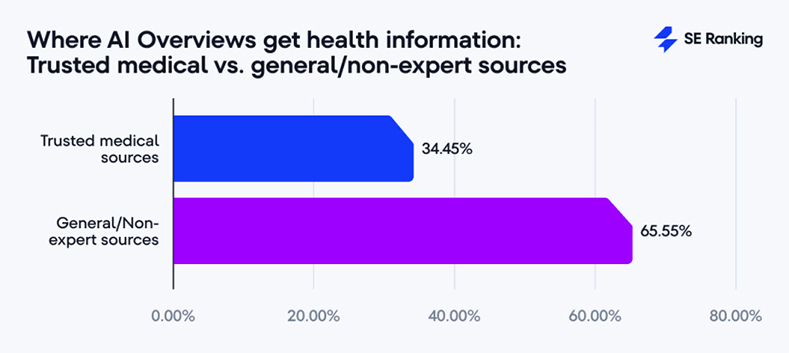
This has sparked concerns about the quality of health advice reaching billions of users monthly, especially when AI features have previously delivered inaccurate or even dangerous information on topics like medical test interpretations.
The implications are profound.
What began as a system built on linking to the best human-curated knowledge now increasingly funnels users toward short-form, high-engagement content from social platforms and video sites, often at the expense of in-depth, legitimate websites.
Traditional publishers face dwindling traffic, while creators on YouTube and social media gain prominence through algorithms that reward watch time and interaction over factual rigor or professional credentials.
This evolution raises questions about the future of information reliability: as discovery tilts toward these platforms, the internet's promise of accessible expertise risks being overshadowed by entertainment-driven, sometimes unvetted sources.
The shift isn't just technical. Instead, it's reshaping how society encounters knowledge, potentially prioritizing "Dr. YouTube" over actual doctors in critical areas like health.






















































































































































































































































































