
Despite living in an increasingly connected world, not everyone is able to enjoy the internet equally.
Many people in rural or remote areas remain underserved, either because fiber-optic and cable infrastructure doesn't extend to where they live, or because local providers deliver slow, unreliable service—sometimes coupled with censorship or excessive filtering. For these users, fast and open access to the web isn't a given; it's a privilege.
This is where Starlink steps in as a crucial lifeline.
For a growing number of users, Starlink is not just a backup—it's their only reliable high-speed internet option. Whether it's farmers working kilometers from the nearest cell tower, families in isolated mountain communities, or digital nomads constantly on the move, Starlink has become a vital enabler of modern life.
And when a "total blackout" happens, bad things can happen.
Especially in Ukraine.


Starlink’s satellite internet, relied on by millions worldwide for rural connectivity, battlefield access, and hybrid nomadic life, experienced a rare global outage on July 24, 2025. Users across North America, Europe, Asia, and Australia reported total loss of service nearly simultaneously, with DownDetector logging over 61,000 outage reports at peak.
Starlink confirmed the blackout via its X account, explaining that the issue stemmed from a failure of key internal software services responsible for operating the core network.
The disruption lasted about two and a half hours, beginning around 3:00 p.m. EDT (19:00 GMT) and service was mostly restored by 6:23 p.m. ET, though users continued to report intermittent reconnections until around 8:00 p.m. ET.
In Ukraine, things were a bit different, since its internet connectivity is vital to military communications and civilian networks.


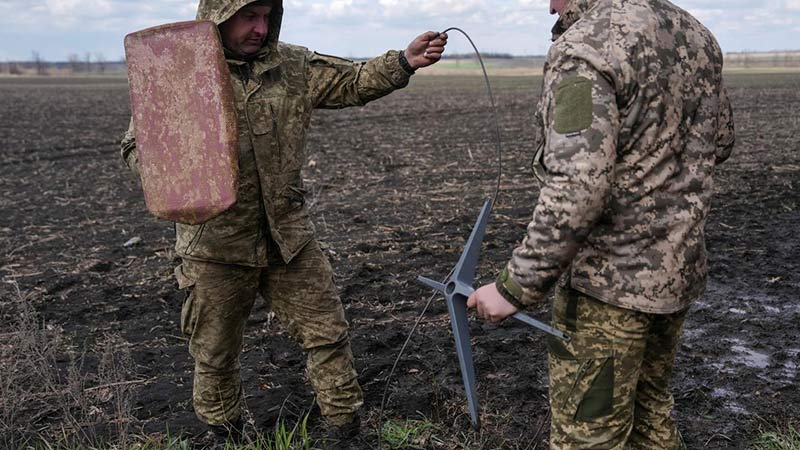
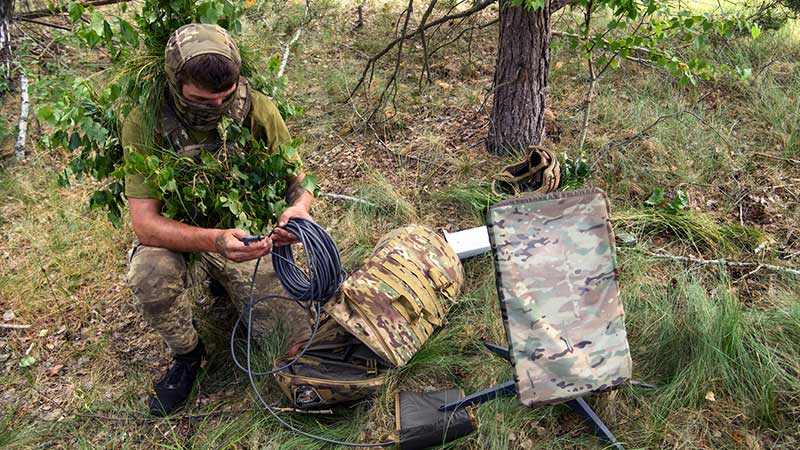
In times of crisis, including infrastructure disruptions and attacks on communications networks, Starlink has kept essential services, media, and even military operations online.
In Ukraine, when other networks went silent, Starlink is the only reliable connection left—keeping both civilians and frontline workers from being digitally cut off from the rest of the world.

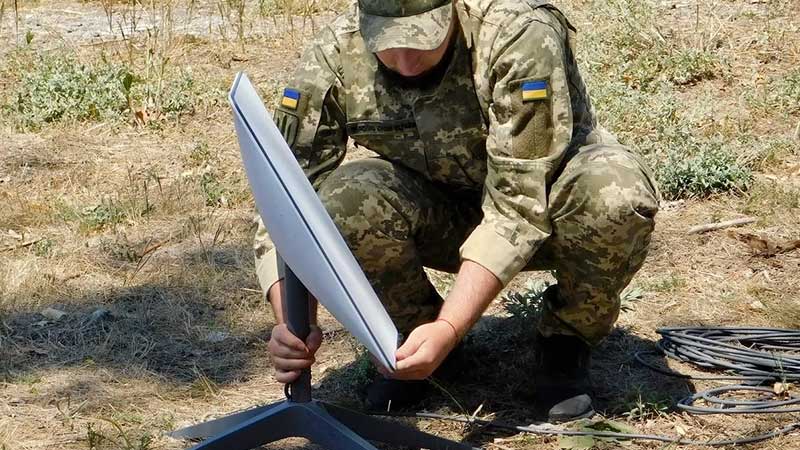
And here, the outage coincided with “connectivity down across the entire front,” disrupting drone operations and command systems—marking the longest interruption Ukrainian forces have faced since the war began.
Starlink is currently in a network outage and we are actively implementing a solution. We appreciate your patience, we'll share an update once this issue is resolved.
— Starlink (@Starlink) July 24, 2025
This outage stands out as perhaps the longest in Starlink’s history, as noted by analysis experts, and was particularly wrenching for regions with limited backup infrastructure.
While Elon Musk and Starlink VP Michael Nicolls both issued apologies on X—promising to investigate and prevent future occurrences—the incident raised concerns about the resilience of satellite-based communication platforms, especially as governments and military installations increasingly rely on them for critical operations.
Service will be restored shortly.
Sorry for the outage.
SpaceX will remedy root cause to ensure it doesn’t happen again. https://t.co/q1bsTVtMZ7— Elon Musk (@elonmusk) July 24, 2025
When a SpaceX engineer reportedly explained that an internal software failure likely caused mesh-network breakdown among satellites, people on the internet went deeper by adding some technical depth.
Some explained that the issue made it impossible for SpaceX, the company that operates Starlink, to route traffic across the constellation, delaying recovery until ground stations could manually re-sync affected satellites in range.
This can be explained by users who reported being stuck at "Optimizing connection" or receiving messages like "Starlink needs your location," which can be described as symptoms consistent with loss of inter-satellite coordination.
The outage coincided uncomfortably with Starlink’s reveal of its growing direct-to-cell service, unveiled in partnership with T-Mobile just hours earlier. Though no direct attribution was confirmed, the timing sparked speculation about whether new system demands or rolling updates played a role.
Despite the disruption, most services were restored swiftly, reaffirming Starlink’s assertion that this was an anomaly in an otherwise highly reliable platform.
Still, users and analysts alike are taking note: even systems designed for global redundancy are vulnerable to cascading software faults—and what felt like a short disruption to some represented a major failure in contexts where alternative infrastructure is minimal or nonexistent.
Starlink has now mostly recovered from the network outage, which lasted approximately 2.5 hours. The outage was due to failure of key internal software services that operate the core network. We apologize for the temporary disruption in our service; we are deeply committed to… https://t.co/ffFYM1Z7tD
— Michael Nicolls (@michaelnicollsx) July 24, 2025
The network issue has been resolved, and Starlink service has been restored. We understand how important connectivity is and apologize for the disruption.
— Starlink (@Starlink) July 25, 2025
In areas where traditional infrastructure is unreliable or destroyed, it becomes the only dependable way to get online.
In Ukraine, this connectivity has been a critical lifeline. The idea to bring Starlink to the country came from Mykhailo Fedorov, Ukraine’s Minister of Digital Transformation. Just two days after Russia launched its full-scale invasion, Fedorov took to Twitter to publicly request assistance from Elon Musk. In less than 48 hours, Musk replied that Starlink service had been activated in Ukraine, and terminals were on their way.
By 2023, Ukraine had deployed over 18,000 Starlink terminals across its territory.
These devices became the backbone of secure communications for government operations, emergency responders, and military units operating in contested or disconnected zones. To adapt to wartime conditions, SpaceX engineers modified the Starlink software to reduce power draw, making it possible to operate terminals through a car’s cigarette lighter port—an innovation that ensured the system could work even during power outages.
Given the country’s widespread deployment and growing demand, SpaceX formalized its presence by opening a local office and, by June 9, Starlink Ukraine was officially registered as an internet service operator.
Read: Ukraine Minister Asks U.S. Tech Companies For Help, And Ask Them To Also Pressure Russia

Beyond internet access, Elon Musk also facilitated the donation of Tesla Powerwalls to Ukraine.
These battery systems, when paired with solar panels, created off-grid power stations capable of keeping critical facilities online during blackouts. They were deployed in heavily affected settlements and played a vital role in reactivating communication hubs and emergency infrastructure without waiting for grid repairs.
Since the beginning of the invasion, Ukraine has received 44 of these Powerwall systems, enhancing its resilience in areas where conventional utilities are unreliable or entirely inoperable.