
The generative AI space is in the middle of a full-blown LLM war.
Since OpenAI introduced ChatGPT to the public, others like Google, Meta, and a growing list of well-established companies and startups are racing to release bigger, faster, and more capable models, often competing on raw output quality or viral demos.
In that scramble, most tools still share the same weakness: they’re great at generating content, but frustratingly imprecise when users actually want to shape it into something finished.
Adobe is taking a very different approach. Instead of trying to win on model hype alone, it’s positioning Firefly as the place where AI output becomes editable, controllable, and ultimately usable for real creative work.
Here, Adobe is pushing its Firefly AI platform far beyond basic image generation and into more powerful, precise AI-powered video creation and editing: a shift that could change how creators produce polished content without needing traditional tools like Premiere Pro.
The latest updates aim to make Firefly not just a prompt generator, but a full creative workspace where you can direct, refine, and assemble video projects with detailed control.
Read: Adobe Introduces Generative AI Video Tools That Allow Users To Edit Videos Using Just Text
Until recently, most AI image and video generators required users to hope the model produced something close to the idea in their heads. And often, that meant endless retries and adjustments.
Adobe wants Firefly to be different by giving creators tools that feel more like real editing than blind generation.
With its newest features, users can now use prompt-based edits to tweak parts of a video, like colors, camera angles, or objects, without regenerating the entire clip. That shift alone makes AI video much more practical for real projects.
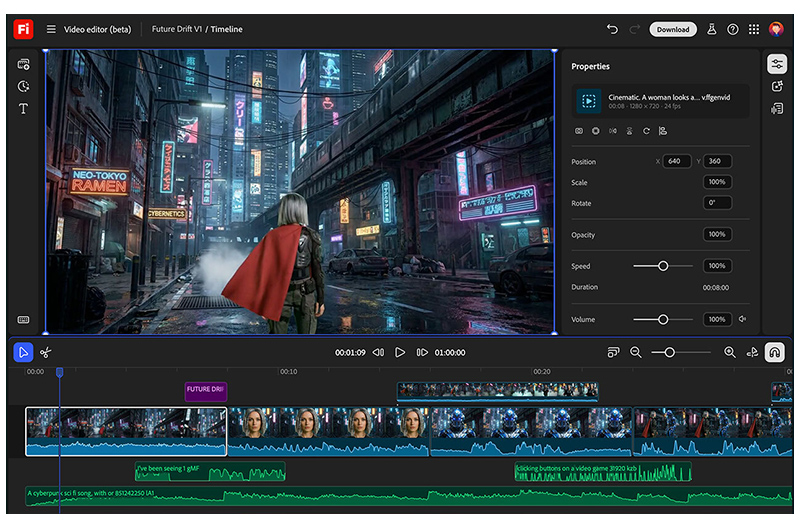
At the center of this evolution is the Firefly video editor, now rolling out in public beta.
This web-based editing space puts AI-generated clips, audio tracks, and users own footage into a multi-track timeline that they can rearrange, trim, and adjust like a conventional editing app. Whether users prefer text-based editing (e.g., "trim this segment") or timeline control (dragging footage and audio), Firefly’s browser editor gives users both options in one place.
Firefly is also expanding its ecosystem with powerful third-party AI models.
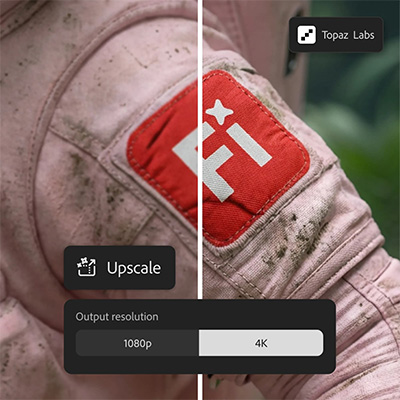
Tools like Runway’s Aleph help with precise prompt-based editing (for example, brightening a subject or swapping skies), while Topaz Astra brings advanced upscaling capabilities, let creators boost AI clips to 1080p or even 4K quality.
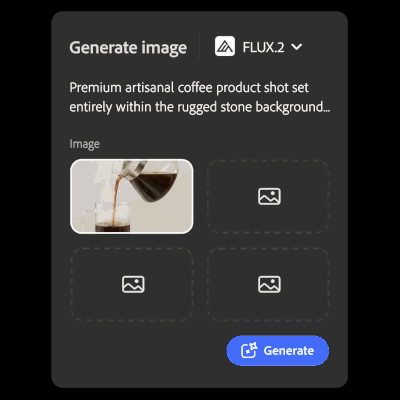
Adobe is also integrating models like Black Forest Labs’ FLUX.2 to enhance image generation across Firefly and other Adobe tools.
In the announcement, Adobe said that:
These changes aim to address one of the biggest frustrations with AI video so far: the need to start from scratch every time something wasn’t right.
Now, users can adjust individual elements with natural language, much like editing an image, a big step toward precision editing with AI.
Adobe is also sweetening the deal for creators by offering unlimited image and video generations for people on paid Firefly plans through mid-January 2026, encouraging users to experiment with new tools without worrying about credit limits.
Taken together, these updates reflect Adobe’s ambition to make Firefly a one-stop hub for creative AI: where generation, editing, and refinement live under one roof, and where creators don’t have to bounce between separate tools to complete a project.
It’s a sign that AI tools are evolving from novelty generators into practical studios for serious creative work.

















































































































































































































































































