
Lots of people have experienced the same frustrating moment: something breaks, they either have to bring to a repair shop, or determine to fix it themselves.
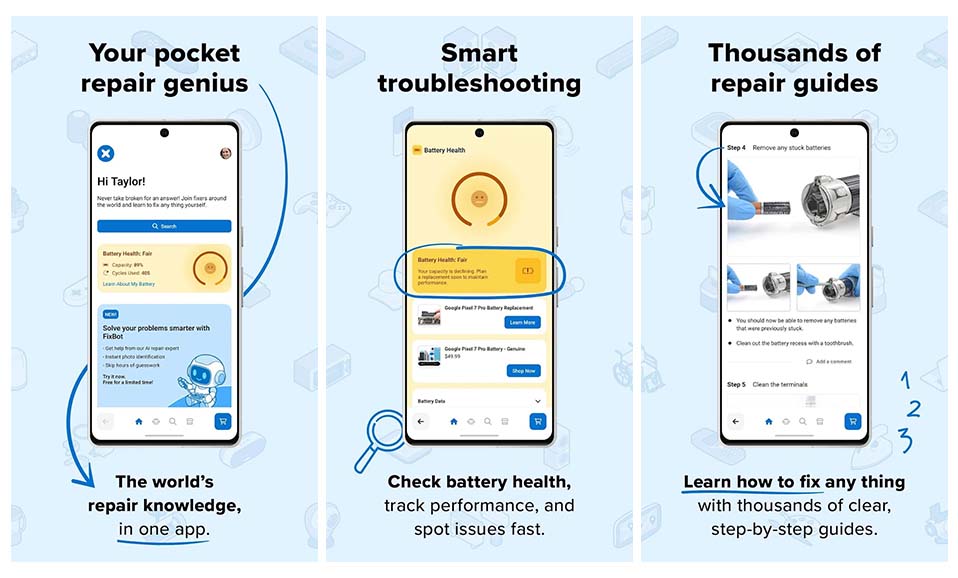
As for the latter, there are tons of online guides, and some findings can get them close, and may actually be the solution. Here, iFixit aims to be that solution. And that is by introducing what's called 'FixBot,' which is literally an AI-powered repair assistant built into the company’s redesigned mobile app for iOS and Android.
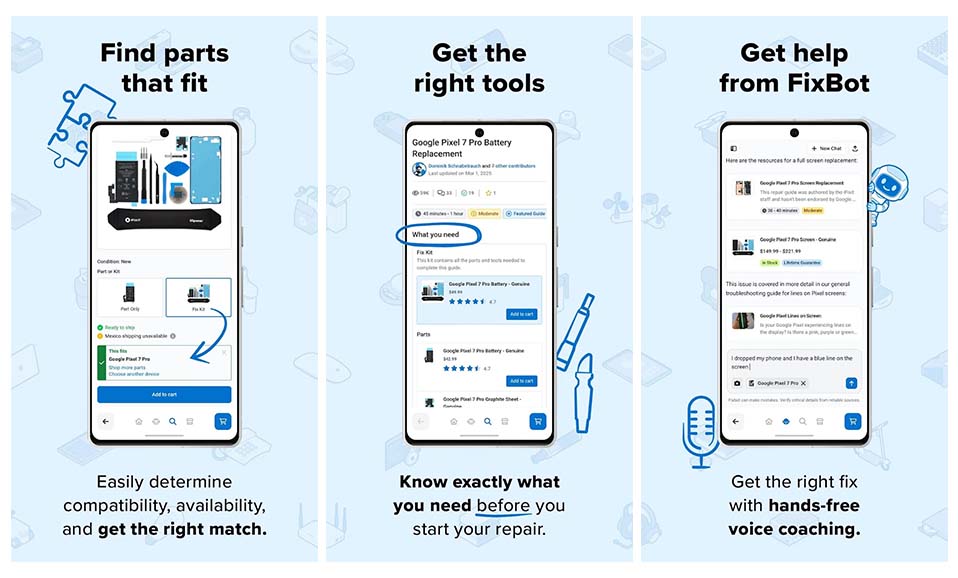
Instead of sifting through half-useful tutorials, users can simply describe they issue by typing, talking, or snapping a photo, and have FixBot walk them through diagnosing and repairing their device like a calm, knowledgeable technician.
What separates FixBot from generic chatbots is its foundation.
iFixit trained it on more than 125,000 repair guides, years' worth of community manuals, forum troubleshooting, and detailed PDF documentation.
What this means, rather than guessing or hallucinating, FixBot references real schematics and instructions and even shows them to the users, so they know where its guidance is coming from. And if they're dealing with a device that doesn’t yet have an official iFixit guide, the bot will search through manufacturer documents and reputable repair forums, clearly labeling anything outside iFixit’s own library.
We’ve got big news: an all-new mobile app with battery health monitors, an AI repair assistant, and of course all the guides and parts that you expect from iFixit! Think of it as an on-call repair expert that helps you make sense of weird symptoms, confusing screws, and mystery… pic.twitter.com/ltarMbcAlq
— iFixit (@iFixit) December 9, 2025
The app also takes advantage of users phone's hardware.
For example, it can use the camera, where users can point it to a broken device, and let the bot identify the model before guiding them through the repair. Voice controls allow entirely hands-free troubleshooting when their hands are dusty, greasy, or buried inside an appliance. Because the app runs on the phone, it knows exactly which device it's using and automatically pulls up relevant repair information without making them search.
One of the app’s most intriguing features is its real-time battery health monitoring.
Not only does it show your battery’s current condition, where system permissions allow, it also predicts future degradation, giving users an estimated "death date" so users can plan a replacement before things go wrong.
Users also get cycle data, lifespan estimates, replacement guides, and links to order compatible parts directly from iFixit.
Android users get this seamlessly, while iOS devices require extra permissions due to Apple’s restrictive APIs.
FixBot also stays focused on what it was built for.
For example, it won't help users with personal dilemmas or off-topic questions and politely declines anything unrelated to repairs. It also won’t guide users into illegal territory, but it will help you understand and exercise their right to repair safely and within the law. This focused design helps avoid the pitfalls other AI chatbots run into.
It's worth noting that FixBot isn’t iFixit’s first mobile app.
The company had one years ago, but Apple removed it from the App Store after iFixit published a teardown of an Apple TV developer kit, which is something Apple said violated developer terms.
After nearly a decade away, the company is back on the App Store with a much more ambitious offering.
For now, FixBot and the app’s full feature set are free to use, though iFixit plans to introduce a paid tier. The free tier will eventually come with usage limits, while paid users will get full access, including voice controls and document uploads.
All together, FixBot feels like one of the most practical, meaningful uses of AI in consumer tech so far. If it can continue delivering accurate repairs and reliable guidance, it has the potential to become the go-to tool for fixing almost anything at home. And if it stumbles, it could also become one of the most ambitious AI experiments the DIY community has ever seen.
But still, while it can get the jobs done, it’s not cutting-edge everywhere.
Several commenters express skepticism about the iFixit app's effectiveness and privacy concerns.
Some users find the app cumbersome, requiring unnecessary steps and personal information without delivering reliable results. Others prefer checking battery health directly, rather than using the app.
Not to mention that it can still hallunicate things, and make up excuses if it doesn't know how to answer properly (a trait large language models share).
This summary is AI-generated. AI can make mistakes and this summary is not a replacement for reading the comments.






















































































































































































































































































