The LLM war has escalated into one of the fiercest battles in tech history.
OpenAI's ChatGPT launch in late 2022 sent shockwaves through the industry, proving that large language models could deliver genuinely useful, human-like conversation at scale and drawing millions of users in weeks.
The disruption was immediate and profound: it forced Microsoft to double down on its OpenAI partnership and embed Copilot everywhere, pushed Google to rush out Gemini as a direct counter to its search business, prompted Meta to open-source LLaMA aggressively, and gave rise to Anthropic, xAI, Mistral, and others each carving out their own lane.
They and others compete either through safety focus, speed, openness, or raw reasoning power.
But by early 2026, the field is crowded and moving fast.
Models keep leaping forward in capability, context length, multimodality, and cost efficiency. Yet the real competition has shifted toward who can make powerful AI accessible to the largest number of people without bankrupting themselves on compute. ChatGPT still leads in sheer cultural reach and weekly active users, but sustaining free access at that scale has become a growing challenge as inference costs soar.
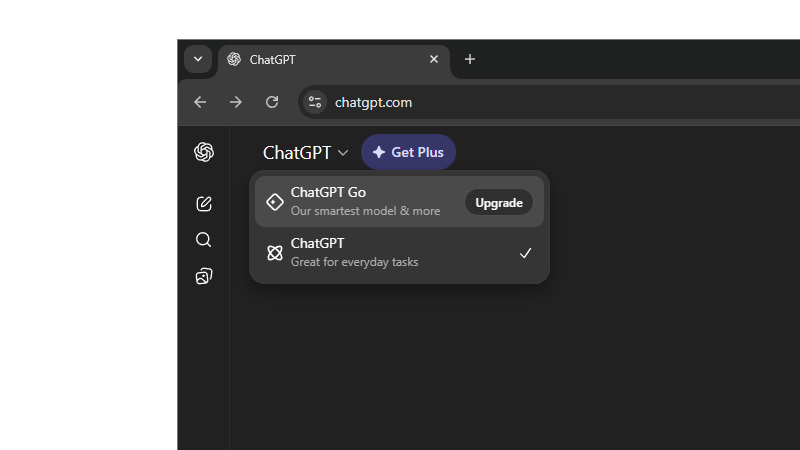
To address this, OpenAI recently introduced ChatGPT Go, a new $8-per-month tier designed to sit between the free plan and the $20 Plus subscription.
ChatGPT Go is rolling out globally in every country where ChatGPT is available.
ChatGPT Go is our low-cost subscription tier that gives you 10x more messages, file uploads and image creation vs free tier, more memory, longer context window, and unlimited use of GPT 5.2 instant…— OpenAI (@OpenAI) January 16, 2026
Go delivers roughly ten times more messages, file uploads, and image generations than the free tier, along with unlimited use of the fast and capable GPT-5.2 Instant model, improved memory, and longer context for ongoing conversations.
It aims to give the majority of users who want more than the free limits—but aren’t ready for Plus.
In other words, Go is a cheap version of paid ChatGPT, and should be affordable for users who wish to ramp up their experience.
The tier has already rolled out globally, with localized pricing in many markets, and early adoption has been strong, especially outside the highest-spending regions.
"In August 2025, we introduced ChatGPT Go in India as a low-cost subscription designed to expand access to ChatGPT’s most popular features and help more people use advanced AI in their daily life. Since then, ChatGPT Go has rolled out to 170 additional countries, making it our fastest growing plan and among the most affordable AI subscription globally," said OpenAI in an announcement.
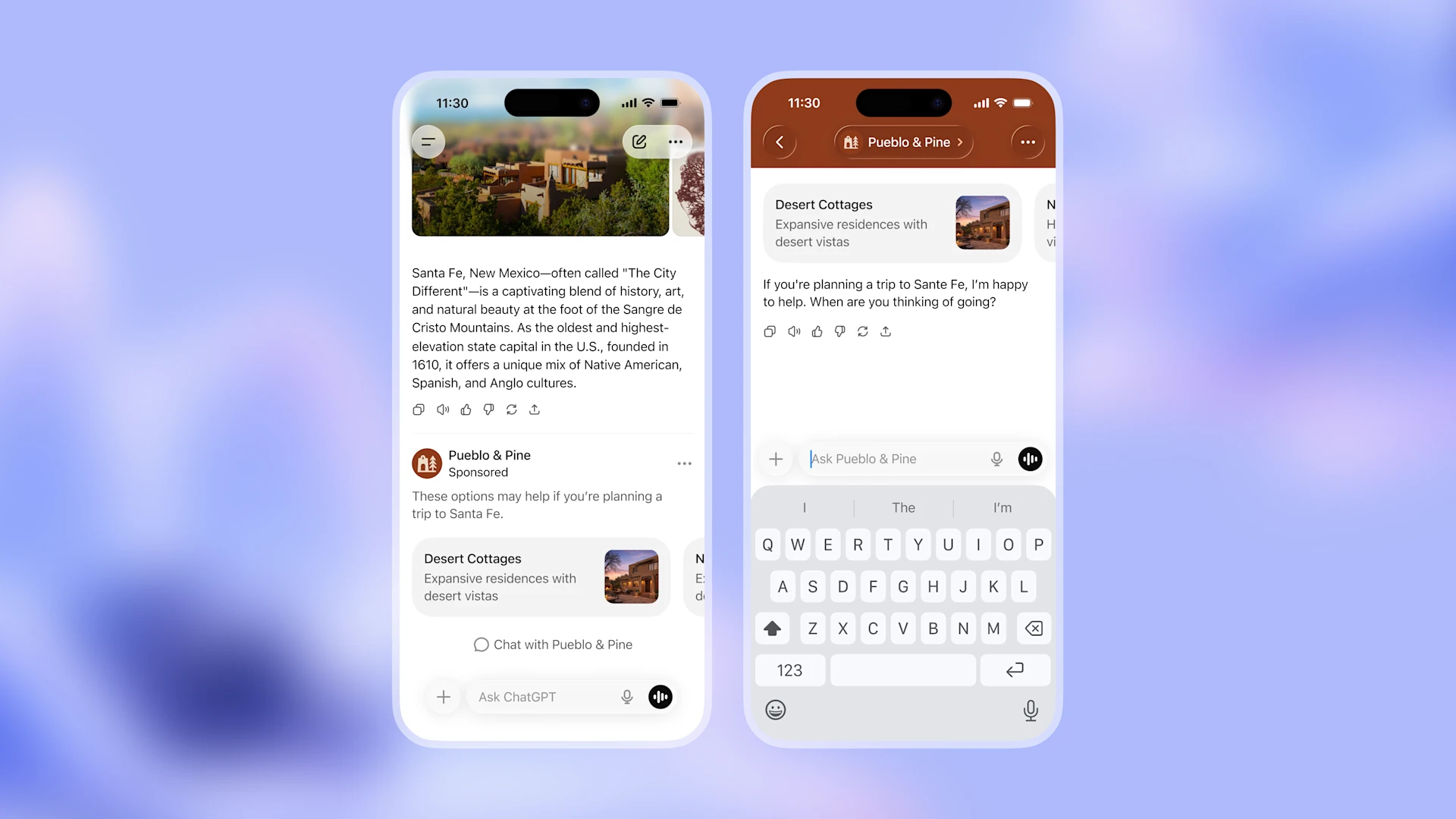
Alongside Go, OpenAI announced it will begin testing ads in the free and Go experiences in the U.S. within the coming weeks.
These ads will appear as clearly labeled sponsored suggestions at the bottom of relevant responses. For example, ChatGPT can show travel recommendations as ads after a destination query, but without ever influencing the core answer. Strict guardrails apply: no user data is sold, personalization can be opted out of, children and sensitive topics are excluded, and feedback on ads directly improves the system.
The company said that it's planning to introduce ads on only the free tier and Go users. As for higher tiers (Plus and above), will stay completely ad-free.
In the coming weeks, we plan to start testing ads in ChatGPT free and Go tiers.
We’re sharing our principles early on how we’ll approach ads–guided by putting user trust and transparency first as we work to make AI accessible to everyone.
What matters most:
- Responses in… pic.twitter.com/3UQJsdriYR— OpenAI (@OpenAI) January 16, 2026
"People trust ChatGPT for many important and personal tasks, so as we introduce ads, it’s crucial we preserve what makes ChatGPT valuable in the first place. That means you need to trust that ChatGPT’s responses are driven by what’s objectively useful, never by advertising. You need to know that your data and conversations are protected and never sold to advertisers. And we need to keep a high bar and give you control over your experience so you see truly relevant, high-quality ads—and can turn off personalization if you want," explained OpenAI in a separate announcement.
The move to a lower-priced Go tier and the introduction of targeted ads share the same underlying goal: keep scaling access dramatically while generating enough revenue to cover exploding infrastructure costs.
OpenAI has publicly projected that the majority of future growth, potentially billions of weekly users, will come from emerging markets where willingness to pay remains lower.
A combination of affordable paid tiers and non-intrusive advertising is seen as the most sustainable way to keep cutting-edge AI available to as many people as possible without compromising quality or the long-term mission of broad democratization.