
Winamp, the classic media player that became iconic in the late '90s and early 2000s.
Known for its simplicity, extensive skinning capabilities, and a powerful, customizable audio experience. What's more, it features custom skins, plugins, media library, internet radio and TV, visualization, and more.
It was beloved for its minimal system resource usage and support for a wide range of audio formats.
While it's no comparison to modern-days' media players and on-demand services, Winamp is making a comeback by opening its source code to developers worldwide.
This move invites global collaboration, allowing developers to contribute their skills, ideas, and passion to help evolve the beloved software.
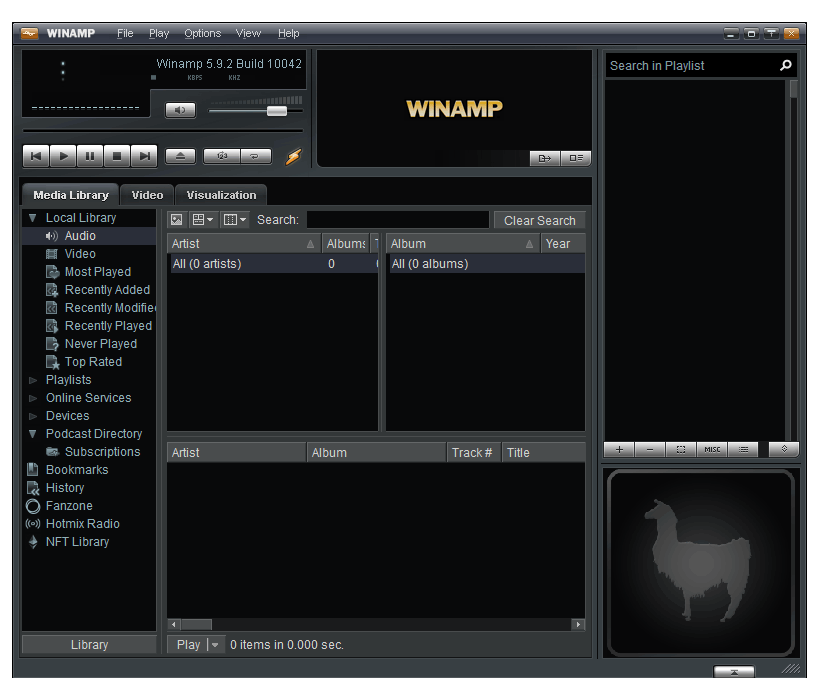
In a press release, "Winamp has announced that it is opening up its source code to enable collaborative development of its legendary player for Windows."
"This is an invitation to global collaboration, where developers worldwide can contribute their expertise, ideas, and passion to help this iconic software evolve."
Winamp was popular as a music player on Microsoft Windows operating system.
By making itself open, Winamp's initiative marks a new chapter in its history, emphasizing community-driven development and innovation.
"This decision will delight millions of users around the world. Our focus will be on new mobile players and other platforms. We will be releasing a new mobile player at the beginning of July. Still, we don't want to forget the tens of millions of users who use the software on Windows and will benefit from thousands of developers' experience and creativity," said Alexandre Saboundjian, CEO of Winamp.
Winamp's decision to open its source code reflects its evolution from a simple music player to a symbol of digital culture and user experience.
The move aims to modernize the software but also to create a collaborative platform where users and developers can directly contribute to its future, in hopes to once again become a significant player in the music software industry.
Big news! Winamp's source code will be available on September 24!
This release invites developers worldwide to contribute to its evolution to help create the perfect player for Windows users: https://t.co/P5AV9nD4uM#winamp #winampplayer #setthetone #winampforcreators pic.twitter.com/pq46Wji0Zw— Winamp (@winamp) May 16, 2024
But what's worth noting, despite the open-source initiative, Winamp wants to retain ownership of the software and control over the official version's innovations.
A software cannot be open sourced with a high level of corporate control.
Owner of the player, the Llama Group, has plans for the app that are not open-source compatible.
"Winamp will remain the owner of the software and will decide on the innovations made in the official version," said Saboundjian.
In other words, Winamp is not open-sourcing its code.
It's also worth noting that Winamp is only opening its player's source code for Windows.
The Mac, Android, and iOS editions shall continue to be entirely proprietary.
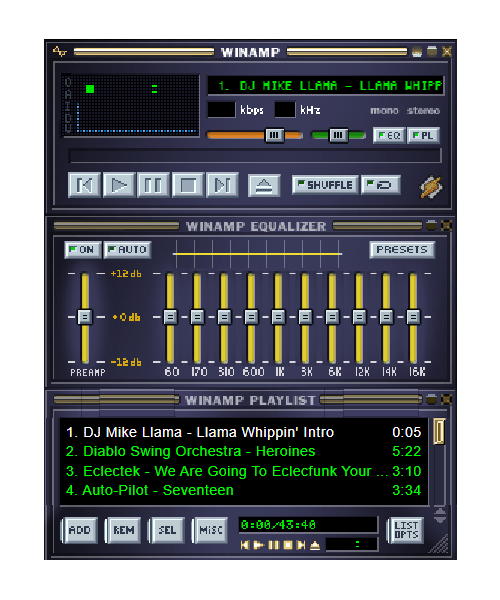
Winamp, a media player that revolutionized the way people listened to music in the late '90s and early 2000s, has had a tumultuous journey.
Launched in 1997 by Justin Frankel and Dmitry Boldyrev, distributed by their company Nullsoft, it quickly gained popularity due to its user-friendly interface and the ability to create playlists. Its peak user base reached 90 million.
However, after AOL acquired Nullsoft, the company behind Winamp, in 1999, things started to change. AOL’s management strategies, including the promotion of its dial-up service through Winamp, led to user dissatisfaction.
The advent of the iPod in 2001 further impacted Winamp’s popularity.
In 2013, AOL planned to discontinue Winamp but ended up selling it to Radionomy, a Belgian online radio service.
Despite its ups and downs, Winamp’s enduring appeal is a testament to its once-dominant status in the world of media players. Though its peak popularity was in the early 2000s, Winamp continues to have a loyal fanbase, and continues to evoke nostalgia among its users.
Although living in the shadow on its past, Winamp still promises an innovative experience.
This however, fell short.
The owners of WinAmp pulled its entire GitHub repository, just a month after uploading the source code.
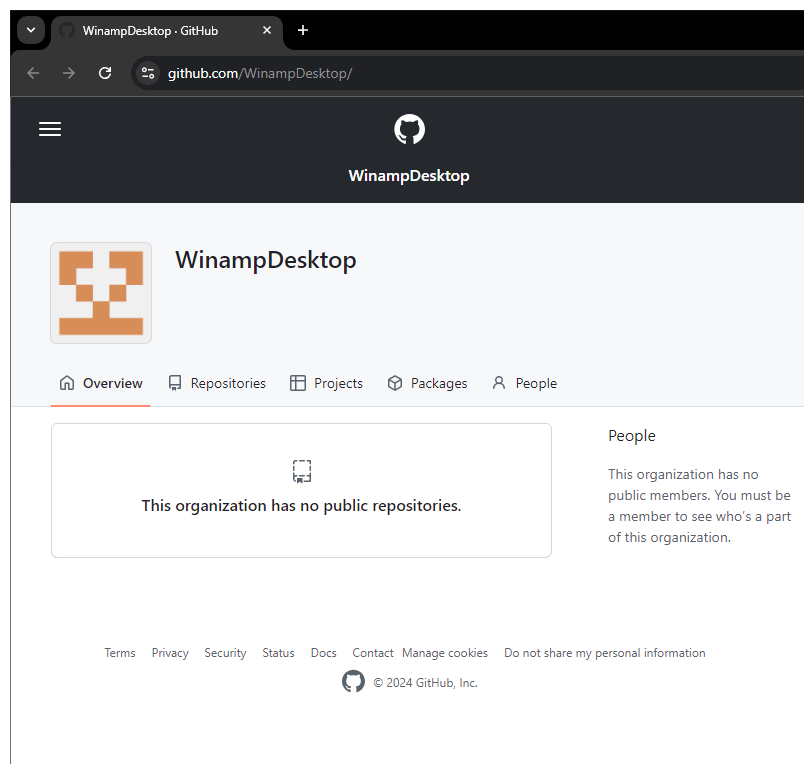
This happens because the source code's release was kind of rocky.
The original release came with a custom license called the WinAmp Collaborative License (WCL) Version 1.0. However, users were quick to point out that this violated GitHub’s terms of service. Hackaday even highlighted that it wasn't really open-source.
Co-developer Justin Frankel wasn’t impressed either, calling the terms “absurd.”
In response to the backlash, WinAmp updated the WCL to Version 1.0.1, allowing forking but still preventing the distribution of modified versions.
To complicate matters further, the uploaded repository included some GPL 2 code, which rendered the restrictive WCL license largely irrelevant.
And, it's also worth noting that the deletion happened soon after The Register enquired about the seeming inclusion of code belonging Shoutcast Distributed Network Audio Server (DNAS), another creation by Nullsoft, and some Microsoft and Intel codecs