

Previously, Google has announced its plan to eliminate annoying ads shown on web pages in its Chrome browser. With version 64, it starts doing that.
Chrome 64 brings an array of improvements, as well as tweaks and features. But the most notable, is the improvements in its ability to block ads, forcing advertisers to be more discreet and involve more into native ads.
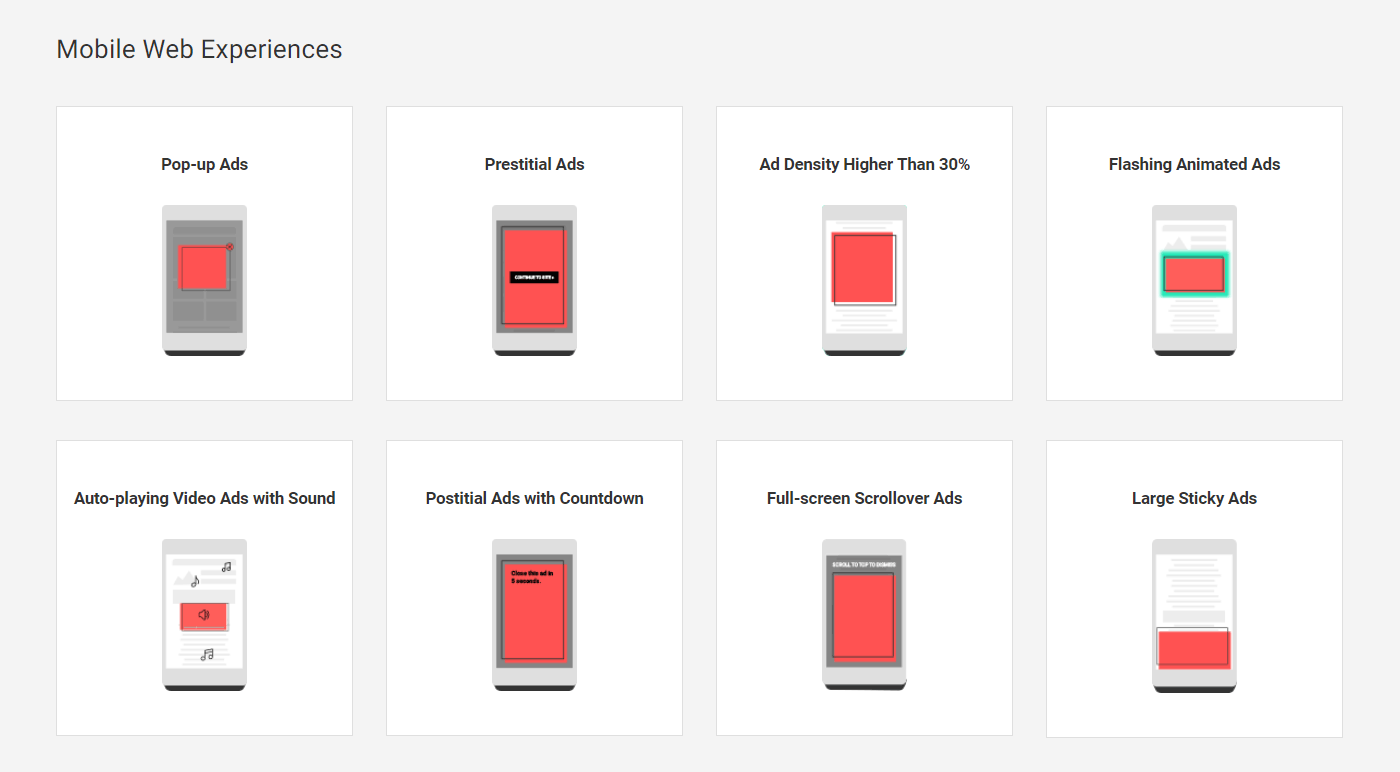
So here, Google wants to end those disguised links that pose like a play button or uses transparent overlays, full-page interstitials ads that appear before a page loads, flashing animated ads, and videos that autoplay with sound.
The browser also starts cracking down on malicious auto-redirects from third-party contents embedded into pages. Here, the web browser blocks third-party iframes unless a user has directly interacted with it.
To do this, Google has partnered with an industry group called the Coalition for Better Ads. There, it has been defined the standards for what qualify as intrusive ads.
Google said that it will first evaluate websites for violations of the standards, to then notify those offending sites about the problem. If 30 days have passed since the report, Chrome will automatically block their ads.
It’s worth noting that if a site is in violation of the Better Ads standards, all ads on its pages will be blocked, not just the ads that aren’t eligible.
Website owners can use the Abusive Experiences Report in the Google Search Console to see if their site has been found with abusive experiences.

The feature is made available on both desktop and Android.
On desktop, Chrome will notify users that it's blocking ads similar to how it lets users know about popup ads. On Android on the other hand, Chrome will show an bar at the bottom of the screen, with an option to allow the ads if the users want them to show.
While this feature is certainly appreciated by Chrome users, it can hurt publishers' revenue. Initially, they need to adapt to the strict standards, and opt out from using intrusive ads.
Here, Google finally forces them to address consumers' feelings towards bad advertising, forcing them to become more creative in building and designing advertisement experiences, as well as removing the intrusive aspect of advertisements, which consumers find annoying.
Besides squashing 53 bugs, Chrome 64 also disables the Shared Array Buffer feature, which is vulnerable to the Meltdown and Spectre security bugs. The version also has video playback on windows and the mute feature for videos that autoplay with sound.
It starts supporting the Resize Observer API, which gives web applications finer control over changes to sizes of elements on a page.
What's more, Chrome 64 also starts supporting HDR (High Dynamic Range). However, users are required to have a HDR-compatible graphics card and display to see the improvements.
Then there is the import.meta property within JavaScript modules that expose the module URL via import.meta.url. This is useful to developers writing JavaScript modules who want access to host-specific metadata about the current module, or library authors who want to access the URL of the module being bundled into the library.
There is also an update to the V8 JavaScript engine, so users can expect better speed and memory improvements, as well as new ECMAScript language features.