Facebook enters one of its most dramatic overhauls in years, an effort driven by the reality that younger users are slipping away and the platform must evolve to stay relevant.
This redesign is Meta’s attempt to modernize Facebook's core experience, make it easier to create and discover content, and ultimately recapture the cultural influence Mark Zuckerberg says the platform has lost. With competition from TikTok, Instagram, and YouTube intensifying, Facebook is reshaping itself into something more visual, more streamlined, and far more algorithmically responsive to people's tastes.
"Facebook’s focus has always been to make it easy to stay close to the people and things you love. Today, we’re introducing improvements that help cut through the clutter so you can easily update your profile, find new content via search, and enjoy photos and videos in your Feed," said Meta in a post.
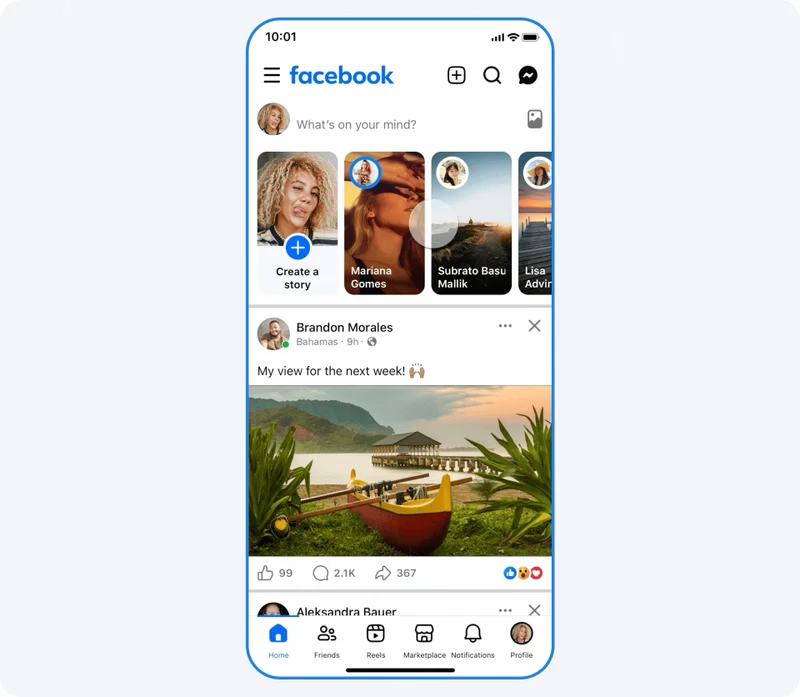
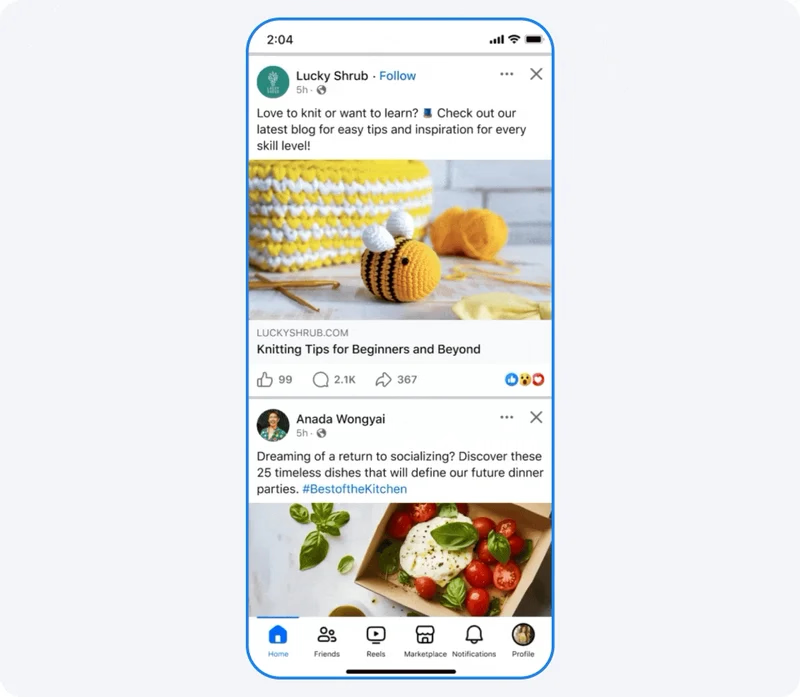
At the center of this shift is a cleaner, more photo-forward feed.
When users post multiple images, Facebook now arranges them into neat grids, giving the feed a more Instagram-like look. Interacting with posts feels more intuitive too: double-tapping photos to like them and tapping images to view them in full screen both add a sense of immediacy the old feed lacked.
The redesign aims to reduce clutter and make the feed feel more immersive, with visuals taking priority over the random assortment of unrelated posts many users have been complaining about for years.
Navigation across the app is getting a simpler feel as well.
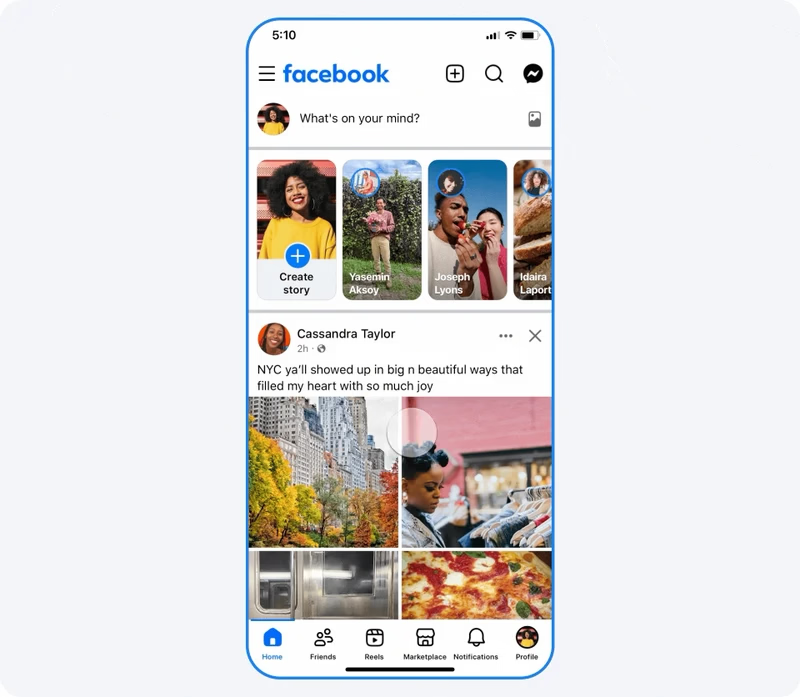
Facebook is moving its most-used features, like Reels, Friends, Marketplace, Profile, front and center on a redesigned tab bar so users aren’t digging through menus just to find what matters.
Cleaner tabs and refreshed menus contribute to a more modern look, and this time, the changes genuinely feel like they’re designed to save users time rather than add more layers to the interface.
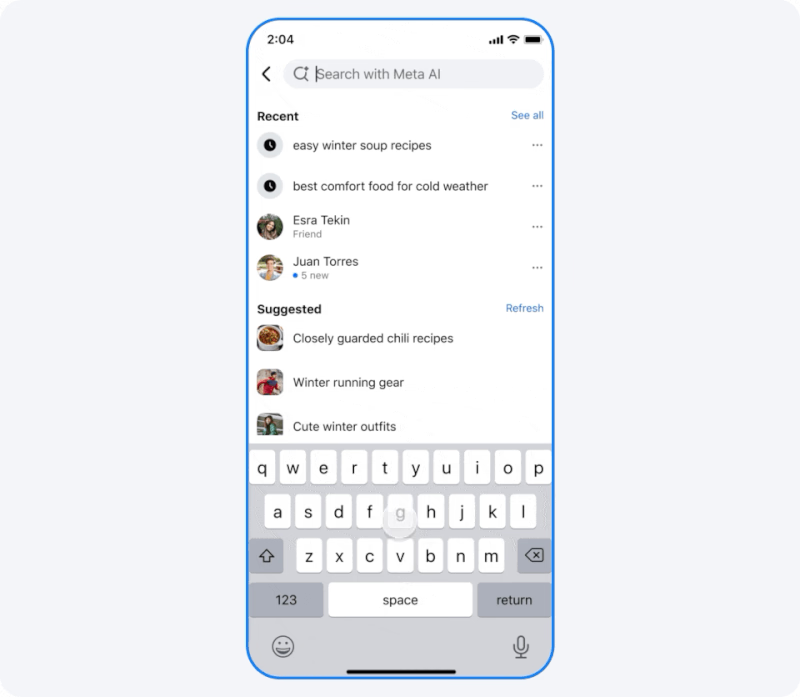
Search is also being reimagined with a heavy emphasis on visual browsing.
Results now appear in an immersive grid layout that supports photos, videos, and posts all in one place.
Meta is testing a full-screen viewer that lets users explore results without losing their place, an approach borrowed from apps that thrive on visual discovery. This signals a bigger shift: Facebook wants to be a place where people find new things, not just where they catch up on old connections.
One of the most notable parts of the update is Facebook’s new focus on user control.
For years, the feed has been governed by unpredictable recommendations and AI-generated noise. Now Facebook is adding easier ways to give feedback on posts, from telling the algorithm what users don’t want to see to choosing categories of content they want more of.
The idea is to allow users to "tune" their feed in a more hands-on way, a feature Instagram and Threads have been rolling out too.
If Meta actually listens to this feedback, the days of endlessly scrolling through irrelevant content or AI-generated spam might finally begin to fade.
The overhaul also touches how content is created.
Facebook has redesigned the tools for posting to Stories and the feed, putting popular functions like music, filters, and tagging right where people can find them.
The goal is to help anyone, especially younger users more accustomed to TikTok and Instagram, create posts with minimal friction. More advanced features like text backgrounds are still available, just tucked a bit deeper to avoid overwhelming the interface. Comments are cleaner and easier to navigate, with clearer threading, badges, and pinning tools that help creators and group admins keep discussions on track.
Profiles are becoming more personal and more social at the same time.
When users update their profile with new interests, like a newfound obsession with sourdough or plans for a weekend, Facebook can suggest friends with similar hobbies or insights. It’s an attempt to rekindle genuine connections through shared interests rather than relying solely on mutual friends.
At the same time, users retain full control over who can see their interests and which changes get shared to their feed.
Underlying all these updates is a deeper strategic shift.
Facebook is trying to reconnect with younger users who see the platform as outdated, and it’s doing so by borrowing the best elements from Instagram while trimming the parts of Facebook people find messy.
Visual posts, short videos, simple tools, and algorithmic tuning all nudge Facebook closer to the modern social landscape. But the redesign also walks a fine line: longtime users may resist the increasingly Instagram-like interface, while younger audiences may still prefer the platforms where their peers already are.
These updates, according to Meta, are only the beginning.
More algorithm controls, more immersive media experiences, and more personalization tools will continue rolling out into 2026.
Whether this is the reinvention Facebook needs, or simply another step toward blurring the lines between Meta’s apps, what's certain is that, the overhaul signals that Facebook is no longer content to rely on what worked ten years ago.
It wants to feel fresh again, and it’s betting heavily on simplicity, visuals, and user control to get there.






















































































































































































































































































