
Google Chrome is the most popular web browser. But for almost that long, it's known as the resource-hungry browser.
Google wants to change that a bit, using what it called the 'heavy ad intervention' system. The feature can make Chrome a faster browser that uses less resources by automatically unload web ads that use a disproportionate amount of system resources.
Traditionally, when people visit websites, those sites will request third-party trackers from other domains, and make them work even before the web finish loading. This can eat a huge amount of resources. The so-called 'heavy ads' can sometimes ruin users' web browsing experience because web pages can load slower than it should.
And because the ads required resources to load, Chrome should consume more of a device's battery power and consumes more mobile data.
The 'heavy ad intervention' system here is meant to reduce Chrome's network and CPU footprint.
According to Google software engineer John Delaney in a post on Google Groups:
Chrome does this by using a thresholds-based detection system to find those heavy ads.
Using the thresholds, the system can automatically mark ads that are consuming much of a device's resources as ads with performance issues if users do not interact with them.
The criteria include:
- Uses the main thread for more than 60 seconds in total.
- Uses the main thread for more than 15 seconds in any 30-second window.
- Uses more than 4 megabytes of network bandwidth.
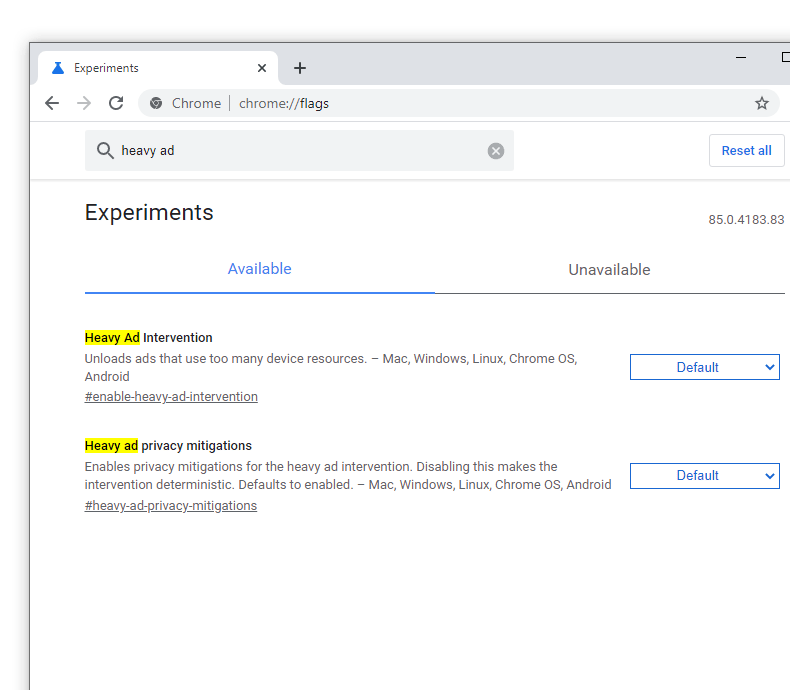
Chrome Product Manager Marshall Vale said:
'When an ad reaches its limit, the ad's frame will navigate to an error page, informing the user that the ad has used too many resources."
Vale also said that only 0.3% of all ads displayed online will exceed Chrome's specific thresholds. While that is a small number, it should be noted that they consume 26% of all the network data and 28% of all CPU resources used by online ads.
This is huge, and this is why Chrome sees that blocking those ads should do more good than harm.
To know whether or not their ads are heavy, John Delaney wrote that developers can go to heavy-ads.glitch.me, where they can upload a creative to test out whether it would trigger the intervention.
The website simply loads the creative into a Chrome detected ad iframe and checks if the intervention system can be triggered.
Google started working on this anti-heavy ad intervention system in July 2019, as part of a larger effort trying to steer online ads into becoming friendlier. The system follows the Better Ads Standards to determine if a website is showcasing potentially abusive ads.
Besides heavy ads, the system also unloads other things too. Like in-browser cryptocurrency miners, scripts that loads large and poorly compressed images, and loading large video files before a user gesture. It can also unload ads that perform resource-intensive JavaScript operations including CPU timing attacks and video decoding.
Read: The Coalition For Better Ads, And How To Comply With Its 'Better Ads' Standards




















































































































































































































































































