Google is taking a major step toward improving Android’s battery efficiency by targeting one of the most common culprits behind excessive battery drain.
And that is poorly managed wake locks. These are the mechanisms that allow apps to keep Android devices awake even when the screen is off. Typically, this is to perform background tasks like playing music, downloading files, or syncing data. While they serve legitimate purposes, some apps abuse wake locks unnecessarily.
As a result, phones are not allowed to sleep, and battery can drain a lot faster than expected.
To address this, Google has officially launched a new "excessive partial wake locks" metric as part of Android vitals, developed in collaboration with Samsung.
This partnership combines Samsung’s real-world insights into user behavior and battery consumption with Android’s system-level data. After months of refinement since its beta debut in April, the metric is now live and ready to hold apps accountable.
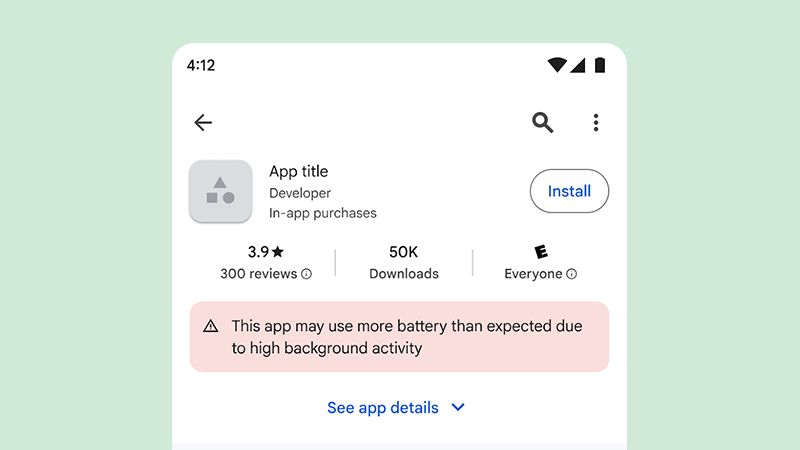
Starting March 1, 2026, Google Play will begin displaying a warning label on app listings for those that fail to manage background activity properly.
The label will read something like "This app may use more battery than expected due to high background activity", signaling to users that installing such an app could shorten their phone’s battery life. To further discourage bad practices, these apps will also be excluded from high-visibility areas in the Play Store, such as recommendation feeds and curated lists.
For developers, the rules are clear.
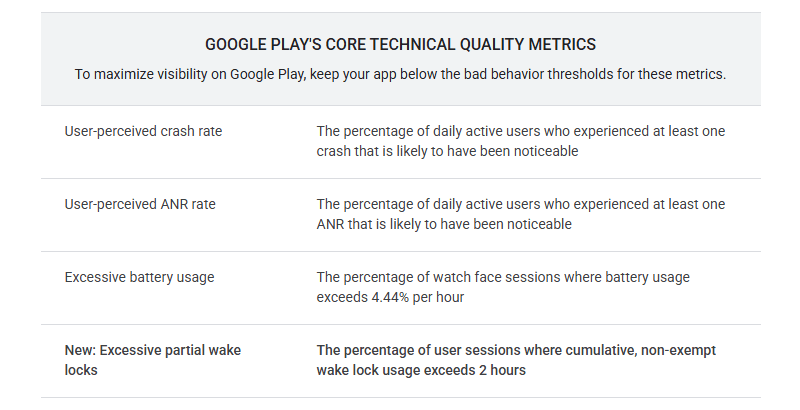
A user session will be marked as excessive if the app holds more than two cumulative hours of non-exempt wake locks in a 24-hour period.
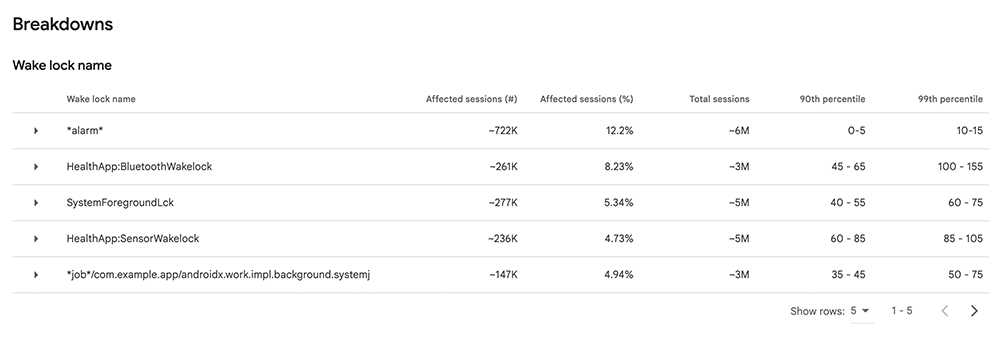
Exemptions apply only to system-level wake locks that serve obvious user benefits and cannot be optimized further, such as audio playback or user-initiated data transfers.
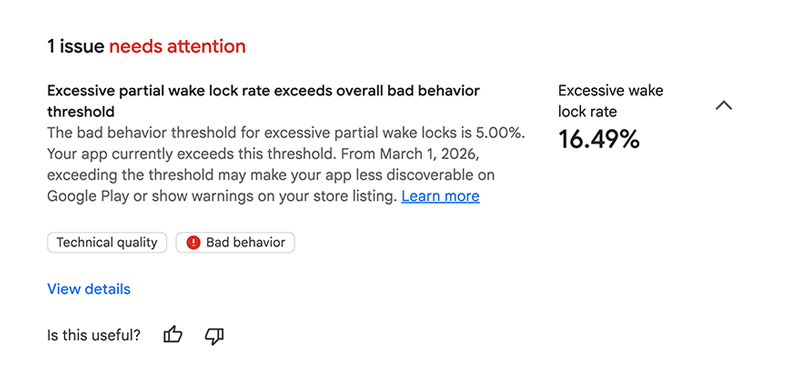
Google will classify an app as problematic if at least 5% of its user sessions over the past 28 days are excessive, crossing what it calls the "bad behavior threshold."
Developers can already access this new metric in Android vitals, which now includes the excessive partial wake locks category under core technical quality metrics.
If an app exceeds the threshold, Google Play Console will surface alerts and insights to help developers pinpoint and resolve the issue. With this early notice, developers have a few months to audit and optimize their apps before the March 2026 rollout.
This move fits neatly into Google’s broader effort to make Android devices smarter and more power-efficient without requiring any action from users.
The Play Store will now automatically highlight apps that respect the system’s power management guidelines, subtly guiding users toward better battery health through informed choices. Meanwhile, developers will face pressure to clean up inefficient background behavior or risk losing visibility—and ultimately, downloads.
While some exceptions will remain for apps that legitimately rely on background activity, like delivery trackers, music players, and navigation services, Google’s new enforcement system ensures that excuses no longer protect sloppy engineering.
For users, the result is a quieter, more efficient Android experience.
For developers, it’s a wake-up call, quite literally, to pay closer attention to how their apps interact with the system once the screen goes dark.






















































































































































































































































































