Mozilla has announced a significant update to Firefox that prioritizes user choice.
In an era where AI is rapidly developing following the introduction of OpenAI's ChatGPT, a number of web browser companies are starting to integrate the technology into web browsing to enhance experience. While AI can indeed help in automation, results have been mixed.
Not everyone wants an AI in a browser.
Responding to diverse community feedback, where some Firefox users embrace helpful AI tools while others prefer to avoid them entirely, the organization is introducing comprehensive AI controls in the desktop version of the browser.
These controls allow people to easily manage or completely disable generative AI features, ensuring Firefox remains flexible for different preferences.
In a blog post, Mozilla said that:
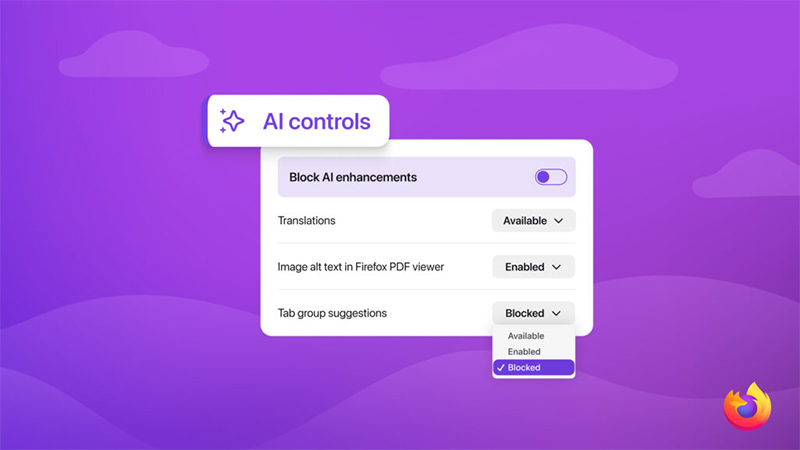
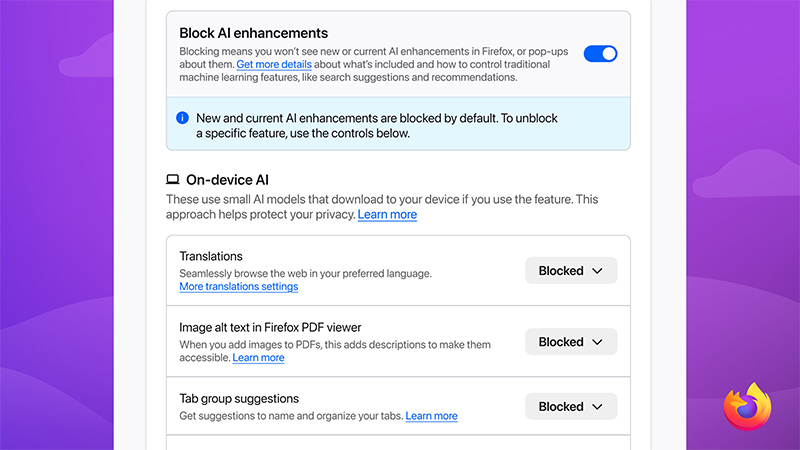
At the heart of the update is a straightforward toggle called "Block AI enhancements."
When enabled, this switch disables all current and future AI-powered functionalities at once. It also prevents any pop-ups, reminders, or prompts encouraging their use, creating a seamless experience for those who want an AI-free browser. Preferences set here persist across updates, giving users lasting control without constant readjustment.
The features affected include several practical additions Mozilla has rolled out recently.
These encompass AI-assisted translations to help browse pages in a preferred language, automatic generation of alt text descriptions for images in PDFs to improve accessibility for screen readers, intelligent tab grouping that suggests related tabs and helpful names, link previews that summarize key points before opening a page, and a sidebar AI chatbot supporting popular models like Anthropic's Claude, ChatGPT, Microsoft Copilot, Google Gemini, and Le Chat Mistral.
While individual toggles let users enable or disable these one by one for more granular control, the global block provides a simple way to opt out completely.
This move aligns with Mozilla's longstanding emphasis on privacy, transparency, and user empowerment, especially as competitors like Chrome and Edge increasingly embed AI without easy full opt-outs.
The company has stressed that choice builds trust, particularly amid concerns about AI bloat, privacy implications, or unwanted changes to the browsing experience. Mozilla plans to keep developing AI options for interested users while ensuring those who don't want them can avoid them effortlessly.
Early access is already available in the Firefox Nightly channel for testing and feedback through Mozilla Connect.
According to Mozilla in the blog post, the new AI controls section 148 is scheduled to start rolling out on February 24, 2026.