
Organizations should be transparent, and that is what Mozilla is trying to do.
It was in 2016 that Mozilla launched its Hardware Report, which shares information about what type of hardware Firefox users are using. Mozilla is taking this a step further with the introduction of Public Data Report.
What it does, is allowing the public to see its internal data.
This includes information about yearly and monthly active users, how many hours per day those users spend their time with Firefox, how long it takes users to upgrade to the latest version, how many Firefox users install add-ons, which add-ons are the most popular, top language settings, tracker blocking and more.
There are 10 different metrics that can be segmented by region and by the top 10 countries where Firefox is most popular.
The data goes back to just over a year, with Mozilla planning to update the data at least once per week.
"We try to be open by design and users should know how data is collected, what data is collected and how that data is used."
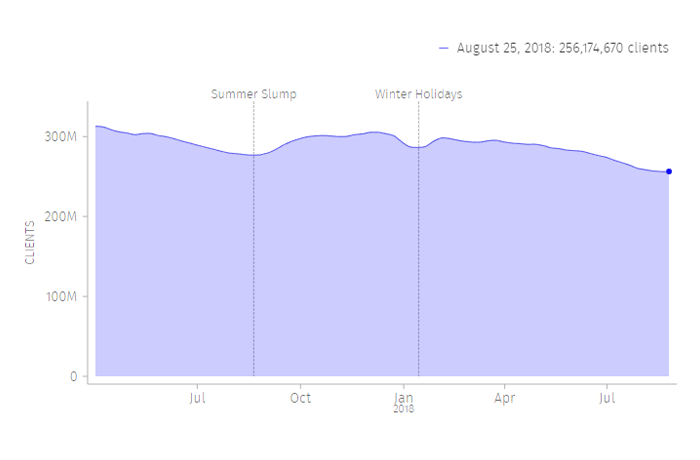
One example shown on the report is the downward trend for monthly active Firefox users, which measures about 250 million, down from over 300 million last April. Mozilla had high hopes that its Quantum browser would compete well against Google Chrome, but according to the first wave of data, that didn't happen.
Mozilla notes that it uses this kind of data to track crash rates, answer specific product questions and measure the impact of its experiments.
Showing its report to the public, Mozilla stresses that the data doesn’t come from some kind of real-time monitoring system. In fact, it's aggregated and the data has been anonymized from a subset of its users. Mozilla gathered this data from Firefox Telemetry system (about:telemetry) which sends data to Mozilla.
At the moment of introduction, Public Data Report focuses on desktop users. Mozilla said that getting data from mobile users is harder, but it has plans to include them in the next versions of this tool.
"After all, it's your data," said Mozilla.






















































































































































































































































































