Google Photos is a cloud-based photo storage and sharing service developed by Google.
Launched in May 2015, it provides users with a way to back up, organize, and search their photos and videos using Google’s AI-driven tools. With features that made it popular, and its ubiquitous presence on Android, has made it one of the most widely used cloud storage services for photos and videos.
Knowing that the trends of AI is still escalating, and that anyone can now create AI-generated imagery, Google wants to make it clear that real and fake are two different things.
And knowing that a lot of people use Google Photos to preserve their memories, suggest that its more than 1 billion users would use it to save pretty much any sort of images and videos, real and AI-generated.
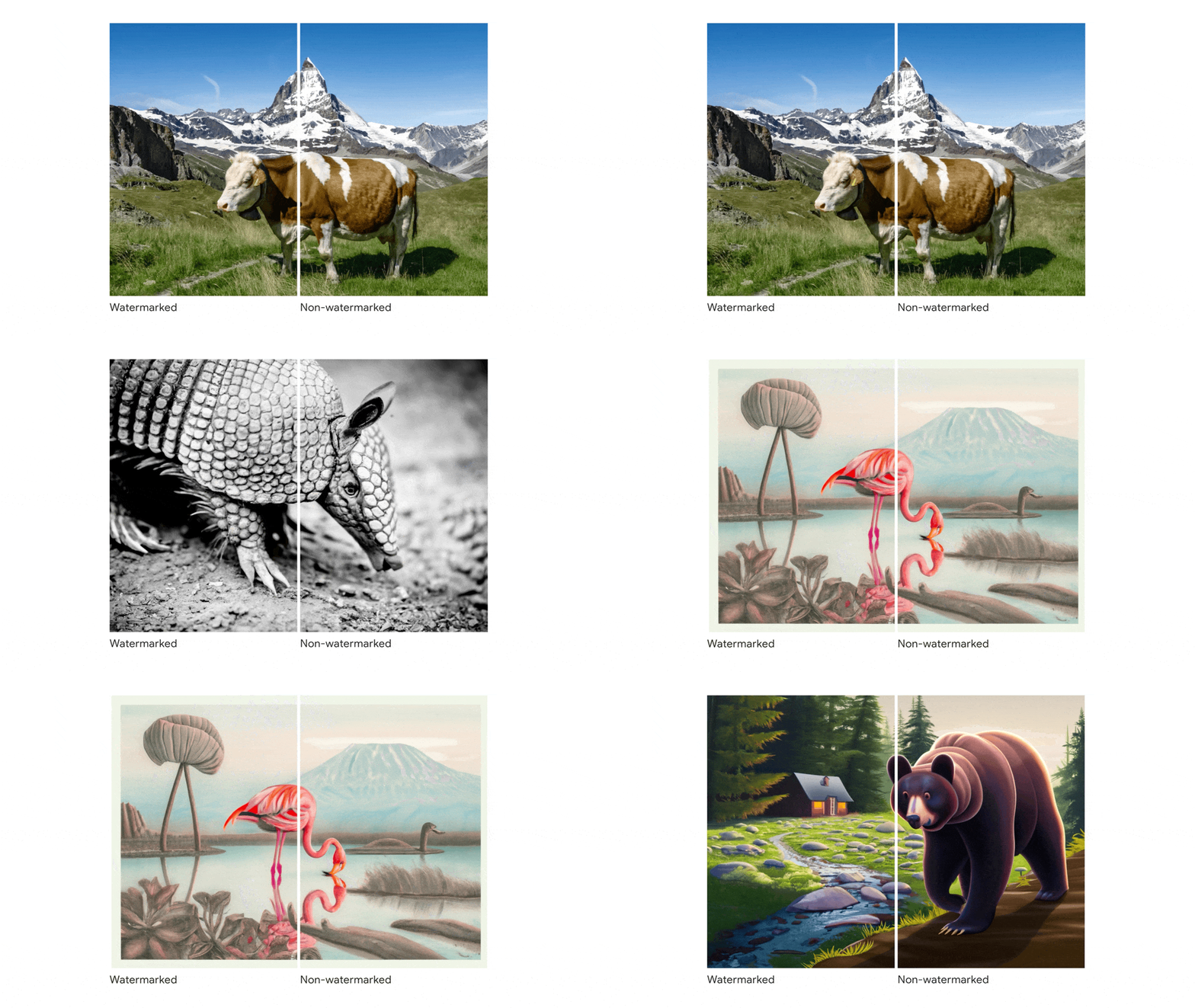
To differentiate these two, Google wants to use 'SynthID' to automatically detect which of the photos and videos are AI-generated, and then put an invisible watermarks on them.
It's probably safe to say that pretty much everyone who has been active online since the rise of ChatGPT from OpenAI, has heard about AI tools that can generate images and videos from just text prompts.
Now that the internet is far too big for any human to comprehend, Google, which is like many other big tech companies, invest their resources to create AI tools to answer the demands, and also create a tool to stop their spread if malicious.
Because the internet has become far too big for even Google to properly filter, the company knows that a lot of people are already generating some sort of fakery using AI.
This isn't something, and is definitely harmless, unless that people are sharing it, while hiding the fact that the imagery was created with AI.
Google has what it calls the SynthID, which is essentially a digital watermarking system that discreetly labels AI-generated or heavily edited media.
This technology embeds an invisible identifier within the pixels, undetectable to the human eye but readable by specialized software.
Each watermark acts as a hidden code, confirming AI involvement and potentially identifying the specific model used.
Unlike traditional watermarks or logos, SynthID does not affect the media's quality or appearance. It is designed to be robust, staying intact even after edits such as cropping, filtering, or compression. This ensures that AI-generated media remains identifiable even if they are resized or slightly modified.
Google aims for this hidden watermarking system to enhance transparency and trust online by making AI-created media more easily recognizable.
Google has begun rolling out SynthID to mark AI-generated and AI-edited content in its products, and that later this year, the company wants to integrate it to Google Photos' Magic Editor (specifically the Reimagine AI edit feature) on Pixel devices.
When users make major AI edits—like adding or removing people or objects—an invisible SynthID watermark is embedded. Minor adjustments, such as color tweaks, may not trigger it.
Google originally applied SynthID to content from only its own AI models, like Imagen-generated art and Magic Editor outputs, but with its presence on Google Photos, Google said in a blog post that SynthID can now detect and watermark all kind of AI-generated and AI-edited images, audio, text or video.
Google sees this as part of a broader push for AI transparency, aligning with industry and policy efforts to combat misinformation and deepfakes.
Industry experts support Google’s move toward AI media transparency but warn that watermarks alone aren’t enough.
This is because most AI-generated content is harmless, and that false-positive can happen.
Another concern is fragmentation—with companies like Google, Amazon, Microsoft, and Meta developing separate watermarking systems, a lack of standardization could weaken the tool's effectiveness.






















































































































































































































































































