The internet was once a wild frontier—open, anonymous, and largely unregulated.
But over the years, the demand for safety, legal compliance, and responsible digital spaces has given rise to various gatekeeping mechanisms. One of the most common among them? Age verification systems. These systems are meant to ensure that minors are kept away from content or services deemed inappropriate for their age—pornography, gambling, alcohol sales, or even some online forums.
On paper, that sounds fair. In practice, however, it raises a deeper concern: privacy.
While it makes sense to filter out underage users, problems begin when sites demand proof of age—such as a scan of a driver’s license, passport, or a selfie holding ID. This shifts age verification from a harmless filter to a data collection pipeline.
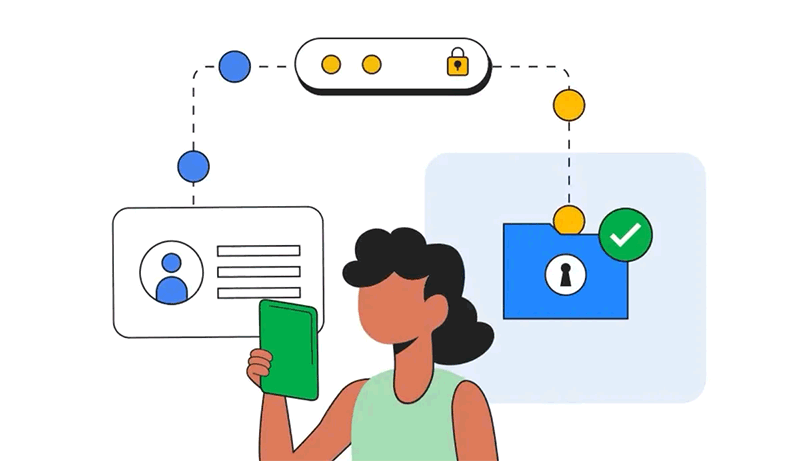
Google wants to change that with the first-of-its-kind, wallet-based digital age verification service.
The idea is open-sourcing a solution that uses zero-knowledge proofs (ZKPs) to let people verify their age without giving up sensitive information.
According to Google in a blog post:
While the transparency of blockchains is a strength in many scenarios, certain smart contract applications demand privacy—often for business-sensitive or legal reasons. For instance, triggering a contract using proprietary data may require that the data remain confidential.
To address this, ZKP uses public blockchains to allow one party to prove to another that they possess specific knowledge—such as a valid input—without disclosing the actual information itself. In blockchain terms, the only thing revealed on-chain through a ZKP is that some hidden data has been verified as valid, with a high level of cryptographic certainty, and without exposing the data itself.
This way, individuals can prove that something is true about themselves—such as being over 18—without revealing any other personal information.
In practical terms, this means a user can access age-restricted content or services without ever sharing their name, birthdate, or any form of identification.
For businesses and organizations of all sizes, this open-source solution offers a simple yet powerful way to meet privacy requirements without compromising user trust.
And because it's open source, developers are free to explore and build upon the ZKP codebase, enabling the creation of privacy-centric applications across various platforms.
As for researchers, they can also tap this technology to pioneer new technologies and expand the possibilities of what ZKPs can do in the real world.
By making ZKP available to the open-source and cryptography communities, the intention is to support a broader ecosystem. It reflects a shared commitment to developing privacy-first solutions that benefit everyone—users, developers, and platforms alike.
The European Union’s eIDAS Regulation set to take effect in 2026. Because of this, Google partners with Sparkasse to bring this technology to the region first.
The digital identity Google proposes is literally an age assurance tool, without compromising privacy.
With Member States urging parties to integrate privacy-enhancing technologies, ZKP should fit well into the European Digital Identity Wallet (“EUDI Wallet”).
"With our commitment to making these ZKP tools openly available, Member States can integrate this into their future EUDI Wallets, accelerating their development," said Google.
ZKP, which leverages Google’s Credential Manager API, backed by Google Wallet, has shown to be effective for age verification.
It can also be integrated directly with Android and Chrome, "enabling seamless, one-click age checks on supported websites and apps, potentially even enabling whole new services – all without revealing personal data."

















































































































































































































































































