Monopoly in business refers to a situation where a single company or entity dominates a particular industry or market.
This means that they have a significant or total control over the production, distribution, and pricing of a specific product or service, effectively eliminating competition. Monopolies can arise for various reasons, such as owning essential patents, having exclusive access to resources, or through aggressive business practices.
And Apple, the tech giant, has long been in control of the overall smartphone market.
While in total, it ships less phones than the overall Android phones, the company entirely controls its phone, and this is a practice many governments want to avoid having.
And among the things officials can do to suppress Apple's control over the market, is by ordering it to create iPhones with USB-C, in order to replace its proprietary Lightning port.

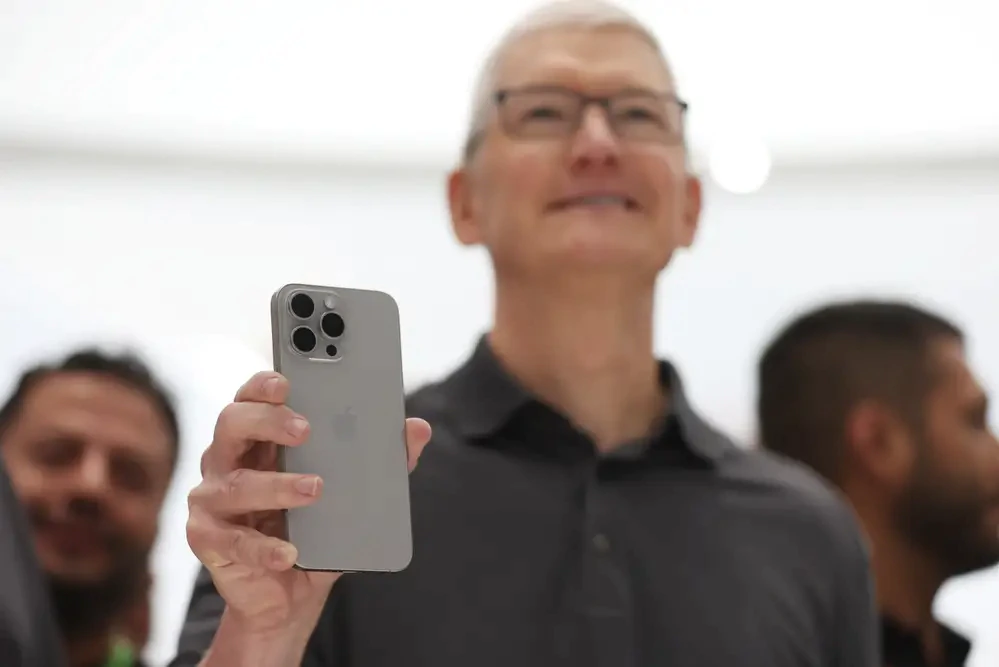
Apple complies, and the result is the iPhone 15 series, first introduced to the public on September 12, 2023.
It all started when the European Union passed a law requiring all smartphones sold in the EU to have a USB-C port by the end of 2024. Apple is a major player in the smartphone market, and at first, it didn't want to accept that rule without a fight.
Apple complained about the EU's decision to make USB-C the common charging standard for electronic devices.
In a statement, Apple said that the decision was "bad for innovation" and would "create unnecessary confusion and inconvenience for consumers." Apple also argued that the decision would stifle competition and give an unfair advantage to USB-C manufacturers.
However, the EU defended its decision, saying that it is necessary to reduce e-waste and make it easier for consumers to use their devices.
If Apple wouldn't comply, the company could face fines of up to €10 million per product. It was also possible for Apple to be banned from selling iPhones in the region, and that decision was final.
After all, the EU argued that Apple has had plenty of time to prepare for the change, as the law was first proposed in 2019.
Due to the rule, and the increasing pressure from regulators around the world to adopt USB-C, Apple softened.
In addition to that, the U.S. government is also considering a law that would make USB-C the standard charging port for all electronic devices.
Read: Engineering Student Crafted The First Working USB-C IPhone, And Sold It For $80,000
USB-C has a number of advantages over Apple's Lightning port.
For example, USB-C is more versatile, and can be used for charging, data transfer, and video output.
After that, USB-C is already the standard port for many devices. The universality means that users could use the same cable to charge their iPhone, connect it to their computer, and connect it to an external display.
Transfer speed is also faster on USB-C, and that power delivery is also better.
The are only two big reasons why Apple refrained from using USB-C and fought for having Lightning port on its iPhone.
The first is control. With Lightning power, Apple can maintain control over the charging and data transfer experience for its devices. This includes things like the type of cables that can be used, the power delivery capabilities, and the data transfer speeds.
The second big reason, is money. Apple charges licensing fees to companies that want to make Lightning cables and accessories.
This is a significant source of revenue for the company.
With iPhone 15 series, Apple marked the first time that its iPhone uses non-proprietary port.
Previously, before Lightning port, Apple used a 30-pin port it introduced alongside the original iPhone in 2007.
It was the standard port for charging, syncing, and connecting various accessories to the early iPhones.

It's worth noting though, that the question about whether Apple is monopolistic or not, has been a topic of debate.
Apple, with its iconic products like the iPhone, iPad, and Mac, has a significant presence in various markets. While they are not a monopolistic company in the traditional sense, where a single company completely dominates a market, the company that was founded by Steve Jobs and Steve Wozniak does hold a substantial share in the markets they operate in.
What makes it "monopolistic" here is due to the fact that Apple operates in a closed ecosystem and has an absolute control over its App Store.
These facts have drawn scrutiny and legal challenges from regulators and competitors, alleging anti-competitive practices.
Some argue that Apple's strict rules and vast control over policies and market, as well as fees and prices, could stifle competition and limit consumer choice.
This has led to various legal battles and investigations in different countries.
However, it's important to note that whether Apple is considered monopolistic depends on the specific legal definitions and regulatory interpretations in different regions. They are undoubtedly a major player in the tech industry, but the extent to which they are deemed monopolistic varies.














































































































































































































































































