About eleven years ago, the game Flappy Bird briefly took the mobile gaming world by storm.
The game, which was essentially a side-scroller where player controls a bird, Faby, attempting to fly between columns of green pipes without hitting them, was originally developed by Vietnamese video game artist and programmer Dong Nguyen.
Through its simple graphics and gameplay, players raced to get the highest scores they can, which is determined by the number of pipes they pass.
The game was developed by Nguyen alone over period of only several days, and it was the most-downloaded app on both the iOS and Android app stores, before the game was terminated by Nguyen.
This time, Flappy Bird is trying to make a return.
A group called 'The Flappy Bird Foundation' released a trailer that teases Flappy Bird's return.
In the video, the game is seen to have gained significant upgrades with additional features, including battle royale-style gameplay and an easy mode involving basketball hoops.
The Flappy Bird Foundation said it was founded in 2023 and “is led by a dedicated team of passionate fans and industry veterans who share a deep love for Flappy Bird and sought to rescue the iconic gameplay and IP for the community of over 100 million enthusiasts.”
"The Flappy Bird Foundation is committed to preserving the Flappy Bird IP and expanding the legacy of Flappy Bird," it said.
"By faithfully bringing back our classic and nostalgic gameplay while introducing new elements, the Foundation aims to give back to the global fan community that created the phenomenon."

While The Flappy Bird Foundation claimed to have acquired the rights to Piou Piou vs. Cactus, a game some claim Nguyen’s Flappy Bird took inspiration from, and that in a press release, the foundation also claimed to have obtained the Flappy Bird trademark from Gametech LLC, the nature of the foundation is initially unclear.
This is because Nguyen had previously vowed never to sell the rights to the game, before making his disappearance from the public eye.
Investigations then revealed that Gametech didn’t purchase Flappy Bird directly from Nguyen, but claimed the trademark after it expired due to his lack of intent to reuse it. The creator of Piou Piou vs. Cactus appears to be involved in the re-release.
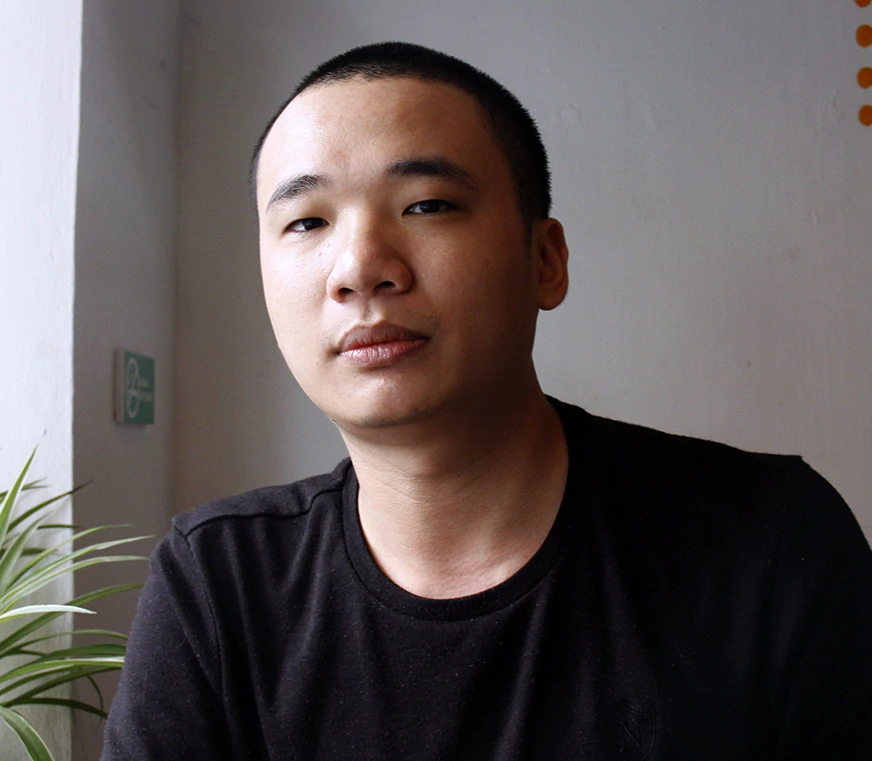
Following the virality of the news, Nguyen, as the creator of the original Flappy Bird, made his own announcement.
In a post on the social media X, he said that he have no relation with the game, and he didn't sell anything, and that he is also not supporting cryptocurrency.
No, I have no related with their game. I did not sell anything.
I also don't support crypto.— Dong Nguyen (@dongatory) September 15, 2024
In other words, Nguyen suggests that he is staying true the words he made about a decade ago, and that he has no intention to revive the game.
When he pulled the game from both the App Store and Google Play on February 10, 2014, despite earning $50,000 per day from ads, Nguyen claimed that he felt guilty over what he considered to be the game's addictive nature and overusage and concerns for his and his family’s safety.
"I can call Flappy Bird a success of mine. But it also ruins my simple life. So now I hate it," Nguyen said when he made his sudden move in 2014.
Its popularity and sudden removal caused phones with the game installed before its removal to be put up for sale for high prices over the internet, and clones of the game were profiting immensely before the two app stores shut them down for being too identical.
The Flappy Bird Foundation's attempts to revive the popular dead game is certainly financially motivated.
After all, the foundation has Michael Roberts, a developer who has a big interest in NFTs and crypto and describes himself as the "chief creative" behind the game's return.
“The legendary Flappy Bird TM is back and will fly higher than ever on Solana as it soars into Web 3.0,” the FlappyBird.org website states. "Flappy Bird will now be the world’s first open-source, community-owned Web 2 and Web 3 game," it adds.
Knowing how Flappy Bird was a huge hit back in its days, the foundation wishes that its iteration of the game can recapture its former viral success.
Nevertheless, 2024 is not 2014, and in the span of a decade, mobile technology has evolved tremendously, and that the mobile gaming landscape has also changed.






















































































































































































































































































