To most people, their internet runs inside cables and invisibly, when in reality, the internet runs under the sea.
Spanning thousands upon thousands of kilometers, beneath the waters, thigh-width cables are laid to connect one country to the next, from one continent to another. It's a network of cables down there. To improve connectivity and response, the only way to do it is to either improve the cables, or add more cables.
And this time, Google opts for the second, when trying to offer internet service to Pacific Island nations..
In a blog post, the technology company said that it's working together with the U.S. and Australia to make this happen.
Specifically, the underwater cable project is meant to provide internet service to Tuvalu, Micronesia, Kiribati, the Marshall Islands, Papua New Guinea, the Solomon Islands, Timor-Leste and Vanuatu.
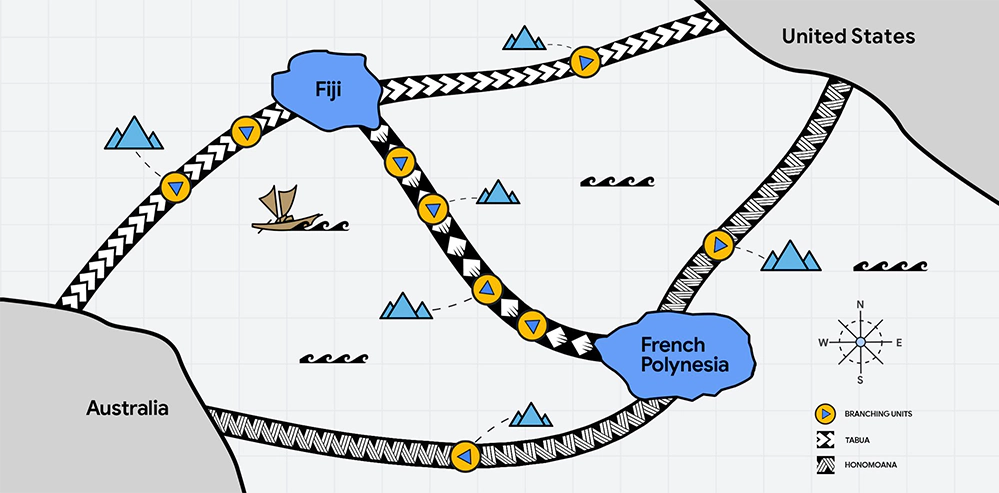
Here, Google wans to put a pair of subsea cables to connect the U.S. to Australia, by way of Fiji and French Polynesia.
The project, announced Wednesday during a visit by Australian prime minister Anthony Albanese to the White House, shall see Google work with local providers to bolster the resilience of subsea cables in a region, which is particularly unique, due to its geographical region that is prone to natural disasters.
The region is also known for frequent outages caused by shipping mishaps.
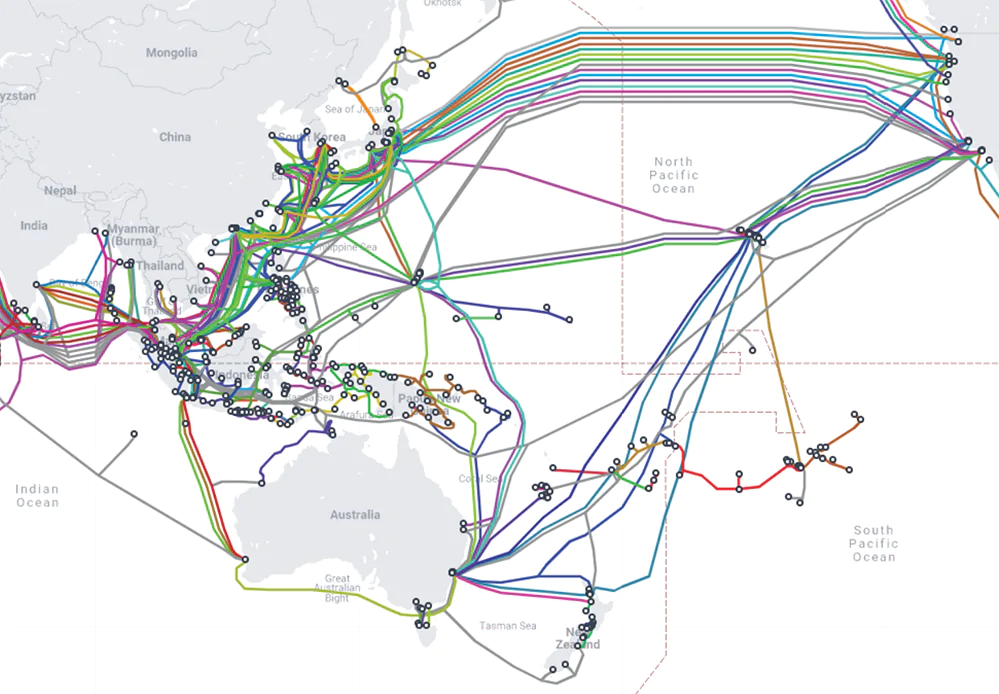
Because cable breaks have been an ongoing problem, particularly in the Asia Pacific., the U.S. and Australia propose extra links to the existing cables.
The subsea cables shall take two routes, called Tabua and Honomoana.
The latter, which is named for the Polynesian words for "link" and "ocean," shall pass through French Polynesia. Tabua shall connect Australia and the U.S. with a stop in Fiji, with the island nation giving the link its name in reference to a sacred whale's tooth.
Fiji and French Polynesia will also be connected by a third interlink cable.
"This will serve to connect transpacific routes, improve reliability, add capacity, and reduce latency for users in the Pacific islands and around the world," Google said in a blog post.
Google said that the cables shall be laid in collaboration with Fiji International Telecommunications, the Office of Posts and Telecommunications of French Polynesia, AP Telecom, and Vocus Group.
Read: The Volcanic Eruption At Tonga Crippled Its Only Undersea Internet Cable
The U.S. committed to $5 million in cash with provisions for another $10 million in the future, whereas Australia agrees to provide the bulk of the funding, fronting $50 million for the project.
The agreement marks the continuity of Google's expansion, which Google is also working on in the area.
At this time, the Pacific islands are an area of interest for both the U.S. and China, as each country has been working to expand their relationships with the island nations.
Among others, they have been promising military partnerships and building projects.
Beyond the economic benefits inherent to improved connectivity, the project is also meant to likely prevent the spread of Chinese influence in the region.
Before this China has extended offers to help South Pacific nations improve their network infrastructure using its homegrown technologies.

While the project is specifically Google's the Biden administration has said work by U.S. telecommunications and internet companies such as Google is a national security issue.
This is because companies that own or oversee cables that connect small countries to the internet can control the flow of information around the world.
In this case, as an example, Google, which is owned by parent company Alphabet, is working on a cable project that links Taiwan with the U.S. and the Philippines.
This can be an issue, because Google as the utmost control over whatever passes through the cable.
Because of this, an official at the U.S. suggests that the Pacific islands may help from cybersecurity experts and companies to help address the issue.






















































































































































































































































































