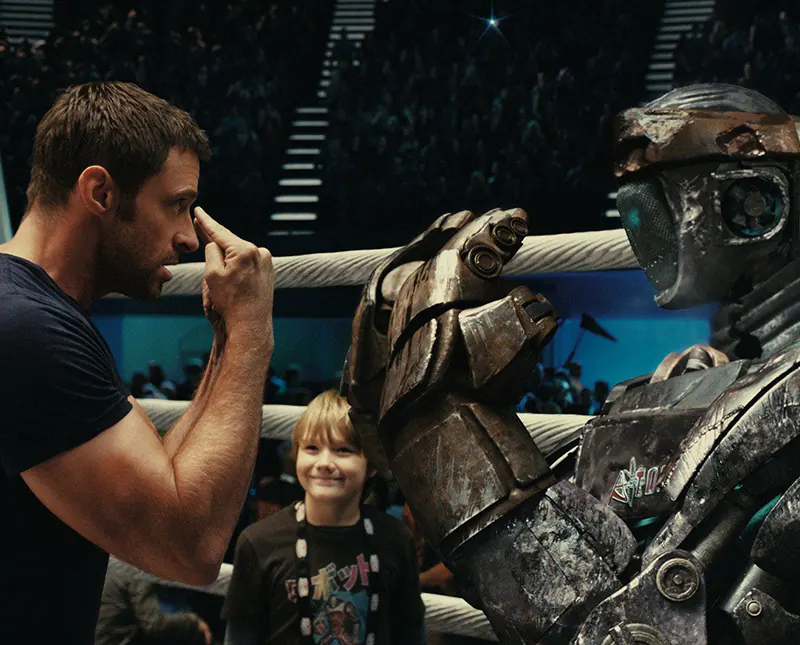
For decades, humans have been obsessed with the idea of robots throwing down in the ring.
From clunky metal gladiators in old sci-fi novels to high-octane Hollywood blockbusters, the fantasy of machines battling it out like boxers has captured our imagination. Think of the 2011 film Real Steel, where Hugh Jackman plays a washed-up fighter turned robot-boxing promoter in a near-future world where massive, remote-controlled humanoid robots duke it out in packed arenas.
The movie nailed the spectacle: sparks flying, crowds roaring, underdogs rising.
It felt like pure entertainment, until May 25, 2025, when it stopped being fiction.
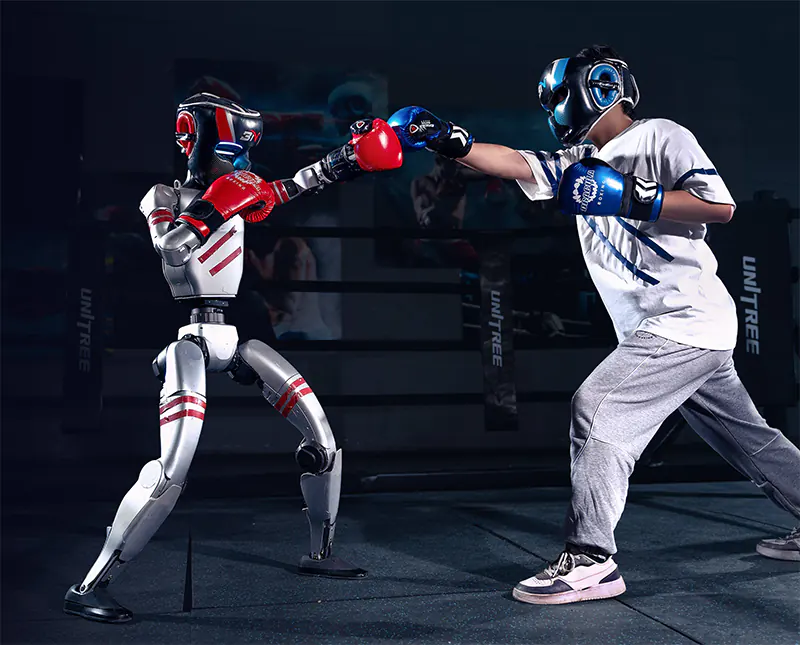
That day in Hangzhou, China, Unitree Robotics made history by hosting the world's first dedicated humanoid robot kickboxing/fighting competition: the Iron Fist King: Awakening! tournament, also known as the Mecha Fighting Series under the China Media Group World Robot Contest.
Four child-sized Unitree G1 robots, each about 1.32 meters tall and weighing around 35 kg, stepped into a real ring.
Remotely piloted by human teams using motion-capture tech and real-time controls, they threw punches, kicks, knees, and combos with surprising fluidity.
No wheels. No tracks. Just bipedal bots moving like fighters.
Robot combat sports have existed for decades, of course. BattleBots and its predecessors launched in the late 1990s and early 2000s with wheeled or tracked robots armed with spinning saws, hammers, flippers, and all sorts of destructive weapons. Those brutal, destructive matches, think two metal boxes smashing each other until one is a smoking wreck, are still going strong today, drawing huge audiences on TV and live events.
They're chaotic, creative, and undeniably fun.
But they were never humanoid.
The dream was always something closer to us: robots that walk, dodge, grapple, and fight on two legs.
Sci-fi gave glimpses. But sci-fi is created because the tech just wasn't there, until it is possible.
Unitree's Iron Fist King turns sci-fi dreams into metal reality.
Unitree's G1 changed the game by making these robots not only available, but also affordable.
The event wasn't some quiet demo. It was a proper tournament-style showdown, broadcast live on Chinese television and streamed globally. Robots sported colored headgear for easy identification and competed in fast-paced matches with clear rules: three rounds, knockouts counted, and an 8-second window to get back up after a fall.
Highlights included precise hooks, uppercuts, and spinning kicks that looked straight out of a human MMA bout, dramatic recoveries where bots stumbled then stabilized thanks to advanced balance algorithms, and a nail-biting final where "AI Strategist," the black-headgear robot piloted by Lu Xin, faced off against "Energy Guardian."
AI Strategist delivered three straight knockouts, crowning itself the first-ever Iron Fist King.
In other words, the even was not a stunt.
It was a proof that humanoid robots can now deliver the kind of physical, entertaining combat we've craved. Suddenly, the line between movie magic and real-world tech is blurring fast. Since May 2025, we’ve seen the momentum build: follow-up events, bigger international showcases like the World Humanoid Robot Games in Beijing later that summer, and even commercial leagues popping up in 2026.
Companies are already talking about full-contact robot sports arenas, VR-piloted leagues, and more.
For now, it's still human brains behind the metal fists.