
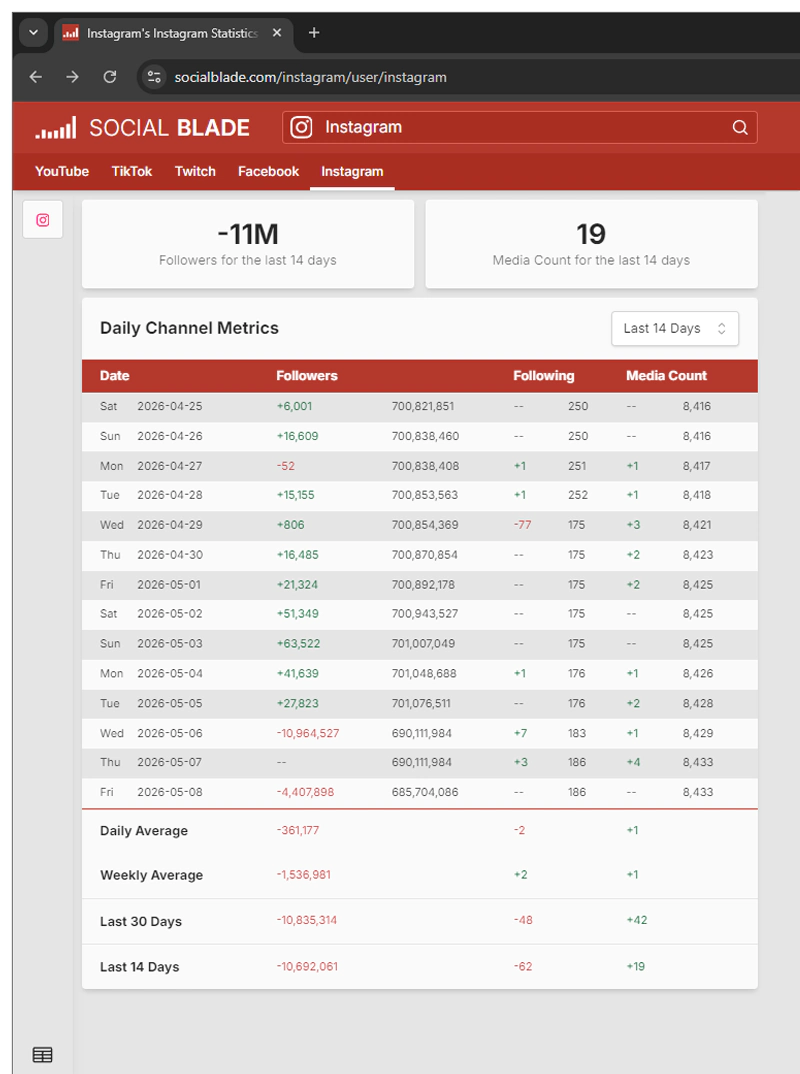
Instagram went through one of its biggest cleanups ever. This happened quietly, when Meta removed millions of inactive bot spam and fake accounts across the platform in a matter of hours.
What started as a routine maintenance effort quickly earned the nickname the Great Purge of 2026 because the drops were so sudden and so large that celebrities influencers and everyday users alike watched their follower counts plummet in real time.
Meta explained it simply as part of their ongoing process to remove inactive accounts so that the numbers everyone sees reflect real active people rather than ghost profiles or automated fakes.
Active followers stayed untouched and any wrongly suspended accounts would return after verification yet the immediate effect felt seismic for accounts that had built up years of inflated audiences.
The heaviest hits landed on the biggest names with Kylie Jenner reportedly losing between 14-15 million million followers in one sweep the kind of drop that turned her once untouchable total into something noticeably leaner. Ariana Grande lost about 12 million, while BLACKPINK's official group account followed close behind shedding around 10 million, and Khloe Kardashian also lost around 10 million. Cristiano Ronaldo saw estimates ranging from 7-8 million gone though some trackers put his loss even higher.
BTS lost roughly 7 million, while Ariana Grande dropped between 5.6 million, and Selena Gomez saw 5.5 million vanish. Both Dwayne Johnson and Taylor Swift lost about 5 million. Justin Bieber lost 4 million.
Other major accounts took noticeable punches too from Lionel Messi and Virat Kohli down to Priyanka Chopra and even Instagram's own verified page which reportedly shed over 10 million.
These were not small tweaks.
For accounts that once boasted four hundred million or six hundred million followers the overnight losses represented a visible reset that left everyone from casual scrollers to brand managers refreshing their feeds in disbelief.
The implications stretch far beyond bruised egos on the leaderboard.
he easiest for anyone to get followers and interactions on social media is through bots, and bot farms is where the business happen.
A bot farm for social media is a coordinated system of fake or automated accounts used to manipulate online activity. Instead of real people engaging naturally, these accounts are controlled by software or groups of workers, making posts, profiles, or opinions appear more popular and widely supported than they actually are.
From the outside, it can look like genuine engagement, but much of it is artificial.
The way a bot farm works usually starts with creating large numbers of accounts. These can be generated automatically or set up manually to avoid detection, often using stolen or AI-generated profile photos to appear real. After creation, the accounts are "warmed up" by posting normal content, following users, and interacting casually so they don't immediately get flagged as suspicious.
Once the accounts appear legitimate, they are controlled through centralized tools or dashboards. A single operator or small team can manage thousands of accounts at once, directing them to like posts, leave comments, follow specific profiles, or share content. This allows coordinated bursts of activity that can quickly boost visibility.
When a campaign is launched, the bot farm is used to amplify certain messages or content.
It can artificially increase likes, shares, and comments to push something into trending spaces or make it seem widely supported. In some cases, it is also used to flood comment sections with specific opinions, creating the illusion of consensus or popularity.
People use bot farms for different reasons, including inflating follower counts, promoting products, influencing public opinion, or building fake credibility for scams. While it can be effective in the short term, it distorts how information spreads online and can mislead both users and platform algorithms.
Social media platforms such as Instagram, TikTok, and X actively try to detect and remove these networks using automated systems and behavior analysis, but bot farms continue to evolve, making it an ongoing challenge.
For years follower counts had become the ultimate currency for sponsorships brand deals and perceived influence but this purge stripped away the illusion that every number was genuine.
Creators who relied on authentic engagement suddenly found their real audience percentages climbing because the fake noise disappeared which could actually boost visibility and ad performance in the long run. Brands that pay top dollar for reach now have cleaner data to work with forcing influencer marketing to shift toward genuine interaction instead of padded vanity metrics.
On the flip side some smaller creators and businesses worried about short term dips in perceived popularity though most analysts agree the platform ends up healthier overall with less spam and more trustworthy analytics.
Even casual users noticed the difference as their feeds felt a little less cluttered by inauthentic accounts pushing dubious products or recycled content.In the end the purge reminded everyone that social media numbers have always been a mix of real connection and platform gamesmanship.
What felt like a chaotic overnight shakeup was really Instagram catching up to its own promise of authenticity and while the immediate headlines focused on the millions lost the quieter story is about millions of real people whose presence now counts for more.
While Meta has been running steady cleanup efforts on its various platforms for years, but this one looks different. Meta usually focused more on removing fake profiles spam networks impersonators and accounts tied to coordinated inauthentic behavior often announced in batches through transparency reports and creator updates, not this kind overnight purge that everyone notices in their follow counts.
While the dust is still settling and that some counts may fluctuate a bit, one thing is clear: the era of chasing hollow totals just got a lot harder and for those who have been building real communities that is not a loss at all.