For more than a decade, Twitter was the internet’s town square. It shaped news cycles, launched movements, amplified celebrities, and gave ordinary users a direct line into public conversation in a way no other platform had managed before.
The bird logo and the act of “tweeting” became cultural shorthand, embedded not just in apps and URLs but in how people talked about the internet itself.
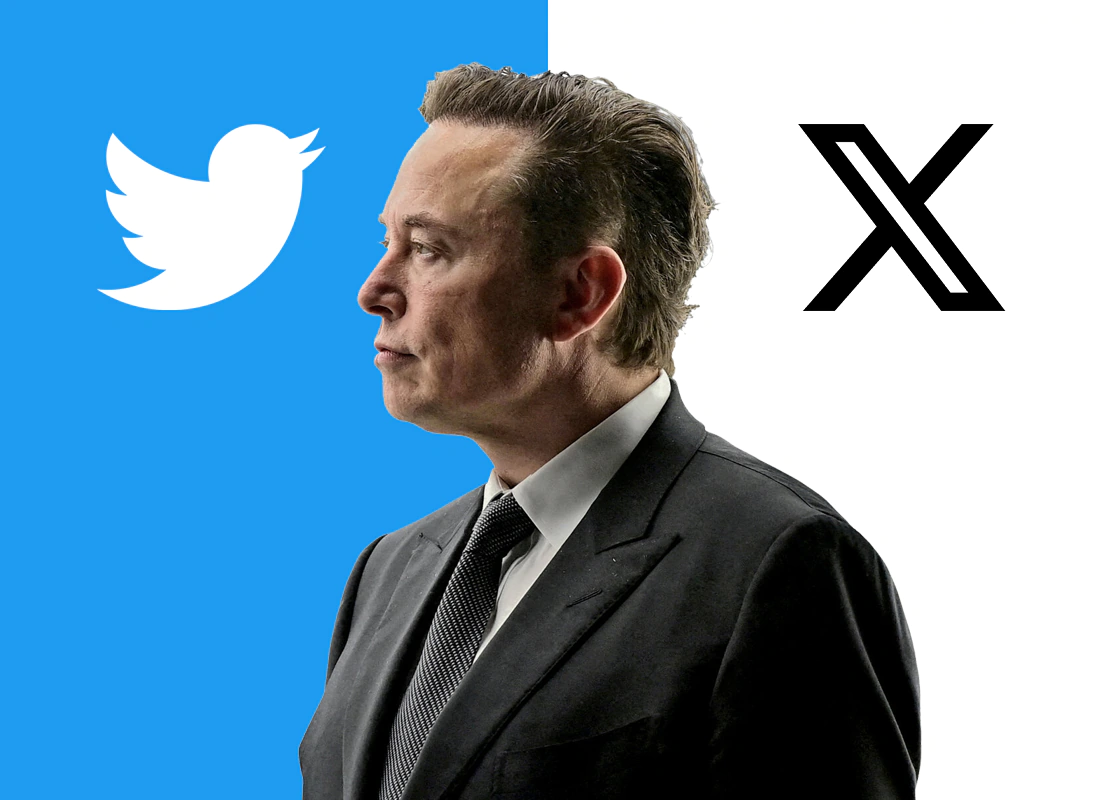
That era began to fracture in 2022, when Elon Musk acquired Twitter for $44 billion. What followed was a rapid and often chaotic transformation of the platform: mass layoffs, policy shifts, advertiser pullback, and eventually, a radical rebrand. In mid-2023, Musk announced that Twitter would become “X,” declaring that the company would “bid adieu to the Twitter brand and, gradually, all the birds.”
The familiar blue icon disappeared, replaced by a stark black-and-white X, as the company tried to reposition itself as something broader than a social network.
But while the name changed, Twitter never fully vanished.
Millions of users continued to visit twitter.com, and got redirected automatically to x.com, and people kept calling posts "tweets" despite X no longer uses the term. Journalists, politicians, brands, and everyday users still referred to the platform as Twitter out of habit and convenience. The cultural gravity of the old name proved difficult to erase.
That tension has now spilled into a legal fight.
This week, Elon Musk’s X Corp filed a lawsuit in Delaware federal court against a Virginia-based startup called 'Operation Bluebird,' which is attempting to cancel X’s federal "Twitter" trademarks.
Operation Bluebird argues that by rebranding to X and removing Twitter branding from its products and marketing, X effectively abandoned the trademark, making it fair game for someone else to claim.
Operation Bluebird says it wants to "bring Twitter back" as a new social media platform, potentially under the name twitter.new.
The group has already filed its own trademark applications and is collecting sign-ups from users interested in reserving handles. Its leadership includes Michael Peroff, an Illinois-based attorney, and Stephen Coates, a former Twitter trademark lawyer, a detail that adds an extra edge to the dispute.
X strongly rejects the abandonment claim.
In its lawsuit, the company argues that Twitter remains one of the world’s most recognizable brands and that a rebrand does not equal relinquishment of trademark rights.
"Twitter is one of the world’s most recognized brands, and it belongs to X Corp," the lawsuit said. "Simply put, a rebrand is not an abandonment of trademark rights."
X points out that users still access the service through twitter.com, continue to refer to it as "Twitter," and that the company itself continues to maintain and enforce its Twitter trademarks. Allowing another company to launch a competing platform under the same name, X argues, would cause massive consumer confusion.
X quickly revised its Terms of Service, effective as of January 15, 2026, stating that: "Nothing in the Terms gives you a right to use the X name or Twitter name or any of the X or Twitter trademarks, logos, domain names, other distinctive brand features, and other proprietary rights, and you may not do so without our express written consent."
The legal stakes are high because trademark law hinges not just on ownership, but on use.
If a company truly stops using a mark and shows no intent to resume, it can lose exclusive rights to it. Musk’s own public statements about abandoning the Twitter brand are now being cited against X as evidence of that intent. At the same time, courts tend to weigh how consumers actually perceive a brand, and in the public mind, Twitter and X remain deeply intertwined.
Operation Bluebird frames its effort as an attempt to restore what Twitter once was: a central, recognizable public square that competitors like Threads, Bluesky, and Mastodon have yet to fully replicate at scale.
"Our cancellation petition is based on well-established trademark law and we believe we will be successful," Bluebird founder Michael Peroff said in a statement in response to the lawsuit. "We are prepared to take this as far as we need to in order to achieve our goal."
X, meanwhile, is making clear that whatever it is becoming, it is not ready to let go of one of the most valuable names in social media history.
Further reading: Elon Musk's X Social Media Is Sued By X, Another Social Media Company






















































































































































































































































































