The large language models (LLMs) competition is no longer what it once was.
OpenAI's ChatGPT initially arrived as a conversational AI, but it quickly demonstrated broad capabilities in reasoning, writing, and code generation, attracting widespread attention and driving significant investment.
Within months, other organizations entered the race in earnest.
The pace of releases accelerated. Each new version brought incremental gains in reasoning depth, context length, and tool use. However, by mid-2026, the frontier had shifted noticeably toward agentic systems capable of sustained, multi-step work rather than single-turn responses.
In this environment, Anthropic’s Claude Fable 5 and related variants posted strong results on several independent benchmarks, particularly those measuring long-horizon coding, repository-level software engineering, and certain agentic workflows. Leaderboards and third-party evaluations frequently placed these models at or near the top in overall quality and specialized coding tasks during the preceding months.
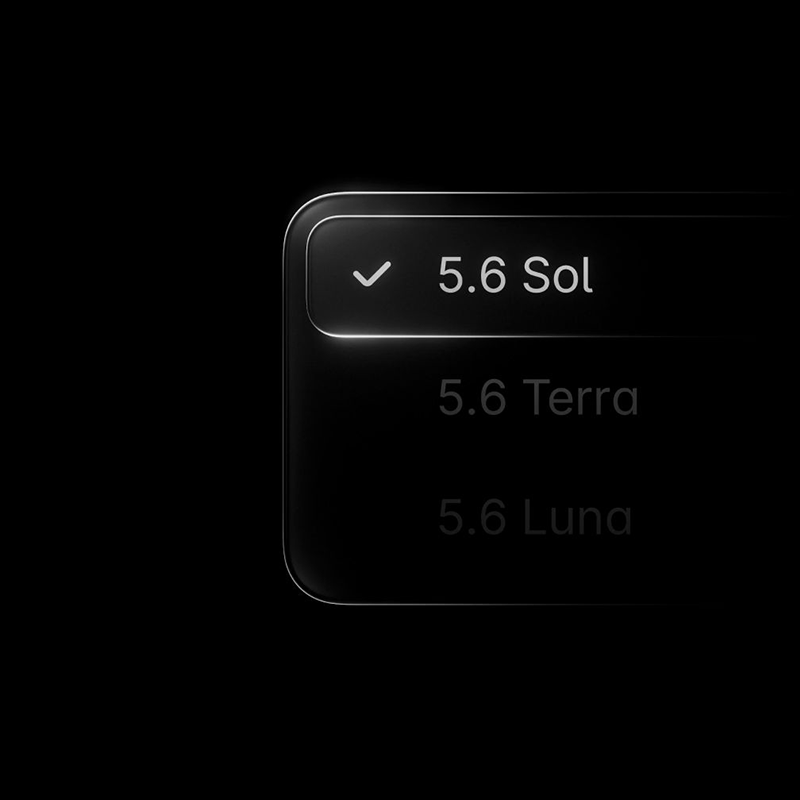
OpenAI responded in late June 2026 with a preview of its 'GPT-5.6' model family, followed by <a href="https://openai.com/index/gpt-5-6/" rel="nofollow" target="blank">broader rollout</a> in July.
The family includes three variants designed for different trade-offs:
Sol as the highest-capability flagship, Terra as a balanced option for everyday efficiency, and Luna as a lower-cost model for high-volume use.
Company statements highlighted improvements in complex reasoning, coding workflows, cybersecurity tasks, and scientific applications, along with reduced token consumption and lower estimated costs in targeted evaluations compared with prior generations.
On specific benchmarks cited by OpenAI, GPT-5.6 Sol recorded new highs.
It reached 53.6 on Agents’ Last Exam, exceeding Claude Fable 5 (adaptive) by 13.1 points at medium reasoning effort while using roughly one-quarter the estimated cost.
On the Artificial Analysis Coding Agent Index it scored 80.0, 2.8 points above Claude Fable 5, while consuming less than half the output tokens and taking less than half the time at about one-third lower cost.
Additional claims included stronger performance on long-horizon security tasks such as vulnerability research and improved design judgment through enhanced computer-use features that allow the model to inspect and refine rendered outputs rather than only generating underlying code or content.
A parallel release introduced ChatGPT Work, an agent built on Codex and GPT-5.6.
The system is intended to handle extended workflows that span multiple applications and files.
Users can describe a desired outcome, after which the agent maintains context over hours, produces polished documents, presentations, analyses, or reports, and iterates while the user retains oversight.
Company materials described it as a move beyond question-answering toward sustained project execution across web, mobile, and desktop environments.
Rollout of GPT-5.6 began globally in ChatGPT, Codex, and the API, with phased availability.
Pro, Enterprise, and Edu users gained earlier access on web and mobile, while Plus and Business plans followed shortly after.
The desktop application made Chat, Work, and Codex features available across all tiers, including free users, on Windows and Mac.
An "ultra" mode was added for the most demanding tasks, coordinating multiple agents in parallel at the expense of higher token consumption. Safety testing received emphasis, with extended red-teaming and automated evaluation cited as part of the launch preparations.
Independent evaluations conducted shortly after release showed a mixed but competitive picture.
GPT-5.6 Sol demonstrated advantages in efficiency and certain terminal-style agentic coding benchmarks, often at lower per-task cost than leading alternatives.
Claude Fable 5 retained leads or near-parity in other areas, including some repository-level software engineering metrics and broader reasoning suites on third-party leaderboards.
Real-world performance continues to depend on the specific workload, with cost, speed, context handling, and integration requirements varying by deployment.
The GPT-5.6 family and ChatGPT Work represent OpenAI's latest effort to regain ground in agentic and efficiency-focused evaluations while expanding practical workflows inside its platform.
As with previous cycles, nobody will remain on top forever.
And this time, OpenAI is after Anthropic because it knows the margin for leadership in agentic systems and efficiency has narrowed to a point where targeted gains in benchmarks, workflow integration, and cost performance can quickly shift user and developer preferences.














































































































































































































































































