
In the intensifying war among large language models and AI agents, major tech companies are racing to build systems that don't just answer questions but actively complete complex tasks.
Since OpenAI released ChatGPT, others are pushing aggressively. Now, in the war to create "agentic" AI, which are tools that can plan, reason, and execute multi-step workflows, the competitive pressure is now reaching creative software, where Adobe has made its most significant move yet.
Adobe is adapting to this AI arms race by launching 'Firefly AI Assistant,' a conversational agent that works directly inside Creative Cloud applications.
Rather than forcing users to master dozens of tools and menus across Photoshop, Premiere Pro, Illustrator, and Lightroom, the assistant lets people describe their goal in plain English.
It then breaks down the request, executes the necessary steps across multiple apps, and presents options for fine-tuning along the way.
The system can handle tasks like generating variations of an image, editing video clips, resizing assets for different platforms, or preparing complete social media campaigns, all while the user remains in the driver's seat.
Your creative process is about to get supercharged .
Say hello to Firefly AI Assistant, a new conversational interface powering creativity across Adobe Creative Cloud apps. By orchestrating and executing complex, multi‑step workflows, this revolutionary innovation collapses…— Adobe Firefly (@AdobeFirefly) April 15, 2026
The system builds on Adobe’s earlier Project Moonlight preview and integrates deeply with the company’s existing tools.
It can learn individual user preferences over time, such as favored editing styles or workflows, though users can control or disable this behavior. Adobe is also introducing "skills" pre-built workflow templates for common tasks like optimizing social media assets that users can select or customize.
This marks a notable evolution in Adobe’s AI strategy.
While the company has steadily added generative features to individual apps, Firefly AI Assistant takes a more agentic approach, attempting to bridge the gap between creative vision and technical execution. It is powered in part by models from Anthropic's Claude family through a new partnership, allowing the assistant to operate both inside Adobe's ecosystem and potentially within Claude itself.
Adobe wrote in a press release that it is "enabling creators to access the best of Adobe directly across the surfaces where they work every day," by bringing its tools to third-party models.
Anthropic's Paul Smith, chief commercial officer, added: "Together with Adobe, we're exploring new ways to help creators conceptualize a project in Claude and reach straight into Adobe Firefly to execute it."
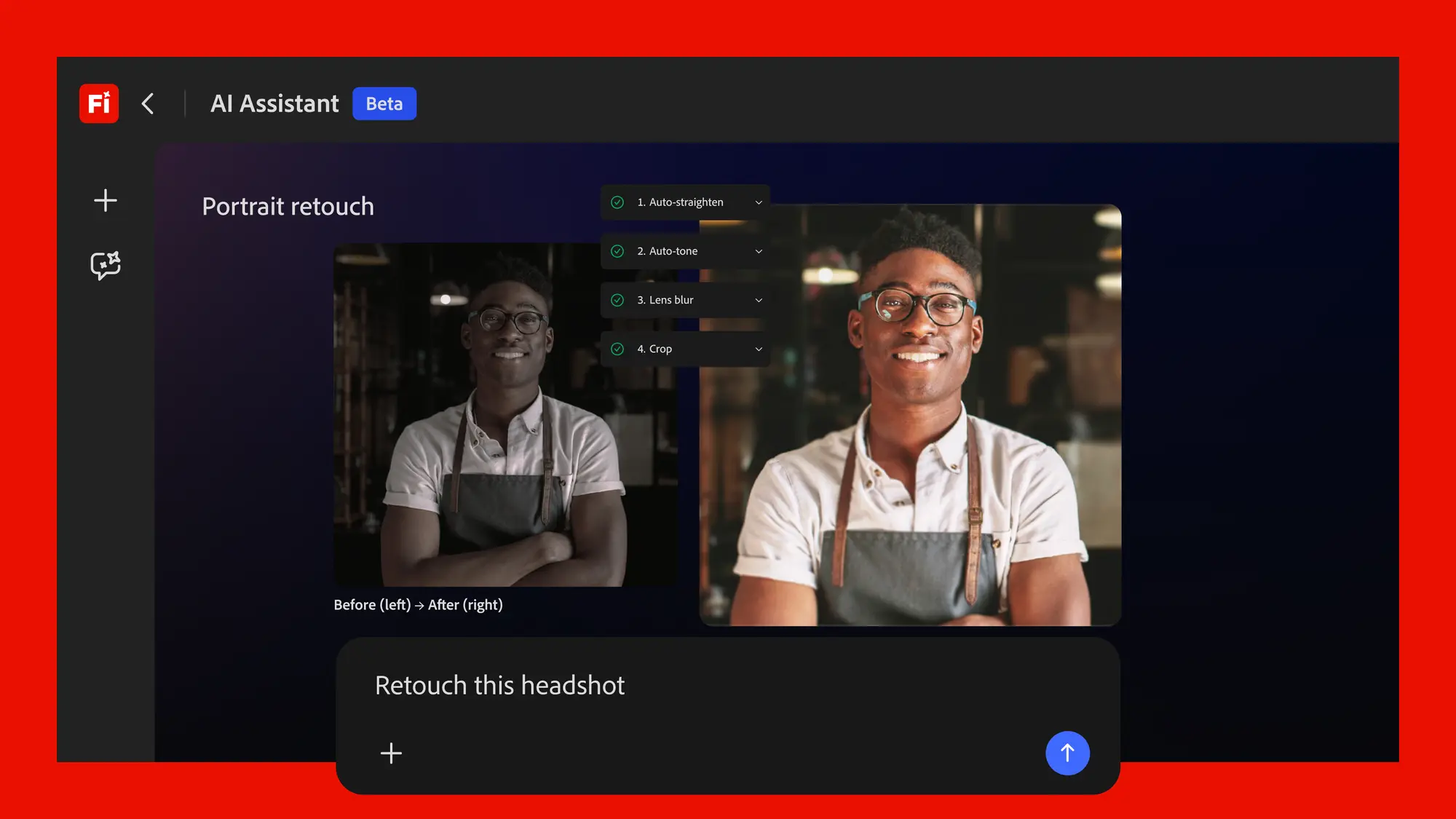
Adobe also significantly expanded Firefly's video and image editing capabilities, introducing new features in Firefly Video Editor including studio-quality sound, advanced color adjustments and Adobe Stock integration, as well as new precision image editing capabilities such as Precision Flow and AI Markup.
Firefly’s roster of more than 30 top industry AI models now includes Kling 3.0 and Kling 3.0 Omni, joining Google's Nano Banana 2 and Veo 3.1, Runway's Gen-4.5, ElevenLabs' Multilingual v2 and more, to offer creators choices and flexibility in how they create.
Together, these cement Firefly as the all-in-one creative AI studio, giving every creator the speed, control and creative freedom to move from idea to high-quality content.
Adobe emphasizes that while the Firefly AI Assistant is doing the heavy work, users remain in control.
"You stay in the loop as the assistant executes, stepping in at any point to guide direction, adjust outputs and create something that's distinctly yours," said Adobe, adding that Firefly AI maintains Adobe's native file formats, so the final output remains fully editable.
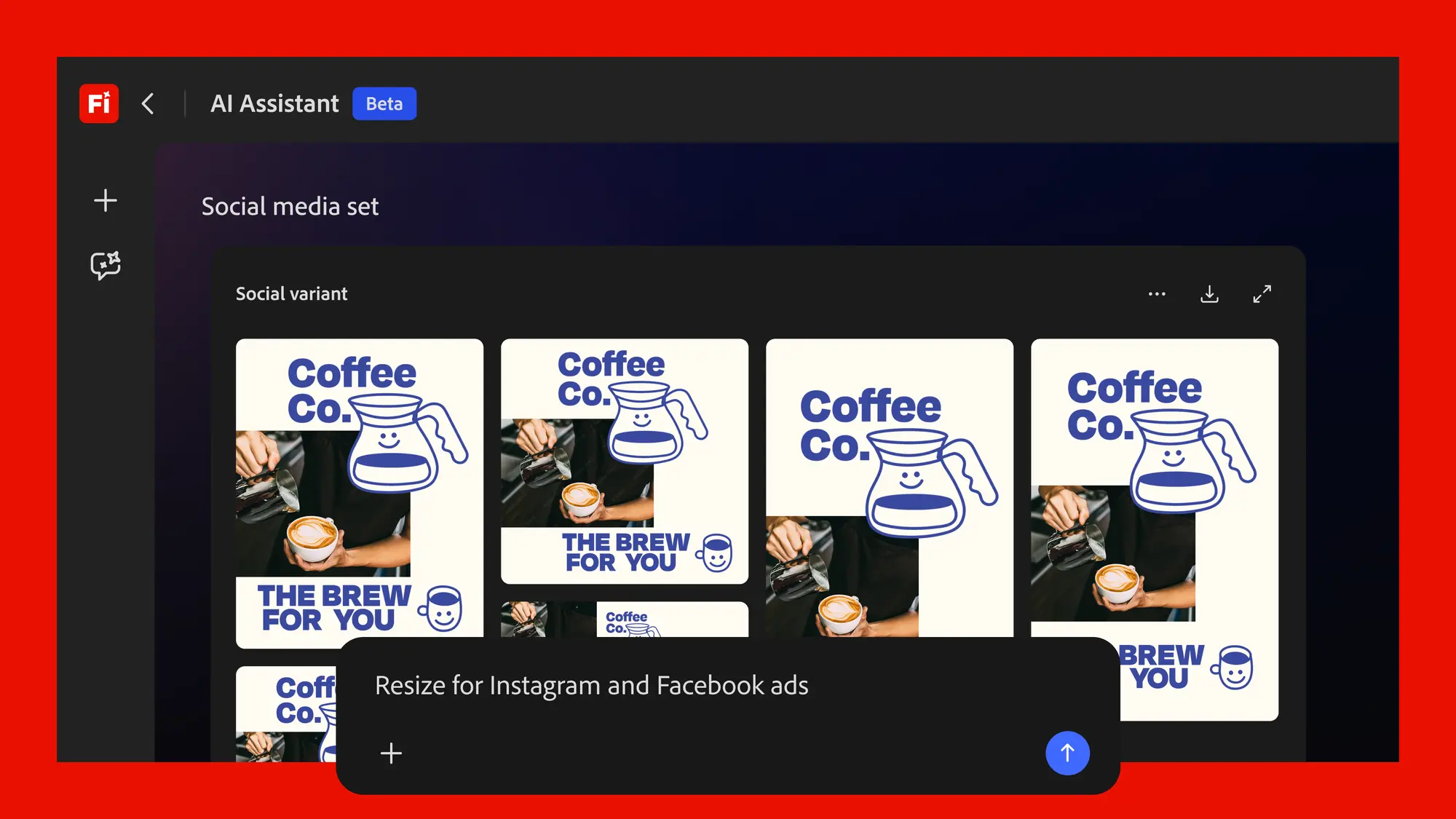
Overall, Adobe is pushing toward a more outcome-focused creative process, where describing the end result matters more than mastering every tool and shortcut. Instead of navigating complex interfaces and workflows step by step, users can increasingly rely on AI to interpret intent and handle execution behind the scenes.
As competition in agentic AI continues to intensify, moves like this signal a broader shift in creative software: one where complex, multi-step workflows are increasingly handled by intelligent assistants rather than manual input.
This not only lowers the barrier to entry for new users but also allows experienced professionals to work faster and focus more on creative direction rather than technical overhead.
Over time, this approach is set to redefine how creators interact with professional tools, turning them from hands-on applications into collaborative systems that can translate ideas into finished work more seamlessly.




















































































































































































































































































