In the world of web design and development, developers have long relied on powerful browser features to shape how users move through their site.
From creating everything from smooth single-page applications to dynamic content loading that feels responsive and modern. One such tool is the browser's History API, which lets pages add or replace entries in a visitor's navigation history without a full reload. This capability can enhance experiences like infinite scrolling or modal dialogs.
However, it also opened the door to practices where developers insert extra steps into that history stack.
Over time, some have used these techniques, often called "history manipulation" or back button hijacking, to keep users on the page a little longer, even when they are actively trying to leave.
The typical scenario unfolds like this: someone clicks a link from a search engine, lands on the site, and quickly realizes it is not quite what they wanted. They hit the back button expecting to return immediately to their previous tab or results page. Instead, the site quietly pushes one or more additional entries, into the browser history.
They can do this using JavaScript methods such as history.pushState or history.replaceState.
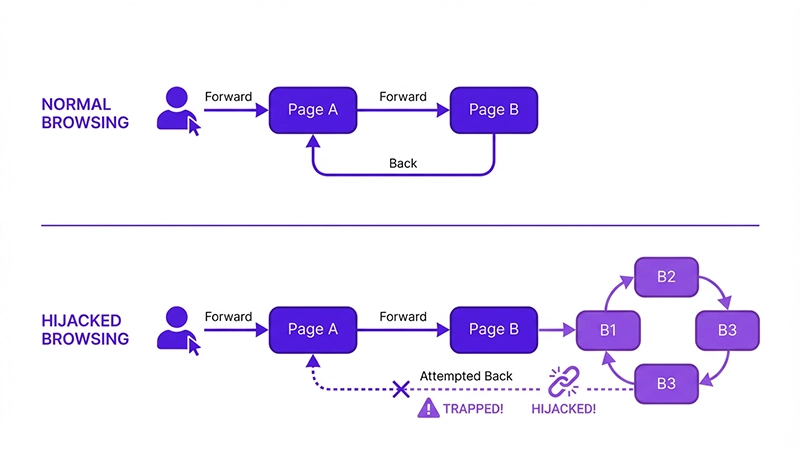
When the back button is pressed, the user is first shown an unexpected interstitial: perhaps a page of recommended articles, a promotional overlay, or a cluster of ads, before they can finally escape. The result feels less like helpful engagement and more like an interruption, as the browser's standard navigation behavior is overridden.
Users have grown familiar with this pattern, and many report feeling manipulated by it.
The back button is one of the most basic expectations in web browsing, a quick way to undo a decision or correct a mistaken click. When sites interfere with that instinct, it erodes trust and makes people less willing to click through to unfamiliar domains in the first place. While the intent behind these tactics is often tied to boosting session time or ad impressions, the outcome frequently clashes with what visitors anticipate from a straightforward online experience.
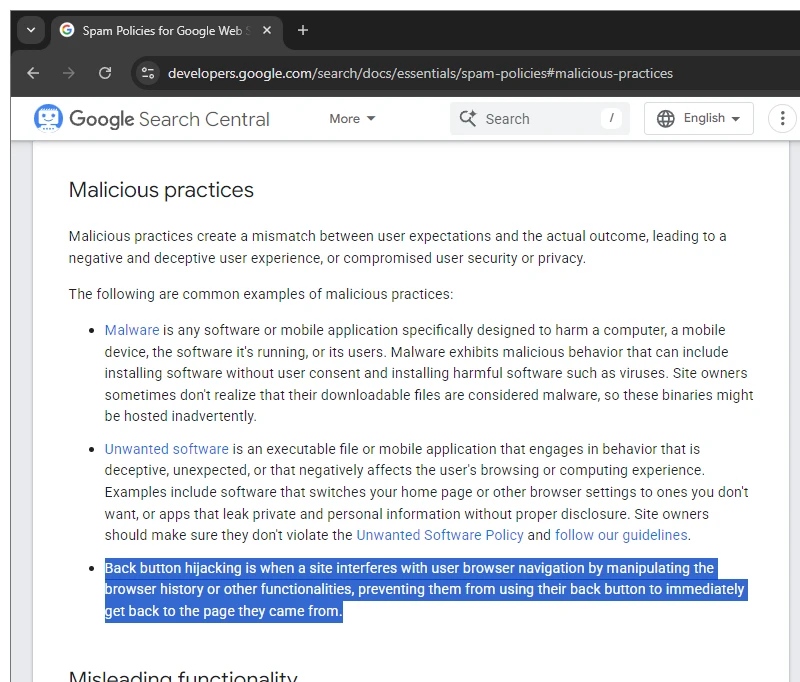
Google has taken notice of the growing prevalence of this behavior, and has made an update to its spam policies to consider the practice "malicious."
In a blog post, the search engine classified back button hijacking as a violation under its "malicious practices" category, placing it alongside concerns like malware or unwanted software.
The policy targets any interference that prevents users from using the back button to return immediately to the page they came from, whether through custom code on the site or scripts pulled in from third-party libraries and advertising platforms. Sites found engaging in the practice now risk manual spam actions or automated demotions that can lower their visibility in search results.
To allow time for adjustments, Google set enforcement to begin on June 15, 2026.
This should give website operators roughly two months to review their pages, audit included scripts, and disable any mechanisms that manipulate browser history in this way.
After that date, sites that still use this "malicious practice" may get down-ranked or even removed from Google Search results. Google then added sites which were penalzed but then fixed the issue could submit a request to Google to have the demotion reconsidered.
The guidance is straightforward: if a technique inserts deceptive or manipulative entries that disrupt normal navigation, it needs to be removed or turned off. This builds on earlier warnings from the company dating back more than a decade, but the new wording makes the rule clearer and easier to enforce consistently.
For those working on web projects, the change serves as a reminder that browser controls exist to serve users, not to override their choices.
Auditing for history manipulation does not require overhauling an entire site; it often comes down to checking ad integrations, recommendation widgets, or engagement tools that might quietly alter navigation flow. As search rankings continue to reward experiences that align with everyday user expectations, keeping navigation intuitive helps maintain both visitor satisfaction and discoverability online.




















































































































































































































































































