
The landscape of voice assistants has shifted dramatically over the past decade.
Amazon launched Alexa more than a decade ago, embedding it into Echo speakers and eventually millions of homes. Google followed closely with Google Assistant, tightly integrated into Android phones and Google’s ecosystem of search, maps, and email. In the early years, both assistants felt comparable, offering similar command-based interactions.
When large language models emerged, however, Google moved faster to reposition its assistant as a conversational AI, using Gemini to push ahead in natural language understanding and context awareness.
What began as simple tools for basic commands, have transformed into a full-blown AI battleground, populated by powerful large language models and intelligent agents.
For a while, Alexa seemed stuck in the old paradigm. It was widely used but increasingly limited, especially compared to assistants that could hold long conversations, summarize information, and reason through complex requests. Alexa+ represents Amazon’s response to that gap. It is not just an upgrade but a redesign of what Alexa is meant to be, powered by generative AI and designed to feel conversational, contextual, and proactive rather than reactive.
In other words, Alexa+ is a reimagined version of Alexa designed for conversational intelligence, proactive assistance, and real-world usefulness.
Using this AI, Amazon wants to snuggle in, and fit into the broader war against popular products like Gemini, Anthropic's Claude, OpenAI's ChatGPT and others.
And now, Alexa+ is having its own user interface, hosted on its own website.
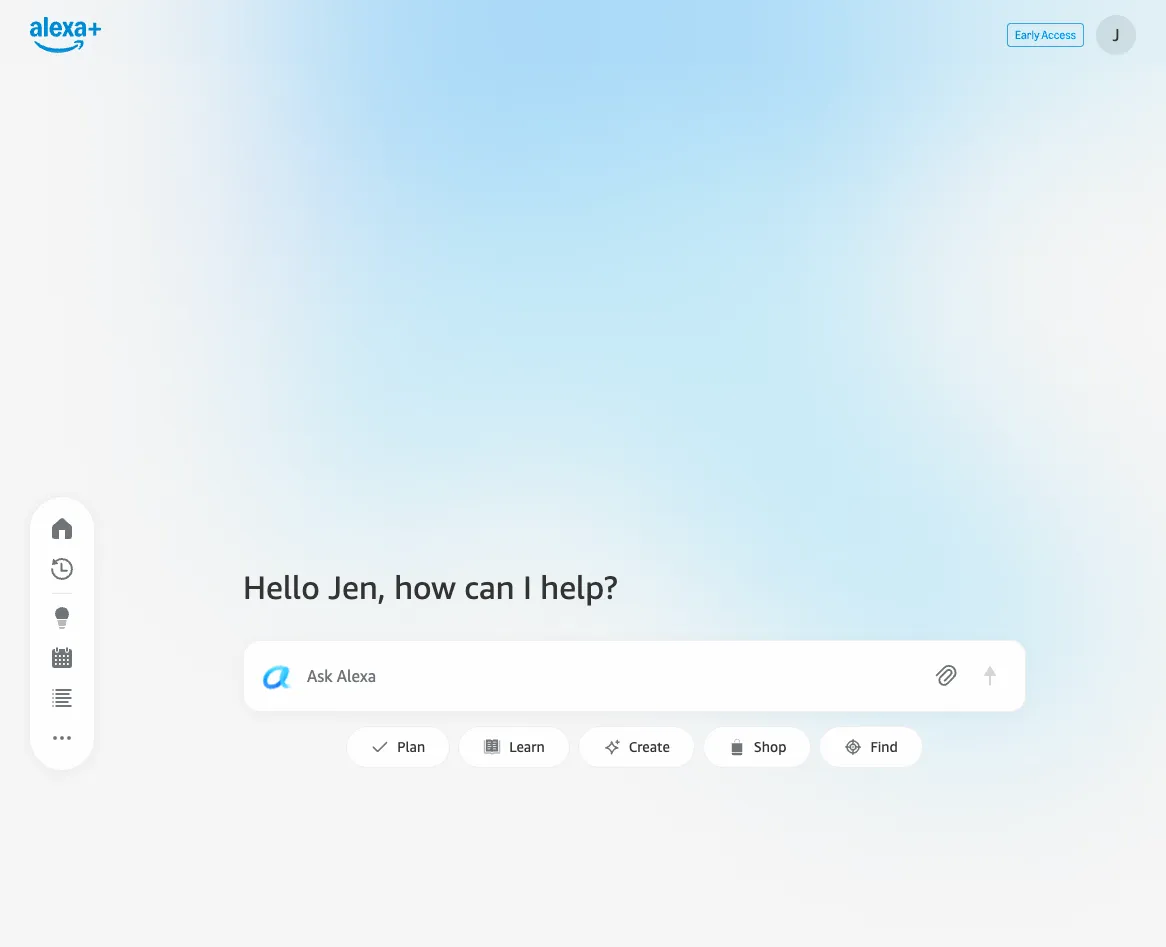
With the website, Alexa+ is no longer confined to smart speakers or mobile apps.
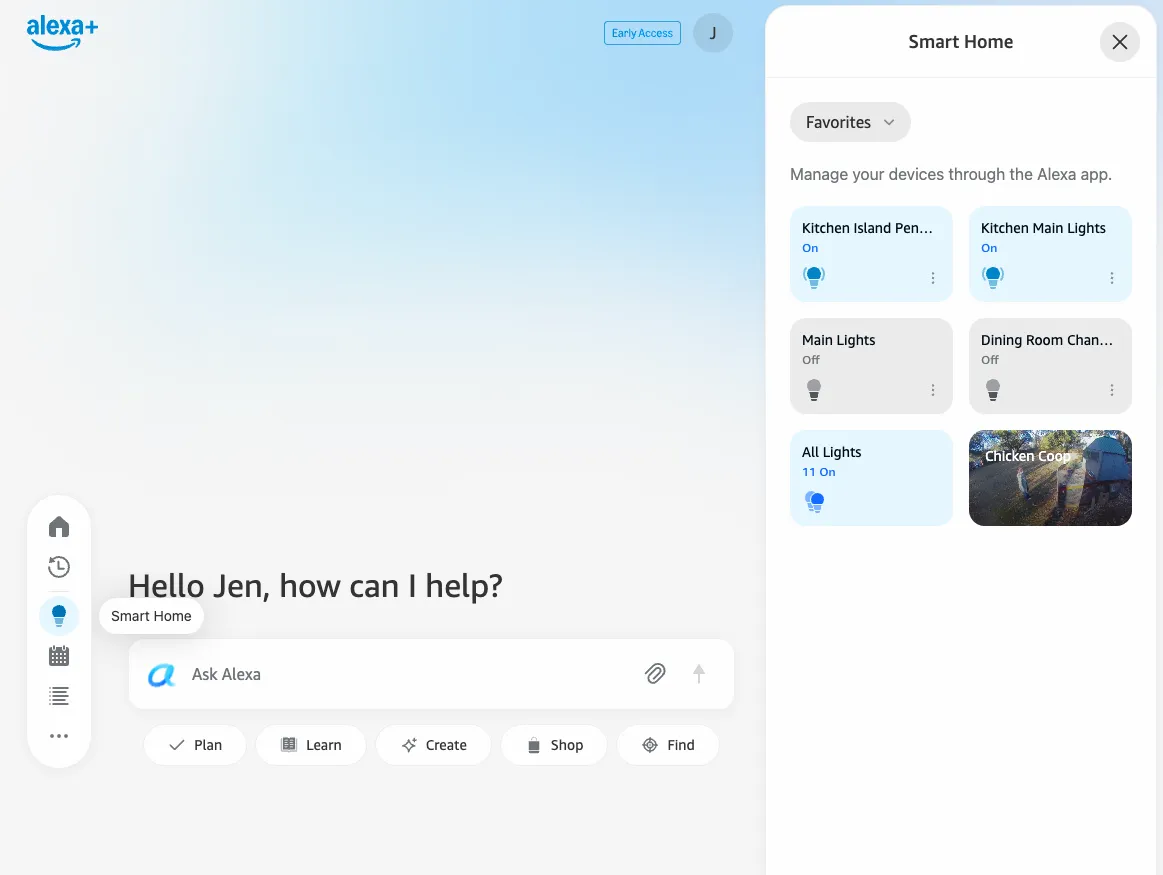
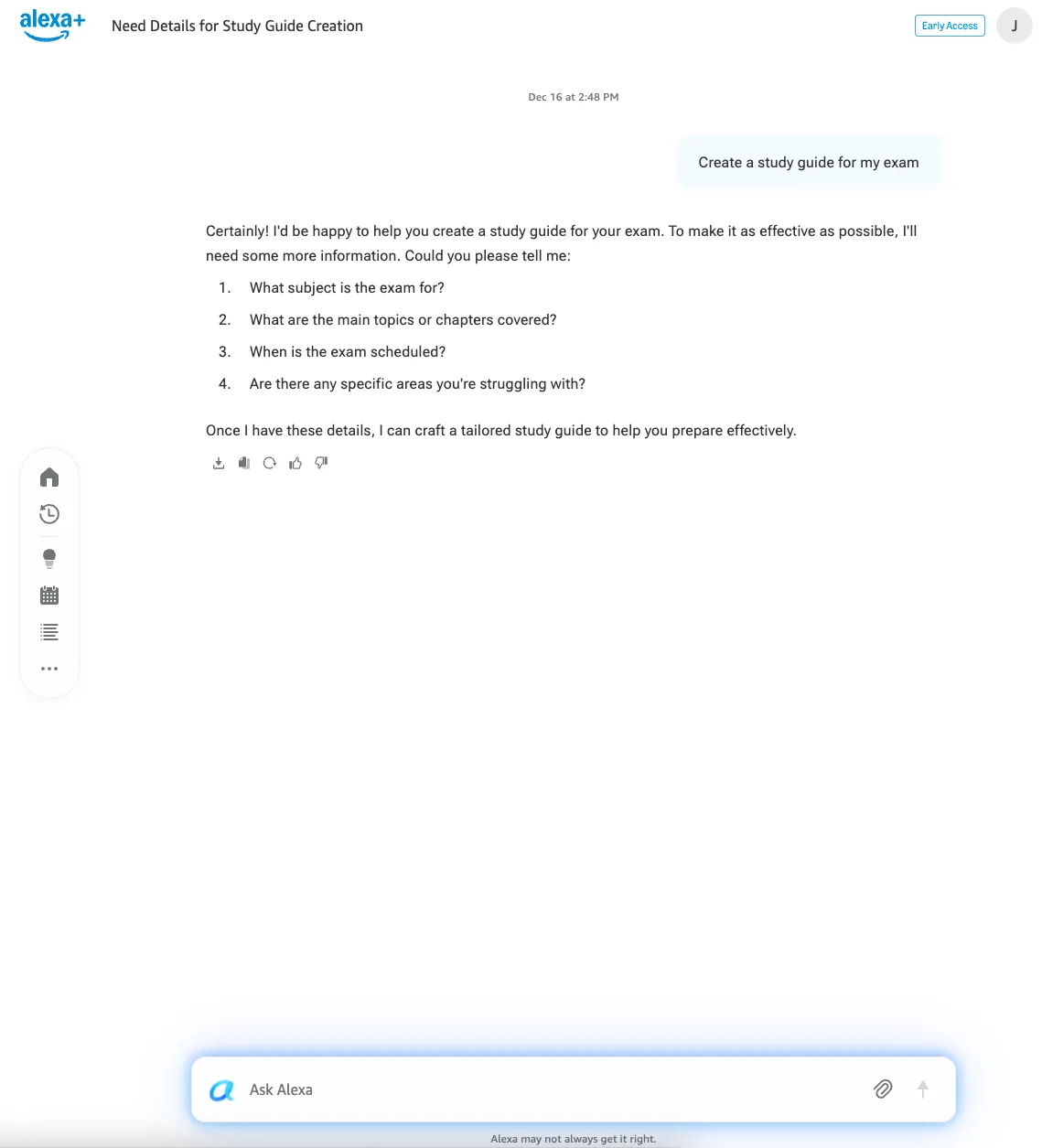
With it, Alexa+ can be accessed directly through a browser by logging into an Amazon account. This web interface allows users to chat with Alexa using text, upload documents, manage tasks and calendars, and continue conversations that also exist on Echo devices.
With this move, Amazon is clearly signaling that Alexa+ is meant to compete in the same space as browser-based AI assistants like ChatGPT and Gemini.
This shift matters because it changes how people think about Alexa.
It is no longer just something users talk to in their living room or kitchen. By giving Alexa+ a web presence, Amazon is positioning it as an everyday AI assistant that can live alongside work tools, files, and planning tasks.
Thanks to LLM, the assistant can understand more natural language, remember conversational context, and take action on behalf of users, such as tracking prices or helping plan activities.
Read: Better Late Than Never, Amazon Unveils A Generative AI-Powered 'Alexa+'
It's worth noting though, that Google still holds an advantage in perception, largely because it embraced conversational AI earlier and integrated it deeply into services people already use throughout the day.
That head start helped Google appear more advanced when the AI boom took off.
Amazon’s strength, however, lies in its massive device footprint and its tight connection to shopping, entertainment, and smart homes.
Alexa+ is designed to leverage those strengths while closing the intelligence gap created by generative AI.
The emergence of an Alexa+ website is a clear sign that Amazon is no longer content to let Alexa be seen as a legacy voice assistant.
It wants Alexa to be an AI agent that works across voice, text, screens, and actions, meeting users wherever they are. The assistant war is no longer just about who has the smartest model, but about who can deliver AI in the most practical, integrated way. With Alexa+ stepping onto the web, Amazon has officially joined that next stage of the fight.






















































































































































































































































































