
The rapid rise of large language models ignited an intense competition often described as the LLM war.
When OpenAI's ChatGPT burst onto the scene in late 2022, it quickly captured public attention with its fluent, conversational responses and ability to handle complex tasks. Tech giants and startups alike rushed to develop or refine their own models to keep pace. Google advanced with Gemini, Anthropic introduced Claude, and others like Meta, Microsoft, and xAI entered the fray with their offerings.
The battle has centered on improving accuracy, reasoning, creativity, and real-world usefulness, with companies vying for users through dedicated apps, integrations, and subscription models.
Apple, long a leader in consumer technology, has found itself somewhat behind in this generative AI surge.
Its voice assistant Siri, introduced nearly 15 years ago, has remained largely unchanged in its core capabilities compared to the leaps made by newer chatbots.
While Apple has invested heavily in on-device machine learning and privacy-focused AI through Apple Intelligence, the company has faced internal challenges and delays in delivering a truly next-generation assistant that matches the expectations set by OpenAI and its rivals. An initial partnership with OpenAI allowed Siri to hand off certain queries to ChatGPT starting in 2024, but this was seen as a stopgap rather than a comprehensive solution.
More recent reports indicate that Apple is preparing a broader approach for the upcoming iOS 27.
It's said that instead of tying Siri exclusively to one external model, Apple plans to open the assistant to multiple third-party AI chatbots.
This would build on the existing ChatGPT integration by adding support for services such as Google's Gemini and Anthropic's Claude, among others potentially available through the App Store. Users would be able to enable these connections through a new "Extensions" system in the settings for Apple Intelligence and Siri, allowing them to select preferred chatbots for handling specific queries.
The mechanism appears straightforward: when Siri encounters a request it cannot fully address on its own, it could route the query to an enabled third-party chatbot installed on the device.
This setup would work across iPhone, iPad, and Mac, maintaining Siri's role as the primary interface while leveraging external strengths where needed.
Developers of these chatbots would gain tools to integrate more seamlessly, potentially driving more subscriptions through Apple's platform and generating commission revenue for the company. Apple is also reported to be working separately with Google on underlying improvements to Siri, including the use of Gemini models in certain aspects of its overhaul.
Further reading: Apple’s Secret 'Veritas' AI Reveals The Future Of Siri In The Ongoing AI Arms Race
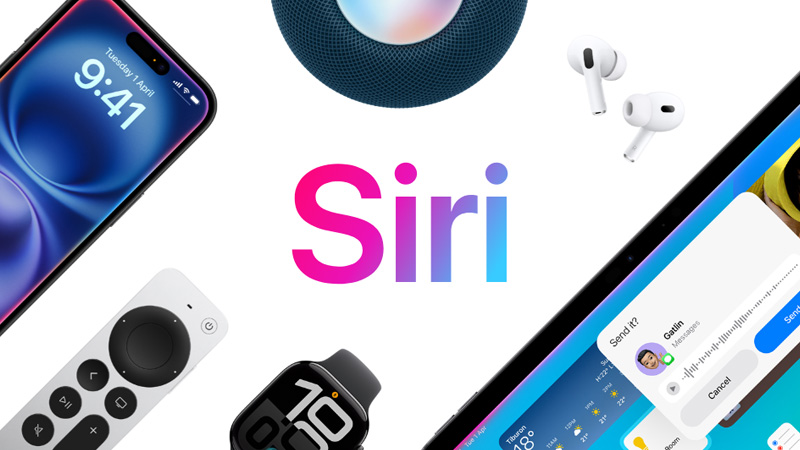
This strategy reflects a pragmatic shift for Apple.
Rather than attempting to outbuild every competitor in foundational models, an area where it has lagged, it aims to position Siri as a flexible hub that can tap into the best available AI options.
The move could help address longstanding criticisms of Siri's limitations while preserving the privacy and on-device processing that Apple emphasizes.
At the same time, it allows the company to accelerate its AI timeline without committing solely to one partner whose popularity or capabilities might shift over time.
Things can change but still, this can be the most plausible way for Apple to compete in this fast-paced AI field.
By adapting its platform to the realities of a fragmented AI landscape, Apple can seek to strengthen the iPhone as a central platform for conversational intelligence without fully ceding control to any single rival.






















































































































































































































































































