
The large language model war has ignited a fierce and unending race toward AI dominance, a contest where every major tech company is determined to claim the crown.
It all began with a simple chatbot, OpenAI’s ChatGPT, a spark that set off an industry-wide explosion of innovation and rivalry. Giants and startups alike rushed to build their own versions, each promising smarter, faster, and more humanlike intelligence.
Yet amid this technological arms race, one titan seems to have stumbled: Apple.
Once seen as the benchmark for innovation, the company has struggled to keep pace in the new era of generative AI. Its much-publicized Apple Intelligence initiative, despite the brand’s signature polish and marketing muscle, failed to gain meaningful traction.
Rather than dealing with its failure, it quietly redirected the spotlight back to its ecosystem of hardware and services. The company hopes to remind users why they fell in love with Apple in the first place: the seamless experience, the refined design, the emotional connection between user and device.
But in a war that shows no sign of slowing, Apple knows it cannot linger on nostalgia. It has to make a bold leap of faith.
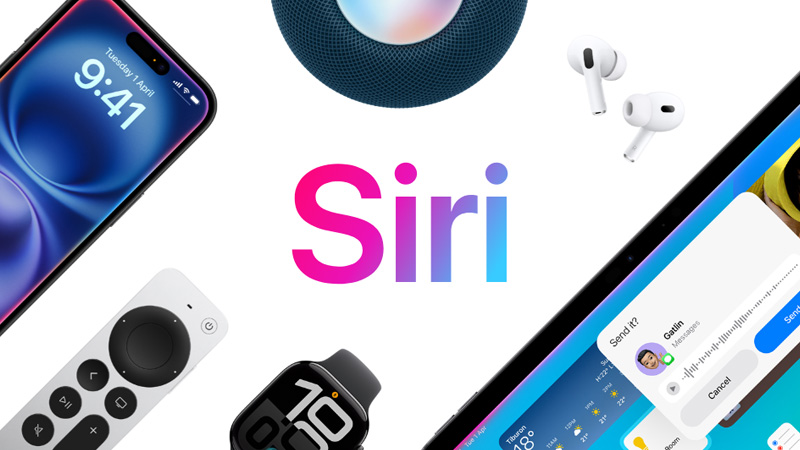
And this time, that leap comes in the form of a reinvented Siri.
Apple wants to power its new Siri experience with Google Gemini.
But not the same Gemini Google uses.
Instead, Apple has reportedly commissioned a custom-built Gemini model, tailor-designed to run on its own Private Cloud Compute servers.
This partnership allows Apple to offer smarter, more contextual answers without compromising on privacy. For example, Siri will soon be able to handle personal queries like "find the book recommendation from Mom" by securely analyzing data stored on the user’s device and generating a response on the fly.
According to reports, this new Siri architecture consists of three major components:
- Query Planner that interprets user requests.
- Knowledge Search system that fetches relevant data.
- Summarizer that crafts the response.
Google’s Gemini models will handle the planner and summarizer tasks, while Apple’s own Foundation Models will process on-device personal data. This ensures that user privacy remains intact, with no external data sharing, and no leaks beyond Apple’s own servers.
The Knowledge Search component is also rumored to use Gemini technology, allowing Siri to better understand world topics, trivia, and real-time information.
The goal is to finally move beyond the frustrating "I found this on the web" fallback and deliver actual answers.
Despite the depth of Google’s involvement, Apple isn’t expected to promote the partnership publicly.
Unlike how Samsung boasts its Galaxy AI features, which replaced Bixby, many of which are powered by Gemini under the hood, Apple is also known to partner with lots of companies, but many of which weren't ever credited. This is why the new Siri shall be marketed entirely as Apple’s own creation: an Apple product running on Apple servers, wrapped in Apple’s familiar design.
Gemini’s presence shall remain an invisible backbone, quietly filling the gaps in Apple’s in-house AI.
With the quiet strategy, Apple hopes that it can finally ship the Siri improvements it promised a year ago without waiting for its own AI models to catch up. After all, Apple knows hat most of its users won't even care who built the engine. All they care is an Apple device that works, and the one that works smarter.
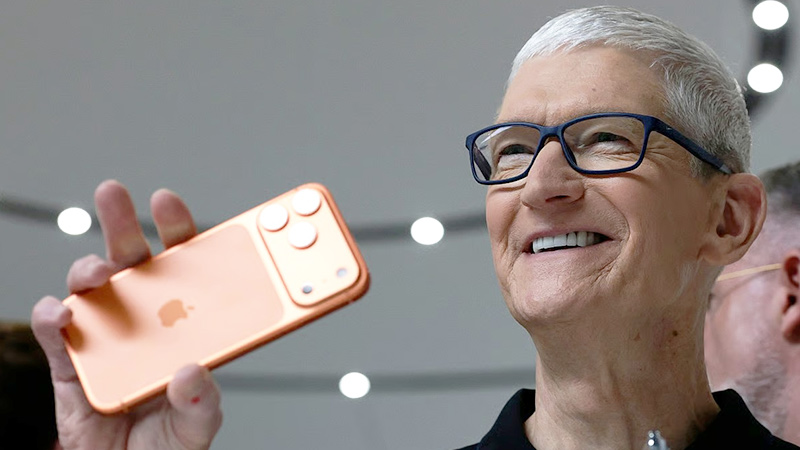
Besides partnering with Google to improve Apple Intelligence, Apple CEO Tim Cook also said that the company plans to deepen its collaboration with third-party AI developers as part of its broader strategy to strengthen its position in the fast-moving artificial intelligence space.
Cook revealed that Apple’s intention is "to integrate with more people over time," confirming that the company’s approach will include expanding beyond its existing partnerships with OpenAI's ChatGPT and Google’s Gemini. Rumors also suggest that Apple is exploring collaborations with Anthropic and Perplexity.
Cook added that AI is becoming an important factor in consumer decision-making when choosing a new iPhone. "I would say that Apple Intelligence is a factor, and we’re very bullish on it becoming a greater factor," he said.
Reports suggest that Apple is being asked to pay around $1 billion per year to access Google’s new, tailor-made Gemini model, which reportedly boasts 1.2 trillion parameters. By comparison, licensing Anthropic’s AI technology is said to cost even more: roughly $1.5 billion annually, according to industry insiders.
This negotiation also unfolds against the backdrop of Apple’s long-standing partnership with Google. The search giant already pays Apple an estimated $20 billion each year to remain the default search engine across iPhones, iPads, and Macs. This is a reminder that the two tech titans are bound by both rivalry and deep financial ties.




















































































































































































































































































