
DuckDuckGo, the privacy-concerned search engine that is often touted as the Google for privacy, has an updated version of its browser extension and mobile app.
With it, DuckDuckGo promises its users safe from prying eyes "beyond the search box."
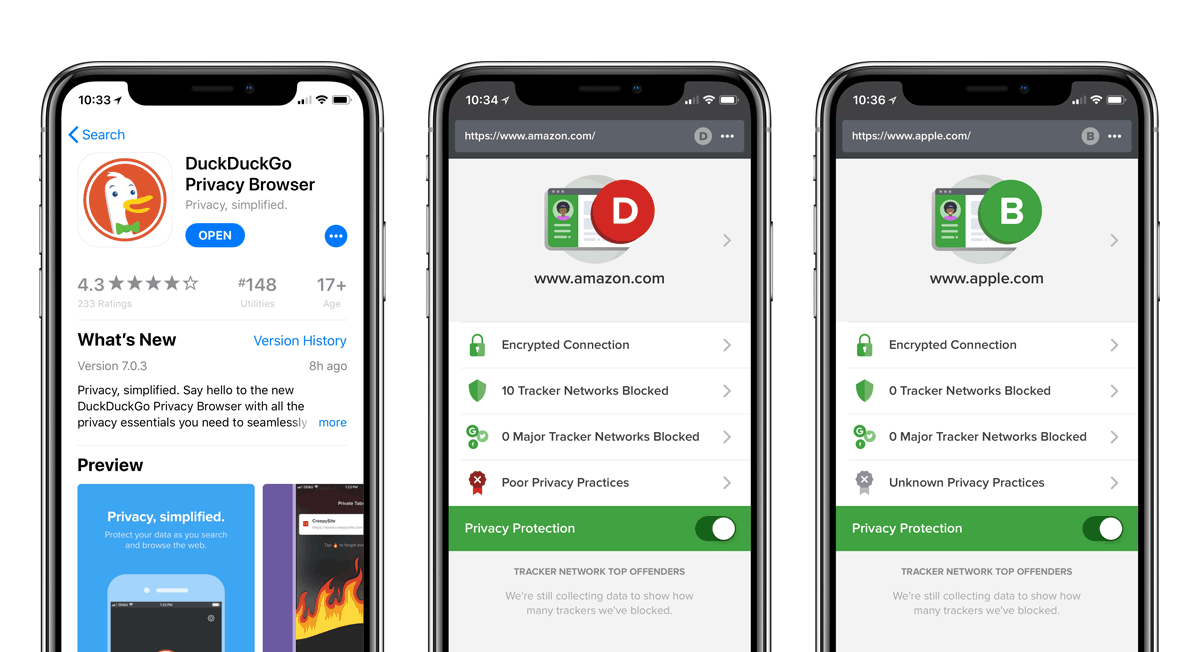
Search engine is DuckDuckGo's primary product. The privacy-focused search engine remains as it is, but has a revamped browser extension and app that offer tools to help users keep their browsing experience safe and private. DuckDuckGo added ratings for websites, grade them in their use of ad trackers, encryption, terms of service and others.
This is a move beyond the search box to protects users' privacy wherever they go on the Internet.
Available for Firefox, Safari, Chrome, iOS and Android, the app and extension's ability to block ad tracking networks is the highlight. In addition to that, the app also forces HTTPS on sites that have it but for whatever reason didn't serve the encrypted page.
What this means, DuckDuckGo combines tracker blocking, smarter encryption, and private search into one seamless user experience, across all major platforms.

Advertising companies, including Google and Facebook, have been known to follow users everywhere they go on the web. By collecting user data, the companies can create accurate user profiles based on browsing history, habit, interest and others, just to target them with ads.
What DuckDuckGo's extension and updated mobile app do, is to find those trackers and stop them from doing their job.
“It’s hard to use the Internet without it feeling a bit creepy - like there’s a nosey neighbor watching everything you do from across the street,” said DuckDuckGo in its blog post. “Except, instead of a nosey neighbor, it’s a vast array of highly sophisticated tracker networks, run by big companies like Google and Facebook, recording everything you do online, often without your knowledge, and selling their findings to the highest bidder via targeted ads.”
DuckDuckGo is a much smaller search engine if compared to Google and Bing. But it has been known to preserve privacy in a way that no other competitors can.
This same pitch continues to prove popular, especially when data breach happens from time to time, and when people just don't want to be tracked. The search engine has served more than 19 million private searches daily in 2017, an increase of more than 50 percent if compared to the previous year.
According to DuckDuckGo CEO Gabriel Weinberg, this increased demand is clearly showing how people are having an appetite for privacy online, and things are only getting bigger. According to Weinberg, the more people that use tools like DuckDuckGo, the more tech companies should focus on reconsidering their business model.
“We’ll collectively raise the internet’s privacy grade, ending the widespread use of invasive tracking,” said Weinberg in an ambitious comment.
"Google trackers [are] now lurking behind 76% of pages, Facebook’s trackers on 24% of pages, and countless others soaking up your personal information to follow you with ads around the web, or worse," Weinberg added.
Here, DuckDuckGo is like highlighting the fact of the current web, where practically everything we do online is tracked, analyzed, categorized, packaged, and sold off to advertisers. And blocking such attempt can be a good thing for people that care about privacy.
But still, the game of advertising against privacy is a cat and mouse game. The mouse may got caught, but there are a lot of mice out there, and the cat won't always be able to catch them all.




















































































































































































































































































