
Facebook is introducing a new AI-powered feature designed to make posting feel more effortless and perhaps, a little more intrusive.
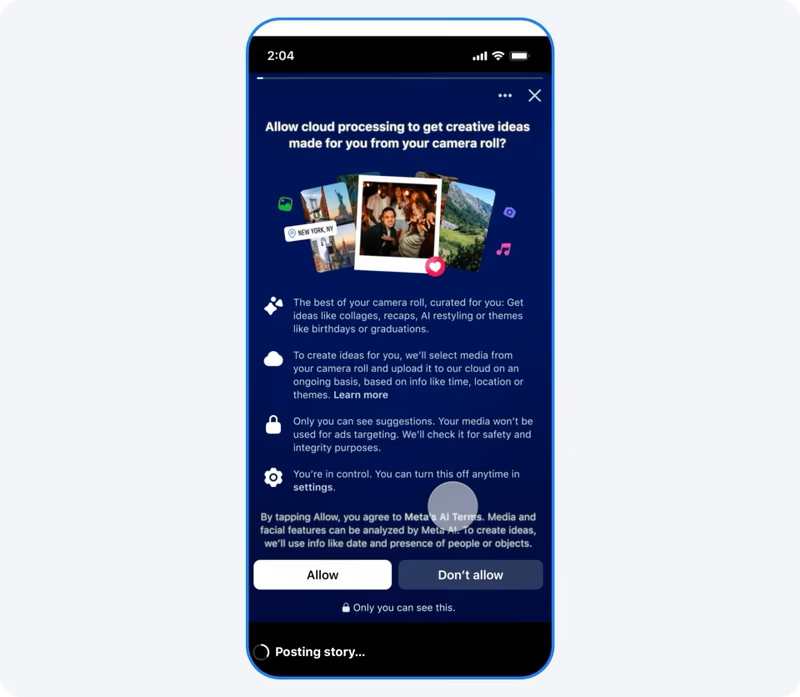
Initially rolling out to users in the U.S. and Canada, the feature lets Meta’s AI scan photos and videos stored in users’ phone camera rolls, even if they’ve never uploaded them to Facebook. The company claims the tool will surface "hidden gems" buried among screenshots, receipts, and random snaps, helping users rediscover moments worth sharing.
Once turned on, Meta’s AI will analyze users' gallery to suggest edits, collages, and themed recaps for events like birthdays, trips, and graduations.
The goal, Meta said, is to make it easier for people to "get creative ideas made for you from your camera roll" without the hassle of manually curating and editing photos.
According to Facebook in a post on its website:
The feature is strictly opt-in, meaning users must explicitly enable it before Meta’s AI can scan their photos.
For a lot of people in this modern digital world, they can snap a lot of photos, but refrain from sharing most of them due to thinking that they're not "shareworthy."
This feature can help resurface those old photos, and make them better and worth sharing.
And to preserve privacy, Meta said that users’ media the AI scans, will not be used for ad targeting purposes, and won’t be used to improve its AI systems, unless the user takes the step of editing the media or sharing the edited photos with friends or others on its social network.
Facebook also said that users can turn it off under Facebook’s Camera Roll Sharing Suggestions settings, at any time they want.
Privacy advocates, however, might not find the idea so charming.
First off, for the AI to work, it will continuously, and quietly upload media from users' device to its cloud on an ongoing basis.
Second, while Meta insists that the media uploaded through this feature won’t be used to improve its AI unless you edit or share the generated content, the company does gain access to your unposted photos by default once the feature is enabled.
Third, Meta has already trained its AI systems on publicly available Facebook and Instagram data going back to 2007, giving critics reason to question whether this new layer of access could eventually expand that data pool.
Fourth, the company also uses the date and presence of people or objects in photos to craft its creative ideas. What this means, the feature is giving Meta a lot more information about users, their relationships, and their life.
And fifth, in this digital world, and the fact that people can snap anything at about anytime, there is no saying what "hidden gems" Meta's AI can find. Personal photos? Very likely.

For those uncomfortable with Meta’s AI combing personal photos, the safest move is to leave the feature disabled or restrict Facebook’s access to the phone’s camera roll entirely through system permissions.
In essence, Facebook’s latest AI experiment sits at the intersection of convenience and privacy.
On one hand, it promises to help users rediscover moments they might have otherwise overlooked. On the other, it quietly invites Meta deeper into users’ lives




















































































































































































































































































