The Large Language Models war commences.
Since OpenAI disrupted the AI landscape with ChatGPT, revolutionizing how users interact with AI-generated content, Google that saw the threat as a "code red".
The company quickly knew that one day, this kind of technology can replace its search engine.
And when OpenAI released its own LLM-powered search engine, it was possibly one of Google's worst nightmare came true.
But Google doesn't bring a knife to this gun fight, and that it comes prepared.
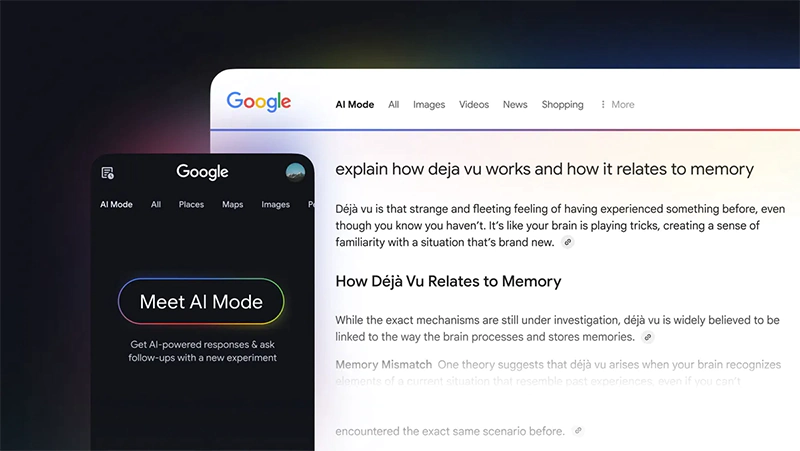
Knowing how disruptive LLM can be, it's now integrating the technology right inside Google Search, and create an extension of AI Overview it calls the 'AI Mode'.
And soon, publishers begin to worry.
The team is really focused on how we make it easy to click to sites -- we have a lot more UI updates coming that we showed in our announcement post. It's something we hear from users that they want and core to how we're building AI Mode. Also, AI Mode is going to respond to new…
— Robby Stein (@rmstein) March 7, 2025
As Google is racing to remain relevant in the world where LLM-powered AIs are eating more of search engines' traffic, Google started shaking up the digital publishing world after releasing AI Mode.
The issue is because AI-driven search and summarization features can be so good at streamlining information, that they raise pressing concerns for publishers.
AI Mode is Google's AI advancement that improves content discovery by providing instant, AI-curated answers to users’ queries.
As a result, these AI-generated summaries mean that users have to make fewer direct clicks to publisher websites.
If users get answers without leaving Google, traffic—and by extension, ad revenue—could plummet.
Smaller publishers may struggle to compete with AI’s prioritization of larger, well-established sources.
And since Google plans to "explore bringing ads" to AI Mode, Google has nothing to lose.
Users are satisfied, Google benefits, and the ones taking the biggest hit are publishers.
I appreciate the response.
Publishers — especially independent sites — are extremely wary of any AI encroachment of our content, as I’m sure you can imagine.
I would love to see Google involve us as part of the “conversation” going forward.
All of the fancy AI tech is not…— Mike Futia (@mikefutia) March 7, 2025
Unlike AI Overview, which is an enhancement to traditional search, AI Mode is a more radical shift toward an AI-first search experience.
While both have major implications for publishers, as they may reduce direct clicks to external websites, AI Mode can be more disruptive.
Robby Stein acknowledges this, and said that he said this his team "is really focused on how we make it easy to click to sites."
"AI Mode is going to respond to new types of questions, let people ask follow ups to explore different facets, and ultimately create new opportunities for sites to rank."
While this is a good pitch, clickthrough rates from AI-generated answers are never that good.
Cool example of how AI Mode can give you these kinds of real-time updates on trending topics - like this one about Kyrie’s injury from the other day.
— Mike Futia (@mikefutia) March 7, 2025
After all, LLMs can create comprehensive and detailed responses. So why would anyone interact with the links, even when there are plenty?
To stay relevant, publishers must adapt by optimizing content for AI visibility, emphasizing original insights, and exploring alternative revenue models beyond traditional ad-based monetization.
Publishers must navigate this shift strategically to remain competitive in the evolving search landscape.




















































































































































































































































































