
Google Search is the world's most popular internet search engine.
For a long time, the search engine has been using AI to enhance the experience of finding content on the web, by analyzing users' search history, and through information it has gathered from the users. But since generative AI race was kickstarted by OpenAI's ChatGPT, the company is going full force to compete.
And this time, Google, which has introduced an AI-powered version of Search, called Search Generative Experience, is giving it a major update in the Google app.
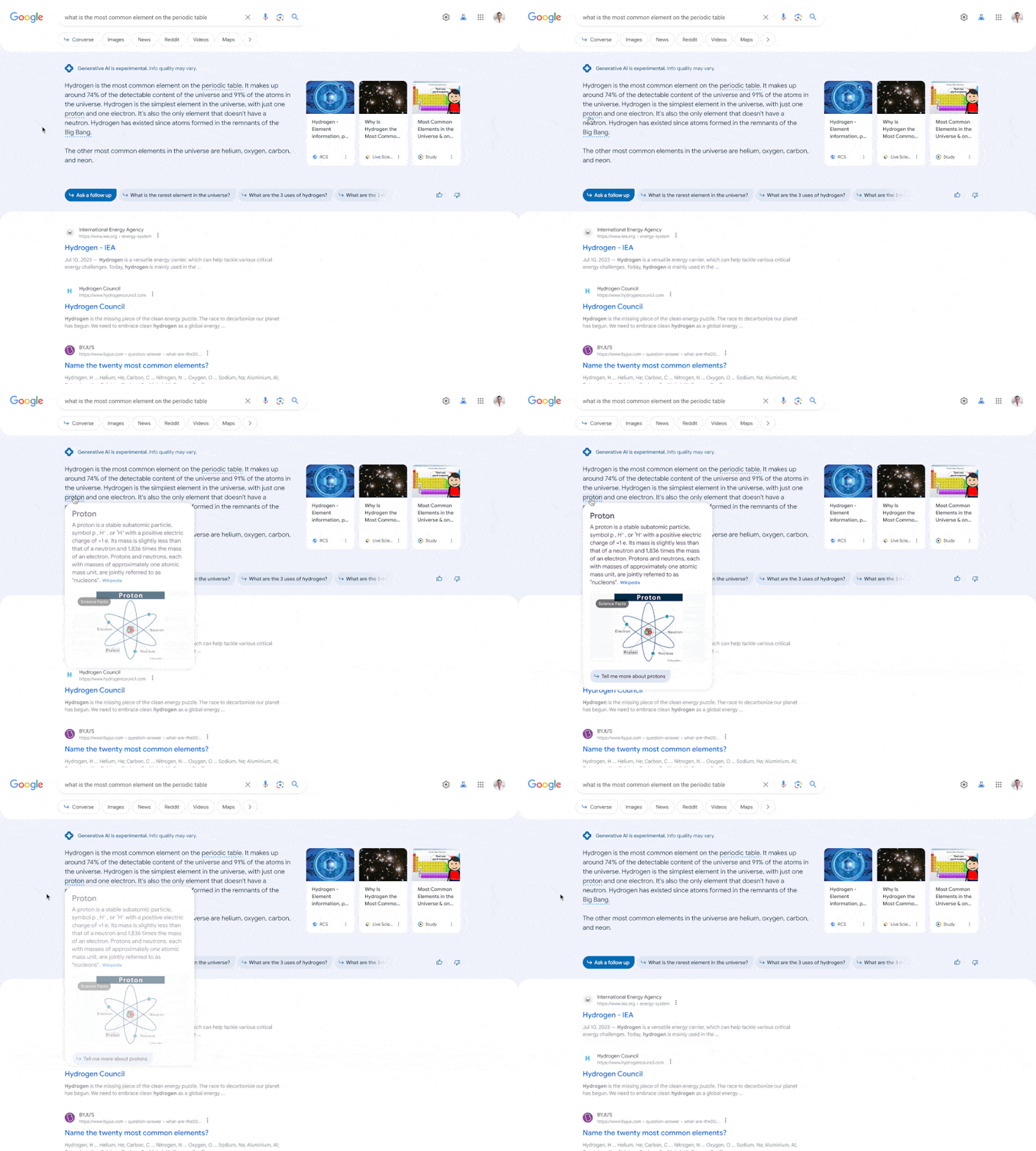
In the update, SGE is able to quickly, and easily, summarize web pages and also show users definitions of words they may be unfamiliar with.
Google calls the feature 'SGE while browsing.'
New updates to our Search Generative Experience include definitions with related images to help explain complex topics, more coding capabilities, and a new experiment that helps you find what you're looking for in a long article more easily. https://t.co/8cZ8sdnJJO
— Sundar Pichai (@sundarpichai) August 15, 2023
This update simply extends the foundation of SGE, which was introduced in beta earlier this 2023.
SGE empowers users with AI-driven contextual overviews and suggestions, and is intended to enhance search results.
And this SGE while browsing feature can be enabled through Google's experimental Search Labs section.
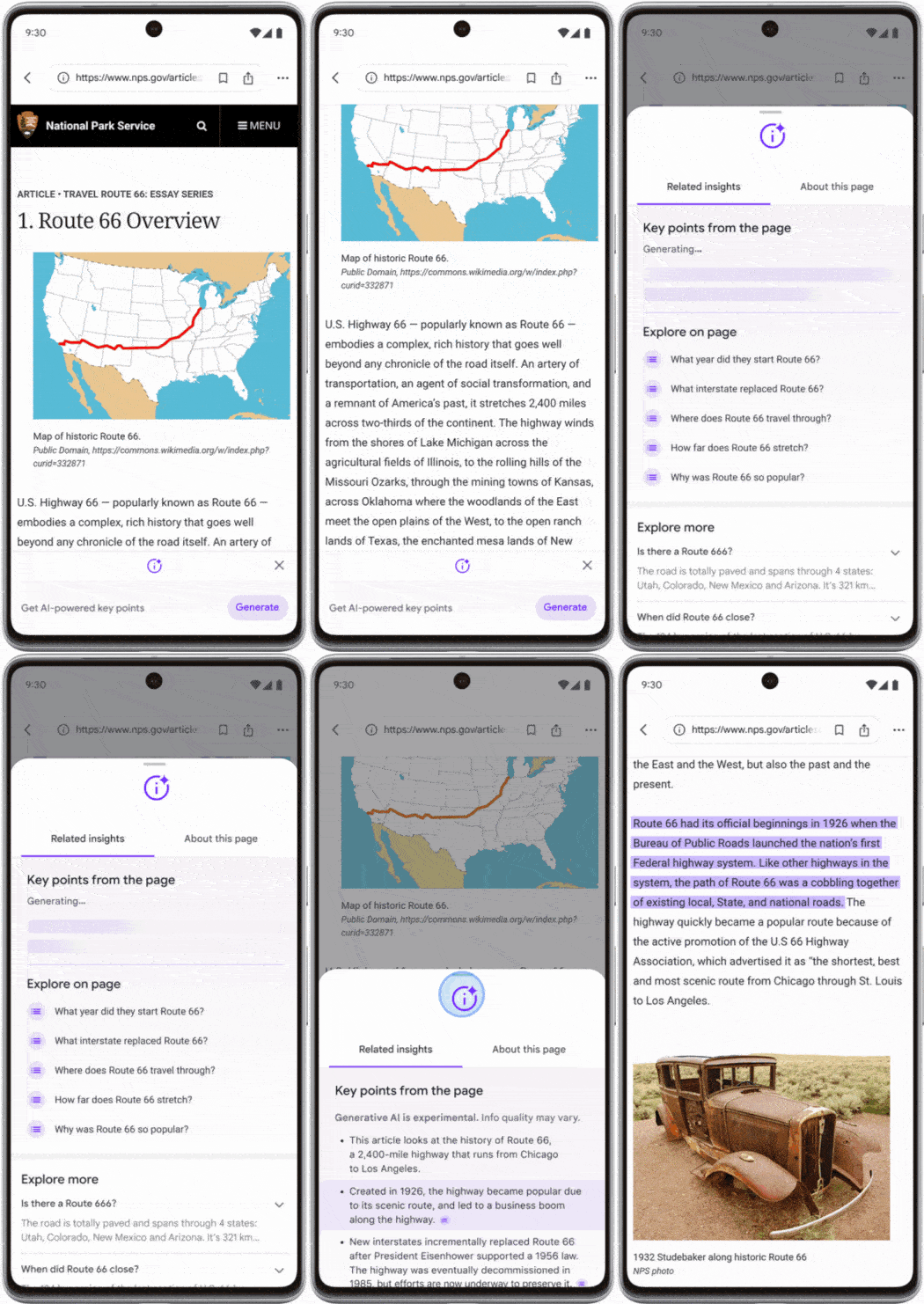
Doing so will make Google to use AI to generate a bulleted list of key points from information on the page users are browsing.
All users have to do, is click the 'generate' button.
Besides summarizing web pages, the feature can also create a list of questions the web page answers, as well as providing user the ability to jump to parts of the page with the relevant information.
"'SGE while browsing' generates the key points of an article to help people find what they're looking for more easily [...] ," explained a Google spokesperson said in a statement.
The feature has been made available in the Google App on both Android and iOS, with Google saying that it's planning to bring it Chrome browser in the future.
Following the rise of generative AIs, and Google's proposed approach to legally collect all public information to train Bard, a number of big publishers have told Google and other services that their articles can't be crawled to feed AI engines.
Responding to this, Google explained that SGE while browsing is different than Bard, which consumes the web for information as training materials.
SGE for browsing is a different AI, and that it works differently, and it's designed only to surface relevant information.
Because of this, Google said that it would be working with publishers to see how the AI can help people more deeply engage with their long-form content. Google also said that the feature is not able to provide key points for content marked as paywalled.
"SGE while browsing" is designed to show AI-generated key points only on articles that are freely available to the public on the web," Google said. "It does not provide key points on articles marked as paywalled, and publishers are in control."
The rapid rise of generative AIs have for the first time in a long time, created competition for Google in the information gathering space. Following the launch of OpenAI's ChatGPT, Google was on a "code red," that it even had to summon both of its founders back to the office.






















































































































































































































































































