WhatsApp started as a simple idea—connect people through text, without the complexity of traditional SMS.
Founded in 2009 by two former Yahoo! employees, WhatsApp entered the mobile space as a lean, no-frills instant messaging app. At the time, most people were still dependent on paid text messages, and group chats were almost nonexistent. WhatsApp's minimal design, combined with its ability to send texts, images, and later voice notes, quietly disrupted the way we communicated.
It wasn’t trying to be flashy or revolutionary—it just worked, and that was enough to start its viral growth.
It was only after Meta—when it was still Facebook—acquired WhatsApp that instant messaging truly cemented itself as many people’s default mode of communication. Quick, informal, and always-on, it reshaped the way we connect with others, for better or worse. The line between urgent and non-urgent blurred, and the expectation to respond instantly crept into every part of modern life.
But like all powerful tools, it demands discipline. WhatsApp may have begun as a humble little chat app, but its evolution mirrors how entangled we’ve become in the pressure to stay reachable. In a world flooded with pings, replies, and unread badges, sometimes the strongest statement you can make is still: Mute.
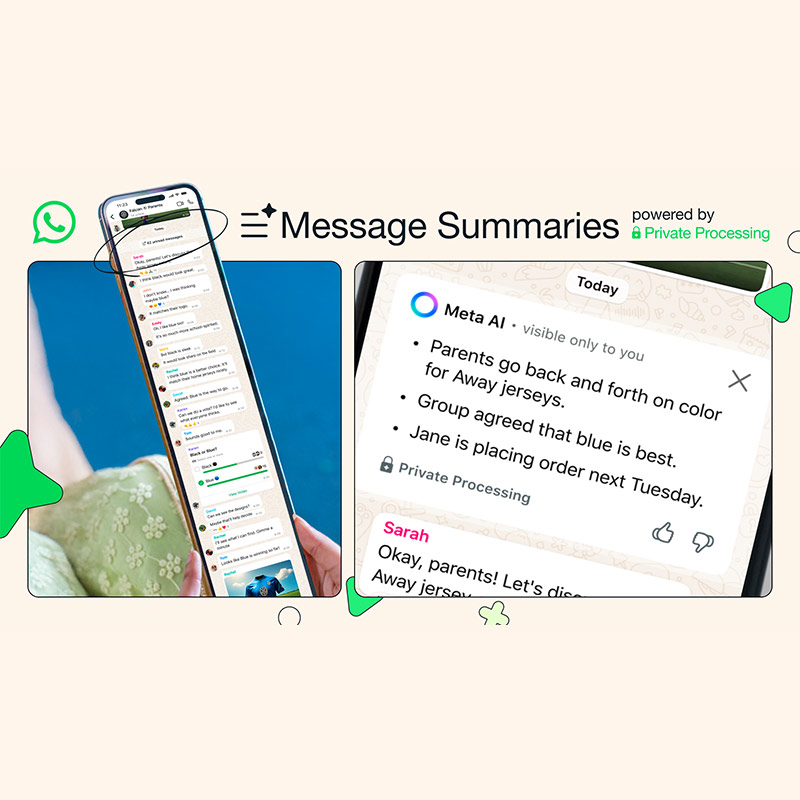
Or maybe, the answer is AI to summarize all the chaos.
In a blog post, WhatsApp said that:
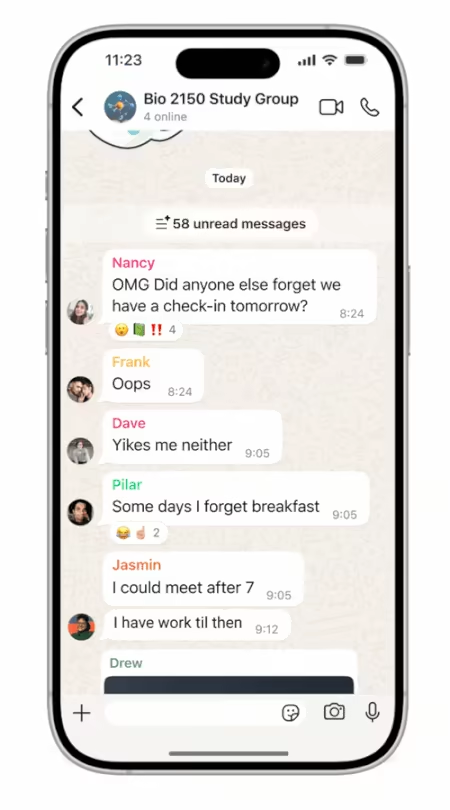
The more capable WhatsApp becomes, the more ways people find to use (and abuse) it. In personal life, it’s not uncommon to be part of dozens of group chats—family, friends, work, neighborhood, school, hobby, that one high school reunion chat you forgot to leave.
Notifications pile up, and suddenly users may end up with hundreds of unread messages across dozens of groups.
The idea of having this AI-powered feature is to deal with message overload.
Initially, the summarization feature is quietly arriving for English-speaking users in the U.S.. No fanfare, no pop-ups.
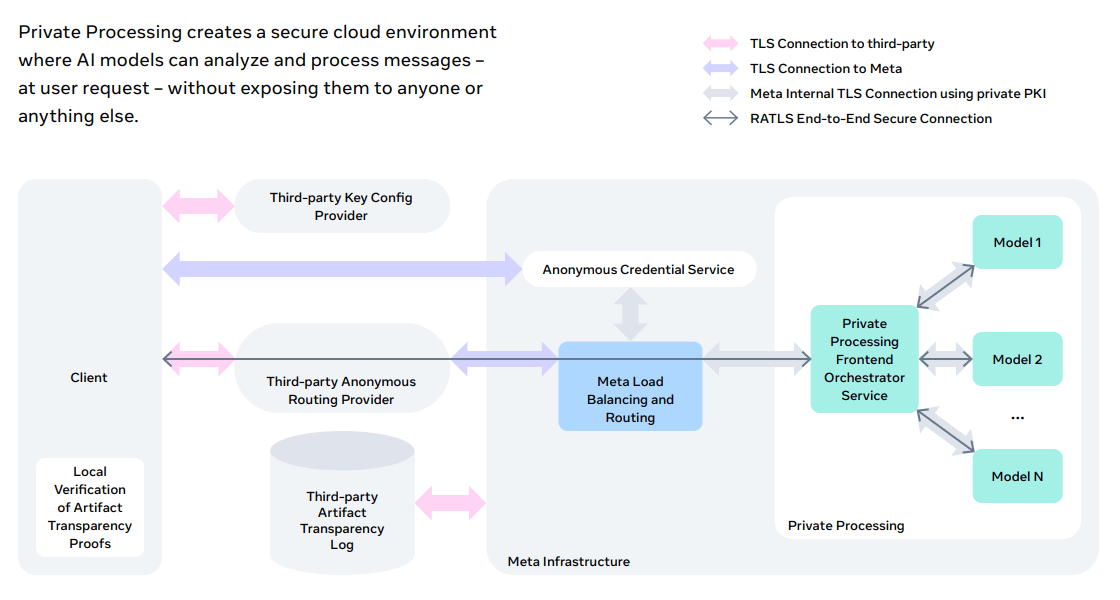
Then comes the question concerning how this AI summarizes messages.
Due the fact that WhatsApp is using end-to-end encryption, a feature that makes it impossible for people other than the sender and the recipient to read messages, Meta published a technical white paper and a separate blog post to explain how its new message summarization feature works, along with one very deliberate assurance: it’s off by default.
At the heart of this system is what WhatsApp calls Private Processing—a technology that promises to perform analysis without Meta AI ever actually "seeing" users messages or their summaries.
The company claims this is possible through the use of a Confidential Virtual Machine, or CVM. This temporary, isolated environment processes the message content just long enough to generate a summary and then immediately discards the data. No retention, no lingering fingerprints. At least, that’s the promise.
Whether or not this is enough to calm the concerns of privacy purists remains to be seen.






















































































































































































































































































