
Keywords? What keywords?
When searching for something, the feature typically uses a pre-built index to find matches and assign scores. It relies on keyword matching, synonym recognition, and ranking based on relevance or popularity. However, with AI, a search function can be significantly enhanced—making it smarter, more intuitive, and capable of understanding context beyond simple word matching.
This is exactly what LinkedIn is doing.
The business and employment-oriented social network is introducing an AI-powered feature designed to help job seekers discover roles that align with their goals—without requiring exact keyword matches or specific job titles.
The updated job search experience allows users to describe what they’re looking for using plain language, says Rohan Rajiv, LinkedIn’s head of career products.
For example, a user might enter a phrase like "I want to use my brand marketing skills to help cure cancer" or "I'm looking for business development roles in the video games industry," and still be shown relevant opportunities, even if those exact terms aren’t used in job listings.
Announcing this AI-powered Job Search feature, Tomer Cohen, Chief Product Officer at LinkedIn, said that:
Powered by large language model Large Language Model from Microsoft, the upgraded Job Search feature is able to better interpret the intent behind job seeker queries and job descriptions, helping to better match people with opportunities in a job market that frequently frustrates both applicants and employers.
The goal is to provide greater flexibility for LinkedIn users hunting for a new job compared to the existing but restrictive search filters for location, industry, and role.
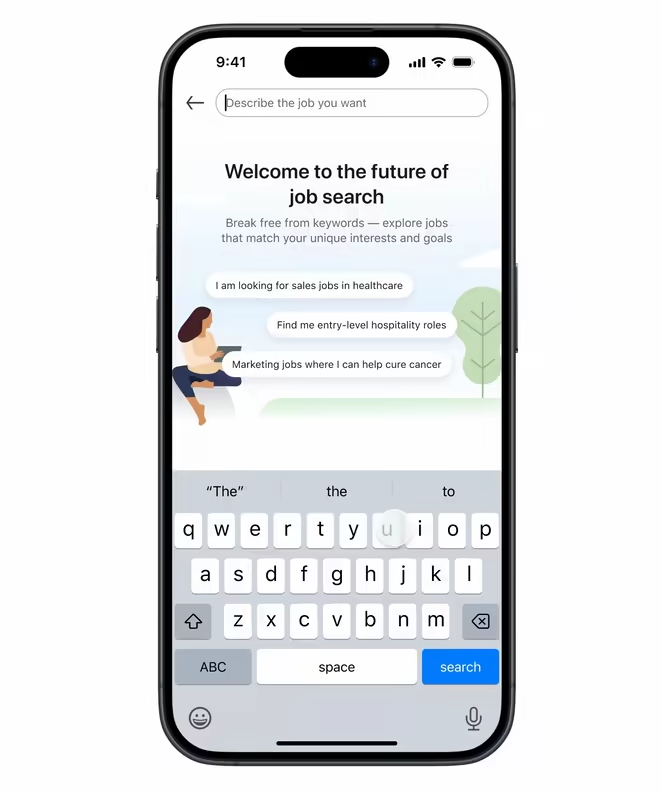
“LLMs are amazing at looking at a job description and extracting semantics out of them and nuance out of them, and inferring things from them,” said Erran Berger, VP of engineering at LinkedIn.
LinkedIn’s recent survey data shows that job seekers are submitting more applications than before, increasing the volume that hiring teams must process.
“They say they are spending three to five hours a day sifting through applications, and less than half of these applications meet the required criteria,” Rajiv added.
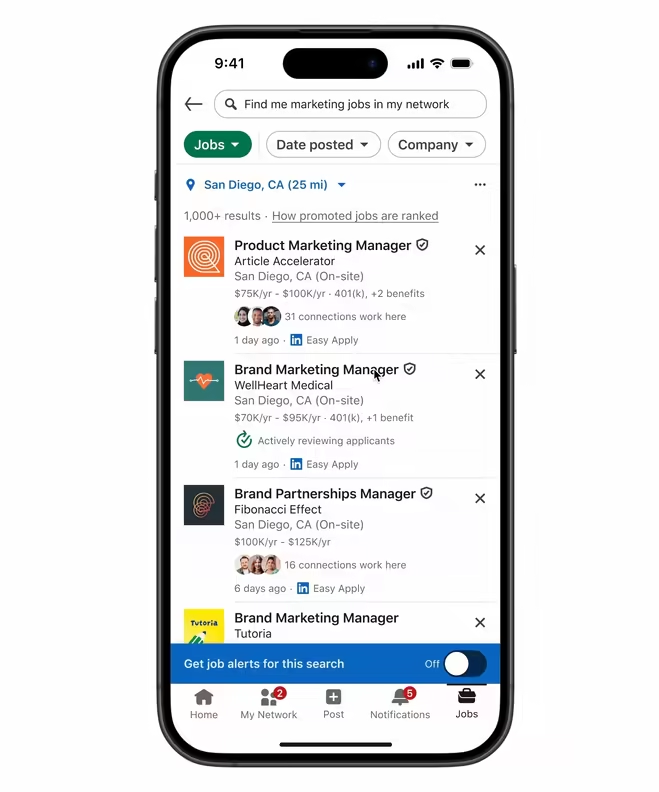
”AI is changing the way we work, and job search on LinkedIn will completely change the way people find their next opportunity,” LinkedIn career expert Zara Easton said in the company’s press release.
“Our hope is that this way of discovering roles — and even new careers — will bring together job seekers’ skills, interests, and aspirations to find their next step.”
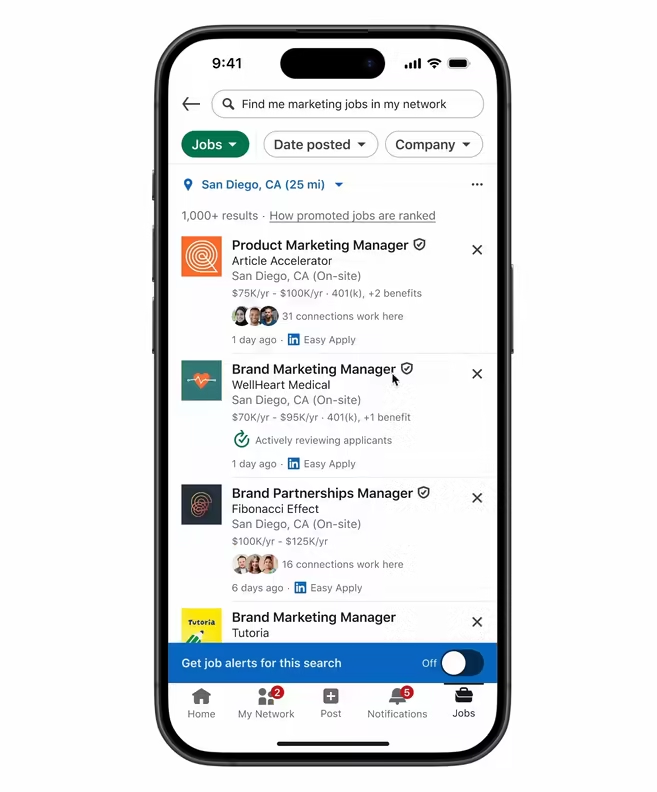
Unlike traditional keyword-based search feature, LLMs are less likely to miss relevant experience.
For instance, the AI can infer that a web developer likely has knowledge of HTML—even if it’s not explicitly mentioned. This level of understanding helps users fine-tune their profiles with appropriate skills or explore roles that better align with their background, ultimately saving time for both job seekers and recruiters.
Another upcoming feature will offer additional context—such as whether a position is 'actively hiring,' if it’s being promoted on LinkedIn, and, when available, how long applicants typically wait to receive a response.
LinkedIn, considered the largest professional social media, knows how AI is a huge topic, and that the demand is high.
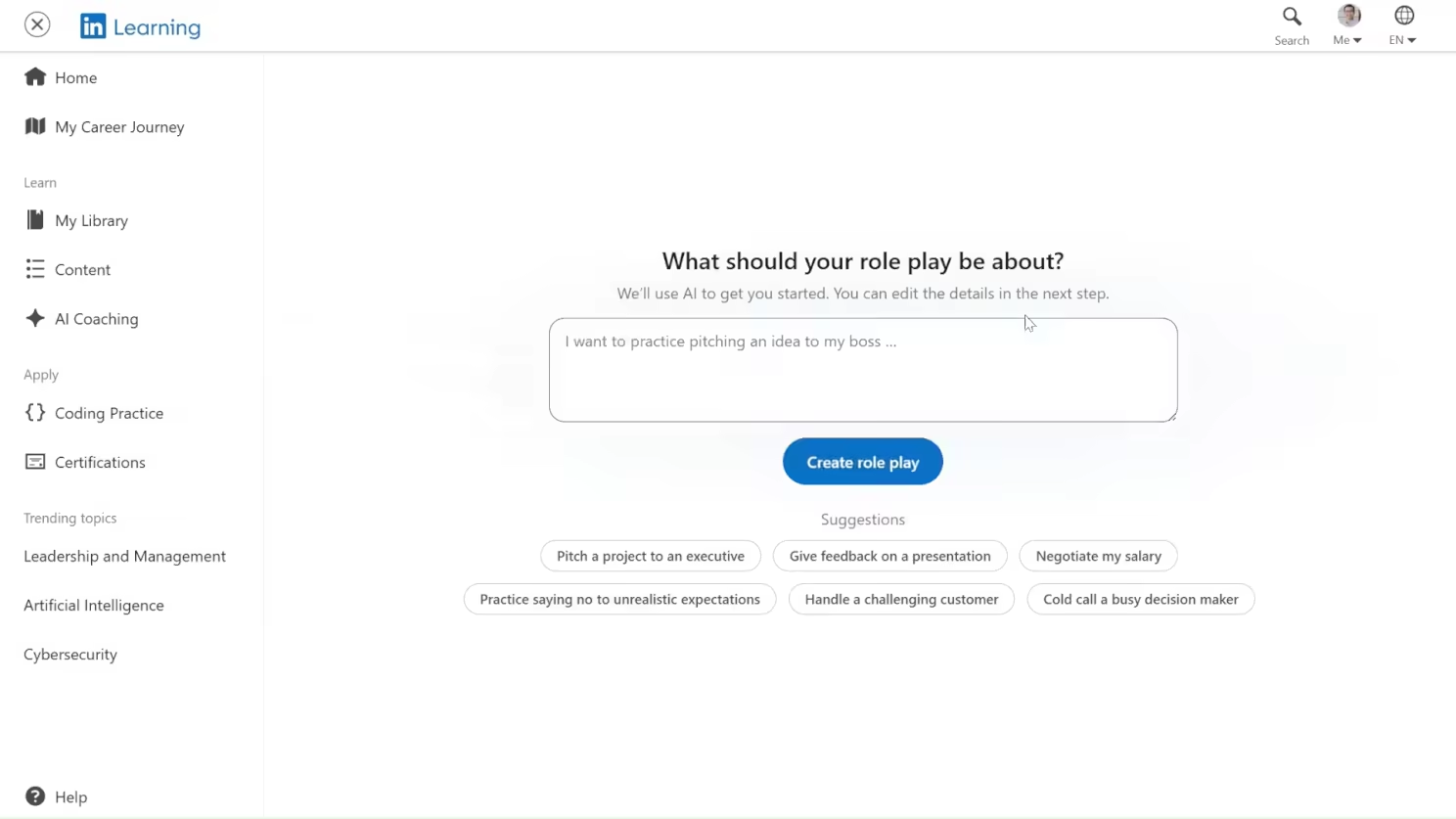
This is why LinkedIn also announced a personalized AI coaching, where the company is offering "more than 1500 courses on AI globally, and to ensure everyone can thrive in this new era [...] ."
"Premium subscribers can now engage in highly personalized, scenario-based learning, practicing critical conversations like 'how to ask for a referral' or 'how to negotiate my salary.' Each session concludes with clear and actionable feedback, paired with LinkedIn Learning courses tailored to your growth areas," LinkedIn further explained.
LinkedIn has steadily expanded its job-matching capabilities, introducing automated job recommendations around 2010 and consolidating job search tools into a dedicated tab on its main platform in 2016.
These changes reflect how users often combine job searches with other research activities, such as exploring company profiles.
At this time, more than 11,000 LinkedIn users apply for a job every minute.
With the AI feature, LinkedIn hopes that it can help even more people land their dream job through the platform.






















































































































































































































































































