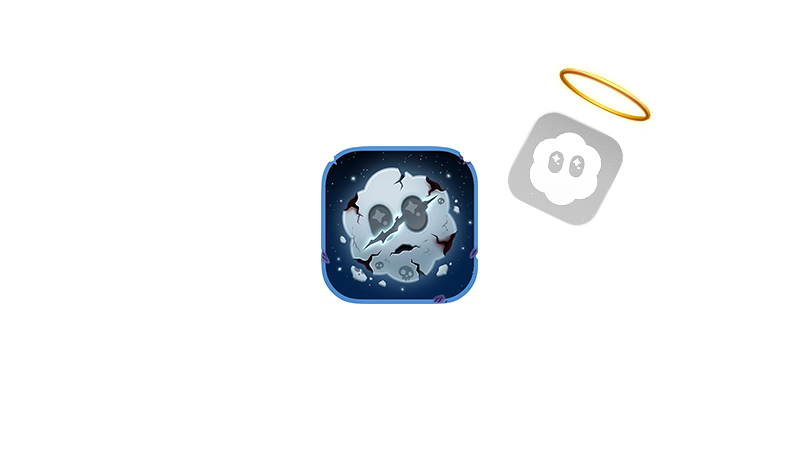
OpenAI has announced the abrupt shutdown of Sora, its groundbreaking AI video generation platform.
In just six months after launching a standalone consumer app that briefly captured the imagination of creators and went viral. In a terse social media post, the company bid farewell to the tool that allowed users to produce hyper-realistic short videos from text prompts, remix others' creations, and share them in a TikTok-style feed.
"We’re saying goodbye to Sora," OpenAI wrote.
"To everyone who created with Sora, shared it, and built community around it: thank you. What you made with Sora mattered, and we know this news is disappointing."
The decision extends to the developer API and any planned video features in ChatGPT, marking a swift retreat from what many viewed as one of the most ambitious consumer AI experiments to date.
We’re saying goodbye to the Sora app. To everyone who created with Sora, shared it, and built community around it: thank you. What you made with Sora mattered, and we know this news is disappointing.
We’ll share more soon, including timelines for the app and API and details on…— Sora (@soraofficialapp) March 24, 2026
Launched publicly in late 2024 after a late arrival, and supercharged it with Sora 2 and the dedicated app in September 2025, Sora quickly climbed to the top of Apple’s App Store, amassing a million downloads in under five days.
Users delighted in generating whimsical and often surreal clips.
Everything from princesses performing parkour to dogs behind the wheel, while professionals experimented with it for storyboarding and concept art. Yet the platform also drew swift criticism for enabling deepfakes, misinformation, violent or racist content, and unauthorized use of copyrighted characters, prompting OpenAI to add guardrails and publish safety guidelines.
Despite these challenges, the app’s early momentum suggested a new frontier for AI-driven entertainment and social sharing.
It redefined the democratization of AI tool to generate videos, and how sharing and AI can co-exist.
The shutdown appears driven primarily by economics and strategic refocusing.
Video generation models are notoriously compute-intensive. In fact, Bill Peebles, who leads Sora at OpenAI, once said that "our GPUs are melting", referring to how big the cost of keeping Sora alive.
OpenAI executives have described the resource demands as "completely unsustainable" amid growing competition for scarce chips and cloud capacity. As the company prepares for a potential initial public offering and seeks to justify its lofty valuation, it is shedding side projects to concentrate on higher-priority areas such as enterprise productivity tools, advanced coding assistants, and agentic AI systems capable of autonomous tasks.
Internal discussions highlighted surprise at the heavy investment in Sora given uncertain long-term demand, with CEO Sam Altman informing staff that the firm would wind down video-related products to simplify operations and reduce organizational complexity.
The Sora research team will pivot toward world simulation technologies to advance robotics, an area where video data can help train machines for real-world physical tasks.
The move also brings an abrupt end to a high-profile partnership with Disney.
Just three months ago, the two companies announced a three-year deal under which Disney would license more than 200 characters, including icons from Marvel, Pixar, and Star Wars, for use in Sora-generated videos, accompanied by a planned $1 billion investment in OpenAI.
"Among the characters fans will be able to use in their creations are Mickey Mouse, Minnie Mouse, Lilo, Stitch, Ariel, Belle, Beast, Cinderella, Baymax, Simba, Mufasa, as well as characters from the worlds of Encanto, Frozen, Inside Out, Moana, Monsters Inc., Toy Story, Up, Zootopia, and many more; plus iconic animated or illustrated versions of Marvel and Lucasfilm characters like Black Panther, Captain America, Deadpool, Groot, Iron Man, Loki, Thor, Thanos, Darth Vader, Han Solo, Luke Skywalker, Leia, the Mandalorian, Stormtroopers, Yoda and more," said OpenAI in its own announcement.
That agreement, which never fully closed and involved no cash changing hands, has now collapsed.
A Disney spokesperson said the studio respects OpenAI’s decision to exit the video generation business and shift priorities, while emphasizing its continued interest in responsible AI collaborations that respect intellectual property.
The news reportedly caught Disney executives off guard, coming shortly after collaborative meetings.
For users, the closure raises immediate practical questions. OpenAI has promised to share a detailed timeline for shutting down the app and API, along with options to preserve or export created videos.
While the consumer excitement around Sora has already shown signs of waning, with month-over-month declines in new installs noted earlier this year, the tool’s influence on the broader AI video landscape remains significant. It demonstrated the rapid progress of generative models and sparked debates about the future of Hollywood, content creation, and the ethical boundaries of synthetic media.
In many ways, Sora’s short life reflects the brutal realities of the current AI arms race. OpenAI, once defined by bold experimentation, and not to mention the launch of ChatGPT that disrupted the industry, is now making calculated trade-offs to stay competitive against rivals like Anthropic in enterprise and coding domains while managing enormous infrastructure costs.
The company is consolidating efforts around a “super app” that merges its ChatGPT desktop experience, coding tools, and browser, aiming for a more focused, productivity-first vision. Video generation, for now, will live on behind the scenes in research rather than as a flashy consumer product.






















































































































































































































































































