
Opera has been creating competing web browsers for years. But during its time in the business, it has been mostly quiet. But nevertheless, its web browsers are popular among users by boasting features that aren't seen on other browsers.
Its main product, the Opera Browser, has introduced integrated ad-blocker to a free VPN, Opera that has been rather quiet if compared to others is shaking things up again by launching Opera Neon.
Neon isn't an update of the Opera browser, but a radical vision of what a browser could be in the future. What it does is taking established conventional designs of web browsers, and replace them with bold features.
This makes Neon to provide a totally different browsing experience, but in the most seamless way possible .
A New Browsing Experience
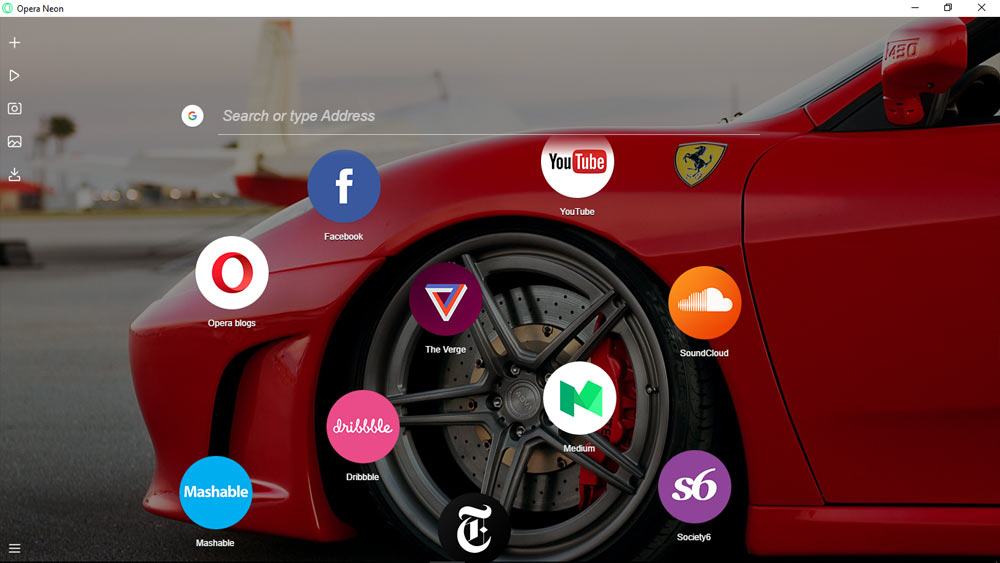
At first start, users are greeted with a fresh look on Speed Dial, visual tabs and the omnibox, which float in to kickstart browsing session. Neon eliminates desktop clutter by bringing the users' wallpaper upfront into the web browser.
This experience removes the feeling of being disconnected from the desktop, something that frequently felt when opening up a new window.
Redesigned Tabs. A Sidebar Drawer For Features
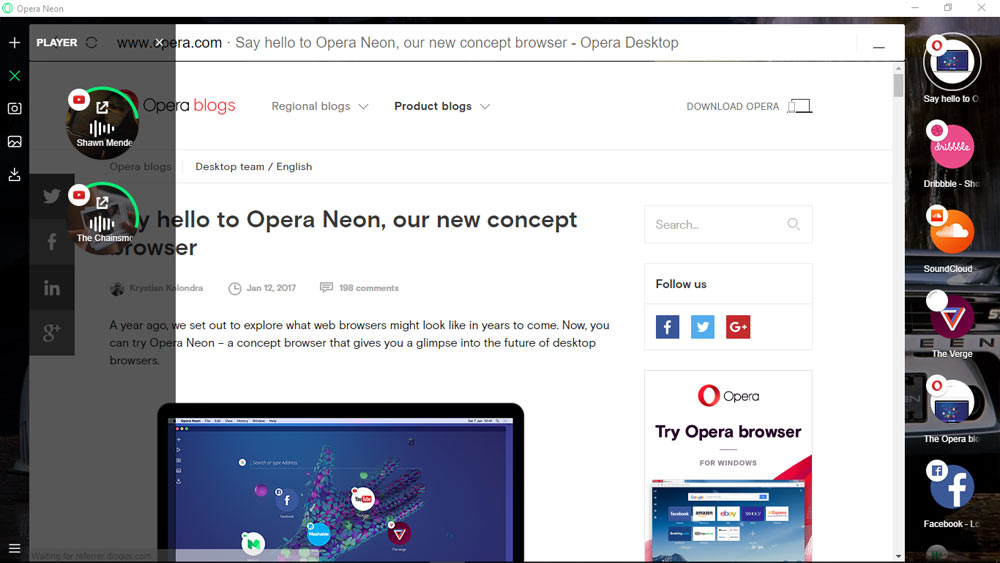
Next is the tabs. Neon has tabs that aren't like usual with a design that made them look like round blobs located on the right-hand side of the screen. Seen on the image above, they're easy to access. Opera added some tweaks to make the tabs able to manage themselves automatically.
Opera Neon's gravity system pulls the most used tabs to a prominent position on the users' Speed Dial. This way, tabs for websites that are used the most will float to the top while infrequent ones will be shown at the bottom.
The colorful visual tabs use images from web pages to help users find the pages they want.
Tabs and other objects respond and all have weight: they can move in a natural way when dragged, pushed, or popped.
Not just how the interface that Opera Neon is reimagining. The web browser also takes smaller things into consideration. The drawer seen on the image above, for example. Located on the left-sidebar, it allows users to control audio and video playback.
Screen-Capture And Split-Screen
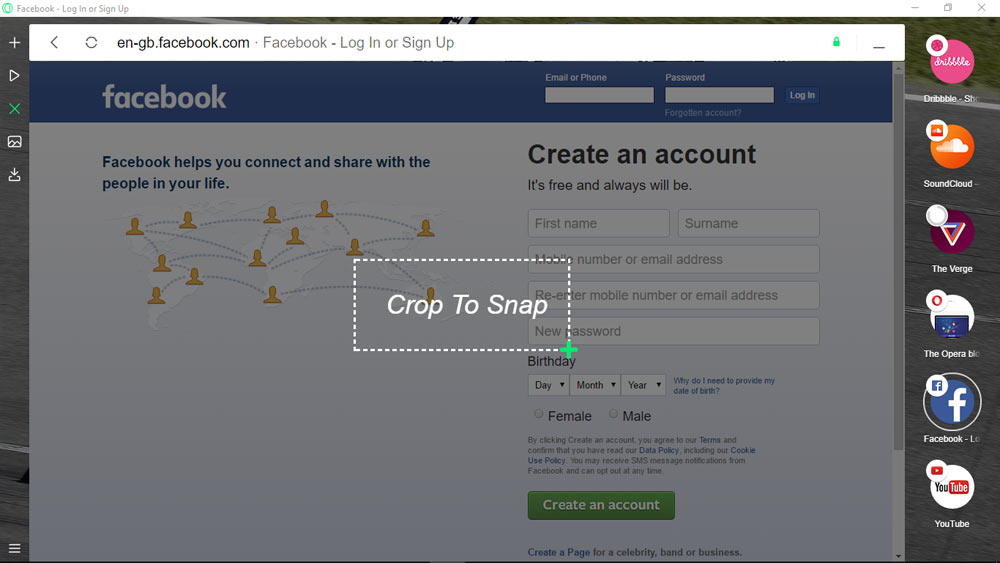
The sidebar also homes a feature for screen-capture that works similar to cropping an image, and a place to access recent downloads.
There is also a video pop-out feature, a built-in snap-to-gallery tool can house images and the media-playing tabs can be put together in the player panel.
Neon also introduces in-window split-screen. Seen on the image below, it enables users to see two websites simultaneously by placing two browser tabs side-by-side within the same window. This can be particularly useful for users with large monitors.

Radical And Ambitious Design
What Opera Neon does with its radical design, is to seek something out of the 'boring' experience users may feel when using conventional browsers.
Opera, which was acquired by a consortium of Chinese companies in 2016, is trying to take its part by shaking the industry with the experimental desktop browser. So Neon here isn't just another average web browser.
While Neon is a "concept browser," Opera has stressed out that it won't replace Opera's existing browser. "However, some of its new features are expected to be added to Opera this spring," noted the company in its announcement.
Opera Neon is available for Windows and MacOS. While it initially lacks some features, like extensions, task bar or bookmarks bar, it does feature its fair share of interesting concepts by showing a glimpse of an ambitious project that was born from imagination.




















































































































































































































































































