

From Nigerian princes to deceased relatives, romance scams and others, email scammers trick victims to send them money, extract as much as possible from them, and get away before victims realized that they've been scammed.
These email scammers work in groups, sending tons of emails to whatever and whoever's email they can get their hands on, in the hopes of catching a few curious victims.
Email scamming is a billion dollar industry with millions of unsuspecting victims that could be anyone. To counter this, NetSafe, an online safety non-profit in New Zealand, built Re:scam, which is simply a bot.
Chatbots are known to help businesses in conducting sales pitch and answering customer services. But on the other side of their effectiveness, they're usually a waste of people's time. This is where NetSafe wants to put time-waster bots into a good use.
Re:scam is a bot that messes with scammers by automatically sending authentic-sounding replies to phishers' messages, trying to shut them up by just wasting their time.
To use it, people just need to forward a scammy message to [email protected] from their inbox, and watch Re:scam rescams the scammer.
But before doing so, Re:scam will first check if the email is indeed fraudulent, and then proceed to reply with a message that sounds like it could've come from a real person.
"The aim is to waste the time of scammers, without wasting a second of yours. When you forward an email, you believe to be a scam to [email protected] a check is done to make sure it is a scam attempt, and then a proxy email address is used to engage the scammer. This will flood their inboxes with responses without any way for them to tell who is a chat-bot, and who is a real vulnerable target. Once you’ve forwarded an email nothing more is required on your part, but the more you send through, the more effective it will be."
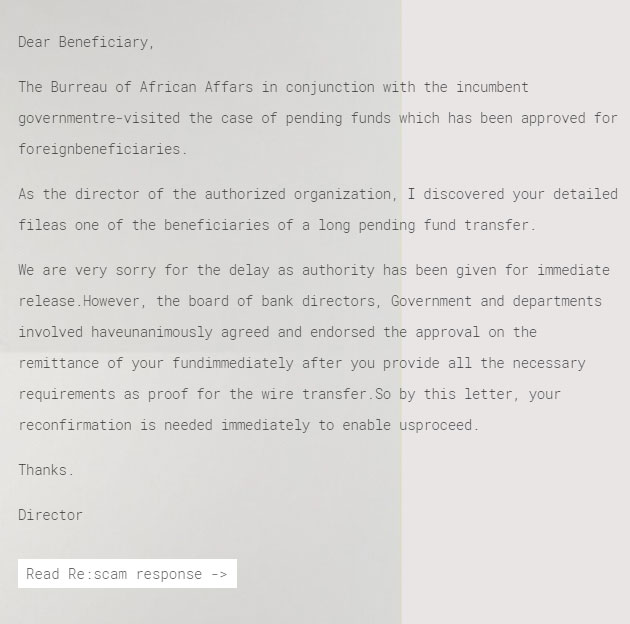
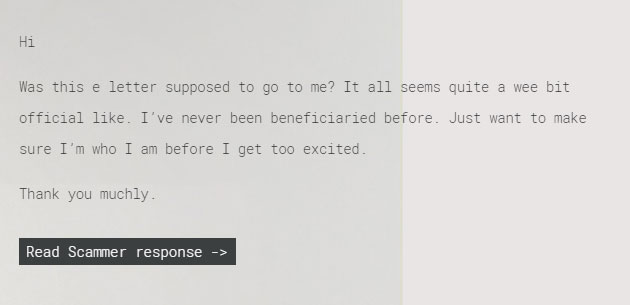
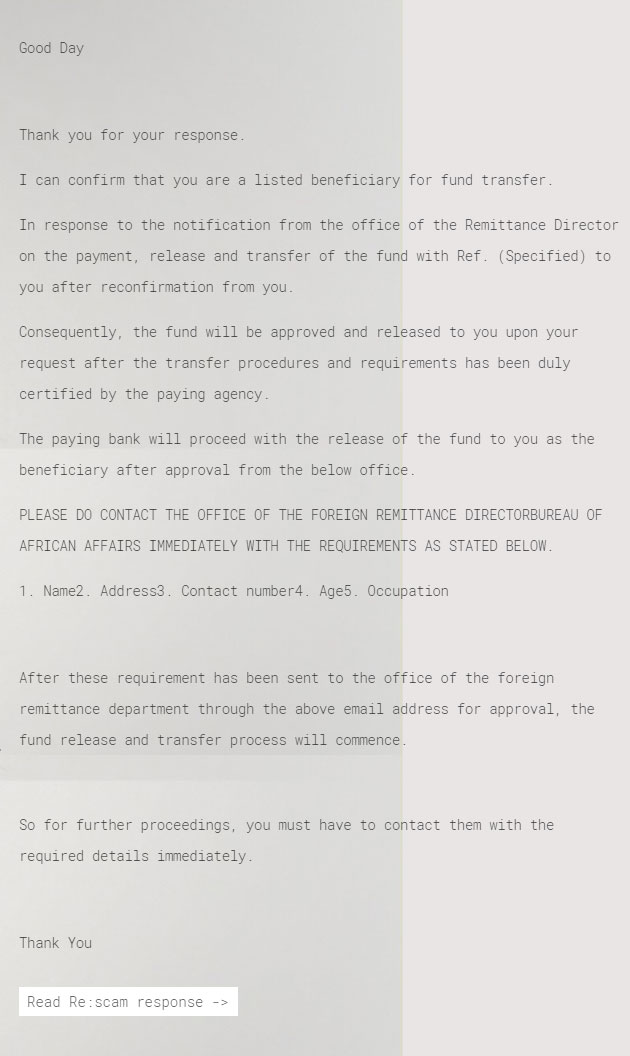
Here's an example of how Re:scam plays with a scammer, starting after the bot responds to the initial scam message:
Scammer:
Re:scam's response:
Scammer's follow-up:
Re:scam's response:
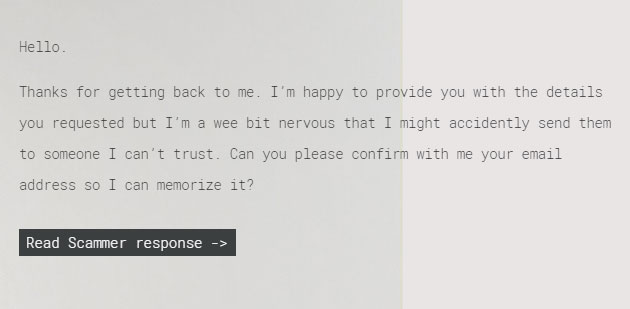
And this conversation keeps on going, until the scammer gives up.
The AI can accurately address the subject matter in the emails, and for most of us that are tired of being bombarded with scam emails, this AI can be amusing and satisfying. However, the length of Re:scam's conversations really depends on the scammers reply.
Rescam is Netsafe's attempt at tackling the global phishing crisis, which sees people lose more than $12 billion a year to email scams each year.