Dataset is one thing, the next is the algorithm, and lastly, it's the electricity that is required to make everything work.
AI and electricity are deeply intertwined, as the development, deployment, because the operation of the technology relies heavily on electrical power. From data centers where the AI is hosted, the increased demands mean that the data centers require a lot more electricity to run those computers.
Not only that the data centers are having high energy consumption, because they also have to consume continuously increasing power to ensure uptime and maintain optimal operating conditions.
The electricity not only powers the servers, because electricity is also needed to cool the servers.
And here, the electricity grid in the U.S. is taking its toll.

AI requires a lot of electricity to work because of its computational needs during training.
Particularly deep learning models, AIs within this process requires massive computational resources. This process is energy-intensive, often involving GPUs (Graphics Processing Units) and TPUs (Tensor Processing Units), which consume substantial power.
Because training can take days, weeks, and even months, this leads to high electricity usage.
Organizations are relying on third-party colocation data centers to fulfill AI-related infrastructure needs, said Flexential in its '2024 State of AI Infrastructure' report.
By polling 350 information technology decision-makers in organizations with over $100 million in annual revenue, the report found that 24% of respondents said that they deploy AI hardware on-premise and 51% said they are leasing rack space in third-party colocation data centers to process data closer to the edge of their network.
These organizations are willing to pay a premium for improved sustainability outcomes from third-party data centers or cloud vendors.
Read: Google Reports A 50% Increase In Carbon Emission Caused By Its AI Energy Usage
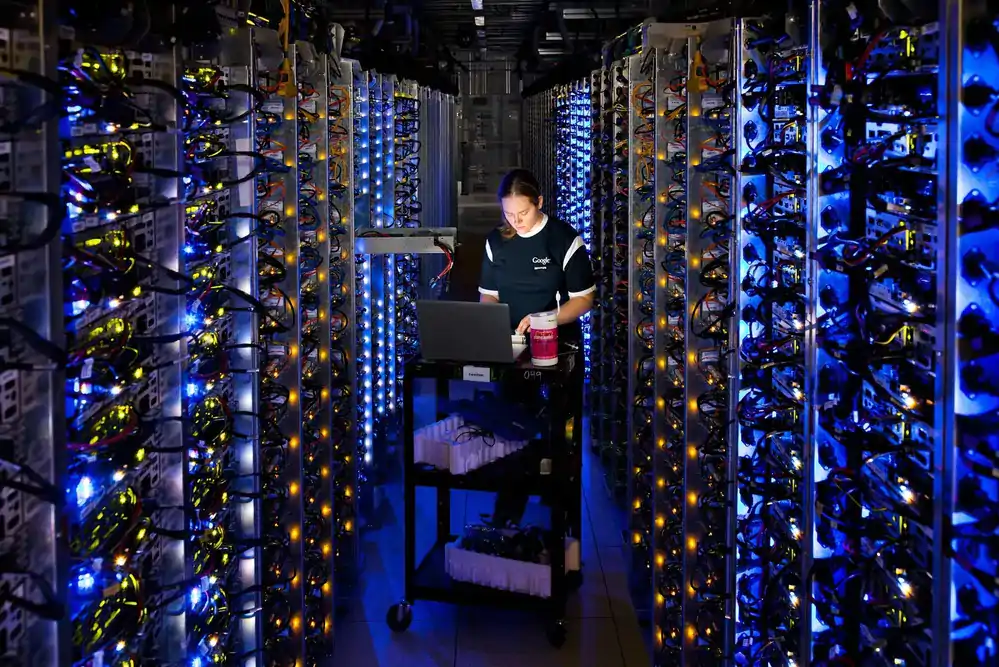
The issue here is that, the AI boom has increased carbon footprints, with Flexential saying that by 2027, AI infrastructure could consume up to 134 TWh of power annually.
This can happen because AI queries require about ten times the electricity of traditional internet searches, the report said.
Then, there is the fact that existing data center designs, especially those in the U.S. where many of those AI products came from, are often unable to meet AI’s large power demands.
According to the Electric Power Research Institute in May, its report concluded that data centers could consume 9% of the U.S. entire electricity generation by 2030, which is about double the amount consumed in 2024.
As a result of this continued dominance of cloud and hyperscale computing in major markets by big players, smaller players would often seek colocation space and power to meet their needs.
In response to limited power availability from the public grid due to big players consuming most of it, an increasing number of smaller players are increasingly exploring microgrids that can integrate renewable energy and provide resiliency from disruptions.
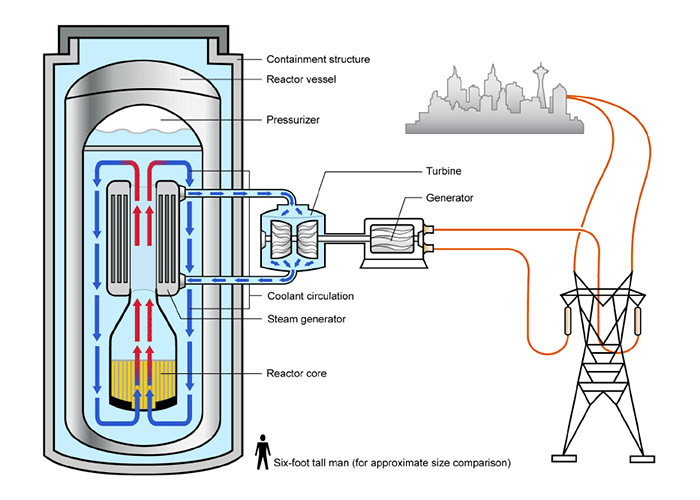
There is also the idea of deploying small modular nuclear reactor (SMR), which can produce significant amount of power if compared to coal-powered plants, but not that much carbon footprint.
Read: Microsoft Wants To Use 'Small Modular Nuclear Reactors' To Power Its AI-Related Data Centers
It's worth noting that sources of renewable energy is highly sought after, and that there's a growing emphasis on using renewable energy sources to power data centers.
Many tech companies are investing in renewables and also building green data centers that rely on solar, wind, and hydroelectric energy. They also work continuously to optimize their increasingly-complex algorithms, and create innovations in semiconductors in order to create more efficient chips.
94% of respondents said that they would pay a premium for data centers that use clean or renewable energy or buy credits to offset their carbon footprints.
45% said they were willing to pay 10% or more for sustainable cloud services, the report said.
Then, there is also the idea to use AI to help reduce the carbon footprint.
For example, AI can be used to optimize electricity distribution and manage smart grids, improving efficiency and reducing wastage. AI can also be used to predict and prevent electrical system failures, ensuring more reliable power supply.
Read: The 'Achilles Heel Of AI' Is Energy. Fusion Is Needed To Solve The 'Energy Puzzle'






















































































































































































































































































